
Author

admin

Browsing

Lode Gold Resources Inc. (TSXV: LOD,OTC:LODFF) (OTCQB: LODFF) (‘Lode Gold’ or the ‘Company’) is pleased to announce that it has completed the third and final tranche of its previously announced non-brokered private placement offering for $1 million. In this final tranche, the Company has raised an additional $326,780 through the issuance of 1,815,446 Units at a price of $0.18 per Unit. The Company has now raised a total of $1,513,768 through the issuance of 8,409,825 Units.

Each $0.18 unit consists of one common share and one common share purchase warrant. Each warrant shall entitle the holder to purchase one common share at an exercise price of $0.35 per common share for a period of three years following the date of closing.

The Company may accelerate the warrant expiry date if the Company’s shares trade at $0.65 or more for a period of 10 days, including days where no trading occurs. The closing of the offering is expected to occur one business day following receipt of all required regulatory approvals.

The proceeds raised from the offering will go toward execution of the business plans for Lode Gold and its subsidiary, Gold Orogen (BC 1475039 Ltd.).

About Lode Gold

Lode Gold (TSXV: LOD,OTC:LODFF) is an exploration and development company with projects in highly prospective and safe mining jurisdictions in Canada and the United States.

In Canada Lode Gold holds assets in the Yukon and New Brunswick. Lode Gold’s Yukon assets are located on the southern portion of the prolific Tombstone Belt and cover approximately 99.5 km2 across a 27 km strike. Over 4,500 m have been drilled on the Yukon assets with confirmed gold endowment and economic drill intercepts over 50 m. There are four reduced-intrusive targets (RIRGS), in addition to sedimentary-hosted orogenic exploration gold.

In New Brunswick, Lode Gold, through its subsidiary 1475039 B.C. Ltd., has created one of the largest land packages in the province with its Acadian Gold Joint Venture, consisting of an area that spans 445 km2 with a 44 km strike. It has confirmed gold endowment with mineralized rhyolites.

In the United States, the Company is focused on its advanced exploration and development asset, the Fremont Mine in Mariposa, California. It has a recent 2025 NI 43-101 report and compliant MRE that can be accessed here https://lode-gold.com/project/freemont-gold-usa/.

Fremont was previously mined until gold mining prohibition in WWII, when its mining license was suspended. Only 8% of the resource identified in the 2025 MRE has been extracted. This asset has exploration upside and is open at depth (three step-out holes at 1,300 m hit structure and were mineralized) and on strike. This is a brownfield project with over 43,000 m drilled, 23 km of underground workings and 14 adits. The project has excellent infrastructure with close access to electricity, water, state highways, railhead and port.

The Company recently completed an internal scoping study evaluating the potential to resume operations at Fremont based on 100% underground mining. Previously, in March 2023, the Company completed a Preliminary Economic Assessment (‘PEA’) in accordance with NI 43-101 which evaluated a mix of open pit and underground mining. The PEA and other technical reports prepared on the Company’s properties are available on the Company’s profile on SEDAR+ (www.sedarplus.ca) and the Company’s website (www.lode-gold.com).

ON BEHALF OF THE COMPANY
Wendy T. Chan
CEO & Director

Information Contact:

Wendy T. Chan
CEO
info@lode-gold.com
+1-(604)-977-GOLD (4653)

Kevin Shum
Investor Relations
kevin@lode-gold.com
+1 (604) -977-GOLD (4653)

Cautionary Note Related to this News Release and Figures

This news release contains information about adjacent properties on which the Company has no right to explore or mine. Readers are cautioned that mineral deposits on adjacent properties are not indicative of mineral deposits on the Company’s properties.

Cautionary Statement Regarding Forward-Looking Information

Neither the TSX Venture Exchange nor its Regulation Services Provider (as that term is defined in the policies of the TSX Venture Exchange) accepts responsibility for the adequacy or accuracy of this release.

This news release includes ‘forward-looking statements’ and ‘forward-looking information’ within the meaning of Canadian securities legislation. All statements included in this news release, other than statements of historical fact, are forward-looking statements including, without limitation, statements with respect to the use of proceeds, advancement and completion of resource calculation, feasibility studies, and exploration plans and targets. Forward-looking statements include predictions, projections and forecasts and are often, but not always, identified by the use of words such as ‘anticipate’, ‘believe’, ‘plan’, ‘estimate’, ‘expect’, ‘potential’, ‘target’, ‘budget’ and ‘intend’ and statements that an event or result ‘may’, ‘will’, ‘should’, ‘could’ or ‘might’ occur or be achieved and other similar expressions and includes the negatives thereof.

Forward-looking statements are based on a number of assumptions and estimates that, while considered reasonable by management based on the business and markets in which the Company operates, are inherently subject to significant operational, economic, and competitive uncertainties, risks and contingencies. These include assumptions regarding, among other things: the status of community relations and the security situation on site; general business and economic conditions; the availability of additional exploration and mineral project financing; the supply and demand for, inventories of, and the level and volatility of the prices of metals; relationships with strategic partners; the timing and receipt of governmental permits and approvals; the timing and receipt of community and landowner approvals; changes in regulations; political factors; the accuracy of the Company’s interpretation of drill results; the geology, grade and continuity of the Company’s mineral deposits; the availability of equipment, skilled labour and services needed for the exploration and development of mineral properties; currency fluctuations; and impact of the COVID-19 pandemic.

There can be no assurance that forward-looking statements will prove to be accurate and actual results, and future events could differ materially from those anticipated in such statements. Important factors that could cause actual results to differ materially from the Company’s expectations include a deterioration of security on site or actions by the local community that inhibits access and/or the ability to productively work on site, actual exploration results, interpretation of metallurgical characteristics of the mineralization, changes in project parameters as plans continue to be refined, future metal prices, availability of capital and financing on acceptable terms, general economic, market or business conditions, uninsured risks, regulatory changes, delays or inability to receive required approvals, unknown impact related to potential business disruptions stemming from the COVID-19 outbreak, or another infectious illness, and other exploration or other risks detailed herein and from time to time in the filings made by the Company with securities regulators, including those described under the heading ‘Risks and Uncertainties’ in the Company’s most recently filed MD&A. The Company does not undertake to update or revise any forward-looking statements, except in accordance with applicable law.

To view the source version of this press release, please visit https://www.newsfilecorp.com/release/261839

News Provided by Newsfile via QuoteMedia

This post appeared first on investingnews.com

The U.S. Court of Appeals for the D.C. Circuit ruled 2-1 Friday that U.S. District Judge James Boasberg cannot move forward with possible contempt proceedings against the Trump administration.

The case involves the administration’s alleged violation of an emergency court order blocking the administration from using a 1798 law to summarily deport hundreds of Venezuelan migrants to El Salvador — the latest in an evolving, high-stakes court clash that has played out for months in various courts. 

Judges Gregory Katsas and Neomi Rao, two Trump appointees on the majority-Democrat bench, sided with the Trump administration Friday in blocking Boasberg’s contempt motion from moving forward. 

Judge Nina Pillard, an Obama appointee, dissented. 

The 2-1 ruling is all but certain to be appealed to the full court to be heard en banc, where the Democrat-majority bench is seen as more favorable to the plaintiffs, or directly to the Supreme Court for review.

‘The district court here was placed in an enormously difficult position,’ Katsas said Friday, writing for the majority.

‘Faced with an emergency situation, it had to digest and rule upon novel and complex issues within a matter of hours. In that context, the court quite understandably issued a written order that contained some ambiguity.’

Katsas noted that the appellate court ruling does not center on the lawfulness of Trump’s Alien Enemies Act removals in March, when administration officials invoked the 1798 immigration law to send more than 250 Venezuelan nationals to CECOT, the maximum-security prison in El Salvador.

‘Nor may we decide whether the government’s aggressive implementation of the presidential proclamation warrants praise or criticism as a policy matter,’ he added. ‘Perhaps it should warrant more careful judicial scrutiny in the future. Perhaps it already has.’

‘Regardless, the government’s initial implementation of the proclamation clearly and indisputably was not criminal.’

The ruling comes months after Boasberg originally found grounds to move on potential contempt proceedings in the case.

It comes as Boasberg has also ordered ongoing status updates on the location and custodial status of the 252 CECOT class migrants, after they were deported last month from El Salvador to Venezuela as part of a prisoner exchange between the U.S. and Venezuela.

It is unclear how many of those migrants had pending asylum applications in the U.S. or had been granted a ‘withholding of removal’ order blocking their return to their country of origin. 

The long-awaited ruling comes months after Boasberg ruled that the court had found probable cause to move on criminal contempt proceedings after he issued a late-night temporary restraining order on March 15 blocking the Trump administration’s use of the Alien Enemies Act to summarily deport certain migrants to El Salvador.

Boasberg had also ordered all migrants to be ‘immediately returned’ to U.S. soil, which did not happen. 

Despite the order, hundreds of migrants were deported to the Salvadorian prison, CECOT, in March, where they remained until late last month, when they were sent from the prison in El Salvador to Venezuela, as part of the prisoner exchange. 

Boasbeg ruled in April that there was ‘probable cause’ to move on criminal contempt proceedings against the Trump administration for failing to return the planes to U.S. soil and said the court had determined that the Trump administration demonstrated a ‘willful disregard’ for his order.

The appeals court granted the Trump administration’s request for an emergency stay of the ruling months earlier, prompting questions as to why they did not move more quickly on the motion.


Still, the decision is almost certain to be appealed either to the full circuit court to be heard en banc, or directly to the Supreme Court for review. 

The Trump administration for months has sparred with judges who have blocked the president’s executive orders from taking force.

Boasberg, in particular, has emerged as one of Trump’s biggest public foes. Last month, the court attempted to have him removed from overseeing the case and have it reassigned to another case — a long-shot effort that legal experts and former judges suggested is unlikely to go far.

This is a breaking news story. Check back for updates.

This post appeared first on FOX NEWS

Apple has been sued by a Texas company that accused the iPhone maker of stealing its technology to create its lucrative mobile wallet Apple Pay.

In a complaint made public on Thursday, Fintiv said Apple Pay’s key features were based on technology developed by CorFire, which Fintiv bought in 2014, and now used in hundreds of millions of iPhones, iPads, Apple Watches and MacBooks.

Apple did not immediately respond to requests for comment.

Fintiv, based in Austin, Texas, said Apple held multiple meetings in 2011 and 2012 and entered nondisclosure agreements with CorFire aimed at licensing its mobile wallet technology, to capitalize on fast-growing demand for contactless payments.

Instead, and with the help of CorFire employees it lured away, Apple used the technology and trade secrets to launch Apple Pay in the United States and dozens of other countries, beginning in 2014, the complaint said.

Fintiv also said Apple has led an informal racketeering enterprise by using Apple Pay to generate fees for credit card issuers such as Bank of America, Capital One, Citigroup, JPMorgan Chase and Wells Fargo, and the payment networks American Express, Mastercard and Visa.

“This is a case of corporate theft and racketeering of monumental proportions,” enabling Cupertino, California-based Apple to generate billions of dollars of revenue without paying Fintiv “a single penny,” the complaint said.

In a statement, Fintiv’s lawyer Marc Kasowitz called Apple’s conduct “one of the most egregious examples of corporate malfeasance” he has seen in 45 years of law practice.

The lawsuit in Atlanta federal court seeks compensatory and punitive damages for violations of federal and Georgia trade secrets and anti-racketeering laws, including RICO.

Apple is the only defendant. CorFire was based in Alpharetta, Georgia, an Atlanta suburb.

On August 4, a federal judge in Austin dismissed Fintiv’s related patent infringement lawsuit against Apple, four days after rejecting some of Fintiv’s claims, court records show.

Fintiv agreed to the dismissal, and plans to “appeal on the existing record,” the records show.

This post appeared first on NBC NEWS

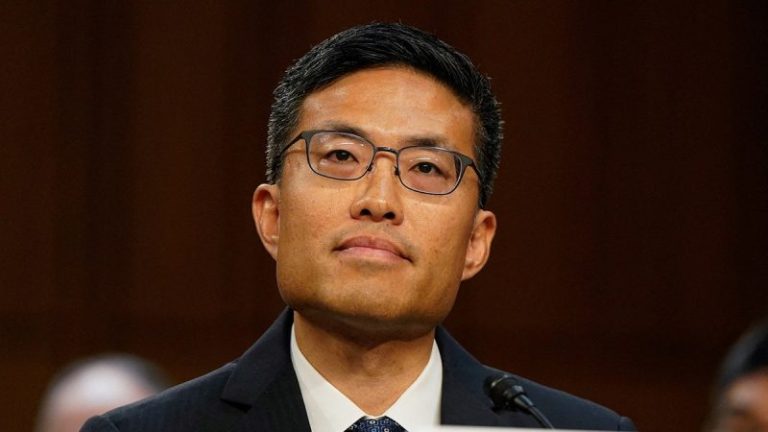
On July 15, President Trump nominated my friend and former Gorsuch clerk colleague Eric Tung to the U.S. Court of Appeals for the Ninth Circuit. If confirmed, Tung will succeed Judge Sandra Ikuta, who recently assumed senior status after a distinguished tenure. Judge Ikuta leaves behind a strong legacy, one Tung is more than equipped to uphold and extend.

Tung’s credentials are exceptional. He earned a philosophy degree from Yale in 2006 and graduated with high honors from the University of Chicago Law School in 2010. While there, he served as managing editor of the University of Chicago Law Review, one of the most rigorous legal journals in the country.

Following law school, Tung clerked for two of the most respected jurists in America: then-Judge Neil Gorsuch on the Tenth Circuit and Supreme Court Justice Antonin Scalia. These clerkships are offered only to the legal elite. Even among that group, Tung stood out.

Although President Trump made inroads during his first term in balancing out the nation’s most liberal federal appeals court outside of Washington, D.C., of the 29 active judges, 16 were Democratic nominees. Tung replacing Ikuta won’t change that balance, but it will ensure the vacated seat remains in the hands of a strong constitutionalist.

Tung’s brilliance, ethics, and temperament have earned him bipartisan respect. A letter supporting his nomination was signed by fellow Supreme Court clerks from across the ideological spectrum, from Justice Ginsburg’s to Justice Thomas’. That level of cross-aisle support is rare and speaks volumes.

One signer, Danielle Sassoon, a former federal prosecutor who has publicly disagreed with the Trump administration, went out of her way to endorse Tung. Her support underscores how widely admired he is for his intellect and integrity, regardless of politics.

Ultimately, what really matters is Tung’s record, and it’s unimpeachable. He is a brilliant legal mind, a fair-minded jurist, and a committed constitutionalist.

Tung’s experience goes far beyond the top of the legal profession. He served in the Department of Justice’s Office of Legal Policy, where he helped vet judicial nominees, giving him a firsthand look at what makes a good judge. As an Assistant U.S. Attorney in Los Angeles, he prosecuted serious criminal cases, gaining invaluable courtroom experience. Now a partner at Jones Day, Tung handles complex appellate and trial work at a national level.

Although President Trump made inroads during his first term in balancing out the nation’s most liberal federal appeals court outside of Washington, D.C., of the 29 active judges, 16 were Democratic nominees. Tung replacing Ikuta won’t change that balance, but it will ensure the vacated seat remains in the hands of a strong constitutionalist.

Despite this impeccable record, Tung’s Senate Judiciary Committee hearing was marred by partisan theatrics. Several Democrat senators ignored his qualifications and fixated instead on social media posts I had written. Sen. Dick Durbin, D-Ill., quoted part of an old post of mine and demanded Tung ‘condemn’ it. Tung, noting the canons of judicial ethics, rightly declined to weigh in, clarifying that my opinions are not necessarily his.

Sen. Cory Booker, D-N.J., followed suit, hitting Tung over a post where I had labeled certain Democrats ‘evil Marxists.’ Booker then attempted to cast himself as a model of bipartisan civility, citing his friendship with Sen. John Kennedy, R-La., conveniently omitting that he once claimed supporters of Justice Brett Kavanaugh’s confirmation to the U.S. Supreme Court were ‘complicit in evil.’ Again, Tung refused to be drawn into political grandstanding, displaying the restraint and poise we should expect from a federal judge.

This guilt-by-association line of attack is dishonest and irrelevant. Tung’s record speaks for itself. Rather than engage with his legal merits, some senators tried to hijack yet another Judiciary Committee  hearing to score cheap political points. Tung never took the bait.

His nomination also highlights the double standard in how judicial diversity is treated. As the son of Chinese immigrants and a fluent Mandarin speaker, one would think Democrats would celebrate Tung at least for their sacred metrics of representation and diversity on the federal bench. But because he’s a conservative, his background is downplayed, or even used against him. The selective celebration of diversity and identity politics in judicial nominations is glaring.

Ultimately, what really matters is Tung’s record, and it’s unimpeachable. He is a brilliant legal mind, a fair-minded jurist, and a committed constitutionalist. His combination of courtroom experience, academic rigor, and ethical clarity makes him an ideal appellate judge.

The Senate should rise above political posturing and confirm Eric Tung without delay. His confirmation will not only fortify the Ninth Circuit, but strengthen the rule of law nationwide. President Trump’s reshaping of the federal judiciary with principled, constitutionalist judges will take a significant step forward with Tung’s appointment.

Eric Tung is exactly the kind of judge Americans want: sharp, steady, and scrupulously fair. The Senate must act upon its return and confirm him in September.

Mike Davis is the founder and president of the Article III Project.

This post appeared first on FOX NEWS

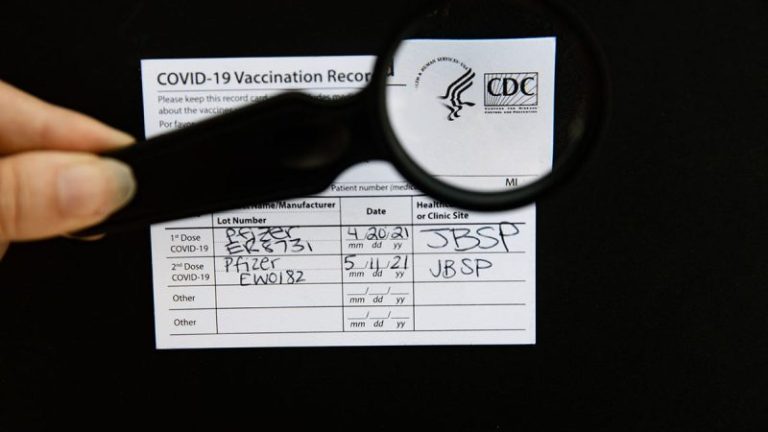
In a sweeping move aimed at rolling back pandemic-era mandates, the Trump administration on Friday directed all federal agencies to erase any records related to employees’ COVID-19 vaccination status, prior mandate noncompliance or exemption requests.

The guidance, issued by the U.S. Office of Personnel Management (OPM), was a response to recent litigation and is part of a broader push to reverse what officials have described as ‘harmful pandemic-era policies’ imposed under the Biden administration. 

‘Things got out of hand during the pandemic, and federal workers were fired, punished or sidelined for simply making a personal medical decision,’ OPM Director Scott Kupor said in a statement.That should never have happened. Thanks to President [Donald] Trump’s leadership, we’re making sure the excesses of that era do not have lingering effects on federal workers.’

Former President Joe Biden signed Executive Order 14043 in September 2021, directing federal agencies to require COVID-19 vaccination as a condition of federal employment. 

After the controversial demand, numerous lawsuits were filed by federal employees, unions and states alleging the mandate violated constitutional rights and federal labor laws.

A federal appeals court blocked enforcement of the order in 2022m and Biden repealed the mandate in May 2023, prompting OPM officials to issue a memorandum to human resources directors stating that ‘agencies should review their job postings … to ensure that none list compliance with the now revoked Executive Order 14043 as a qualification requirement.’ 

The memo also reminded agencies that the executive order could no longer be enforced.

In a memo to heads and acting heads of departments and agencies Friday, Kupor announced that, effective immediately, agencies are barred from using a person’s vaccine history or exemption requests in any employment-related decision, including hiring, promotion, discipline or termination. 

Unless an employee affirmatively opts out within 90 days, all vaccine-related information must be permanently removed from both physical and electronic personnel files.

Agencies must certify compliance with the memo by Sept. 8, according to the memo.

The White House did not immediately respond to Fox News Digital’s request for comment.

This post appeared first on FOX NEWS

Republican senators offered a range of responses when pressed on how the Trump administration has been handling the Epstein files controversy, with some calling it a distraction and others arguing the American people are ‘entitled’ to answers.

Attorney General Pam Bondi announced the ‘first phase’ of declassified files related to Jeffrey Epstein Feb. 27, noting the move was following through on President Donald Trump’s commitment to ‘lifting the veil’ on Epstein and his co-conspirator’s actions. Bondi also said the same month she was in possession of an Epstein ‘client list.’

However, the February declassification contained mostly information and files that had already been publicly available, and the Justice Department subsequently indicated that no ‘client list’ exists. Since then, a series of events, including a clash between FBI Deputy Director Dan Bongino and Attorney General Bondi, have led to mounting pressure on the Trump administration to release more files. 

‘This is factual. Epstein trafficked a lot of young women, some of whom were minors. The American people are entitled to know who — if anyone — he trafficked these young women to, besides himself, and why they weren’t prosecuted,’ John Kennedy, R-La., said. 

‘Now that’s a very simple question that’s at the bottom of all of this. The Department of Justice is going to have to answer that question to the satisfaction of the American people.’


Kennedy’s call for transparency comes after the president described the Epstein situation as a ‘hoax’ while blasting Democrats and other ‘weaklings’ who continue to buy into it. 

‘Their new SCAM is what we will forever call the Jeffrey Epstein Hoax, and my PAST supporters have bought into this ‘bull—-,’ hook, line, and sinker,’ Trump wrote on his Truth Social platform last month amid mounting reports of internal division within the administration over its handling of the Epstein case 

When asked about how the Trump administration was handling the Epstein furor, Sen. Markwayne Mullin, R-Okla., said he thought the situation was being used by Democrats to create a ‘distraction’ from the ongoing investigations into former President Biden and others, like the probe related to Biden’s use of an autopen tool to sign important documents and the investigation into whether Obama-era officials manufactured evidence to accuse Trump of Russian collusion.

‘Look what’s being investigated right now through the Biden administration. … So, what are they going to talk about now?’ Mullin asked. ‘This is nothing but a distraction from the actual facts that is coming out about the Biden administration. Of course, the Democrats say, ‘Well, we’re just about transparency.’ Well, where was the transparency the last four years?’

Democrats have suggested Trump could be implicated in the files, but Mullin said that if such a circumstance were true, the information would have been leaked by the Biden administration. 

Mullin’s counterpart in the Senate, Republican Oklahoma Sen. James Lankford took more of a middle ground in his response about how the administration has been handling the Epstein files.

‘The challenge is there are people that are victims that are in it, and there are folks that are not criminals that are in it as well,’ Lankford said. ‘And the challenge the Department of Justice has is you’ve got a girl that was 14, 16 years old and was abused. Well, now she’s, let’s say 26 or 30, married and has children. 

‘Maybe her family knows about this, maybe they don’t. I don’t know the situation, but we gotta figure out a way to be able to protect those folks that are genuine victims on all this as well as getting out as much information as you possibly can.’

For Sen. Susan Collins, R-Maine, the debate about the Epstein files was not something she was interested in talking about when approached by Fox News Digital.

‘I’m going,’ Collins responded when pressed on the matter outside the Capitol complex.

This post appeared first on FOX NEWS

Bed Bath & Beyond is back — kind of.

The bankrupt home goods chain is being resurrected by the owners and licensees of its intellectual property, which opened the first new Bed Bath & Beyond store in Nashville, Tennessee, on Friday with potentially dozens of more to come.

This time around, the store has a new name — Bed Bath & Beyond Home — and marks a “fresh start” for the beloved brand, said Amy Sullivan, the CEO of The Brand House Collective, the store’s operator.

“We’re proud to reintroduce one of retail’s most iconic names with the launch of Bed Bath & Beyond Home, beautifully reimagined for how families gather at home today,” Sullivan said in a news release. “With Bed Bath & Beyond Home we’re delivering on our mission to offer great brands, for any budget, in every room. It’s a powerful addition to our portfolio and a meaningful step forward in our transformation.”

In honor of the brand’s legacy, the new store will accept the brand’s famous 20% coupon, regardless of when it expired.

“We encourage guests to bring in their legacy Bed Bath & Beyond coupons which we will gladly honor,” the company said in a news release. “The coupon we all know and love is back and for those who need one, a fresh version will be waiting at the door.”

Bed Bath and Beyond 2.0 has been several years in the making and involved a rigmarole of corporate acquisitions and rebrandings. When the original Bed Bath and Beyond filed for bankruptcy in April 2023 following a string of corporate missteps, it struggled to find a buyer and ended up liquidating and selling off its business in parts. Overstock.com later bought the brand’s intellectual property, rebranded its business to Beyond Inc. and launched an online-only version of Bed Bath and Beyond.

What followed from there was a dizzying array of corporate deal-making. Ultimately, Beyond took an ownership stake in Kirkland’s Inc., a home decor chain with around 300 stores across the U.S., and gave it the exclusive license to develop and create Bed Bath & Beyond Home stores, as well as Buy Buy Baby stores.

Kirkland’s later rebranded to The Brand House Collective and plans to convert some of its existing Kirkland’s Home stores into more Bed Bath and Beyond shops. Friday’s launch in Nashville is the first of six planned for the market and, pending the results, it plans to convert around 75 additional stores through 2026.

The company said it chose Nashville for the launch because of its proximity to its corporate headquarters, which will allow it to “closely manage every detail and set the standard for future rollouts.”

While the relaunch is exciting for fans of the legacy brand, it comes at a difficult time for the home decor market. In many ways, Bed Bath & Beyond’s bankruptcy was the fault of its management team and execution missteps, but it also faced macro challenges as well, experts said at the time. Competition from players like Amazon, Walmart, Home Goods and Wayfair has made it harder for other brands to capture customer spend, and the overall sector has been soft for several years because of high interest rates and the sluggish housing market.

Even the current leaders in the home decor space have seen soft trends and it’s unlikely that will change until interest rates fall and the housing market picks back up, some analysts have said.

This post appeared first on NBC NEWS

Demand for helium is rising alongside the semiconductor, healthcare and nuclear energy sectors.

Produced from natural gas wells, helium is an odorless, colorless, non-toxic, non-combustible and non-corrosive gas. While it may bring to mind birthday balloons, the element is an important industrial gas due to its cooling properties.

Helium has several critical applications across various industries witnessing market growth, including the manufacturing of semiconductors and electronics, medical imaging and nuclear power generation.

Global helium supply is mainly attributable to production at liquefaction facilities spread across the US, Qatar, Algeria, Russia, Australia, Canada, Poland and China. However, increasing demand for helium as an industrial gas is spurring further exploration and development of helium projects, including in Canada and in the US.

1. Pulsar Helium (TSXV:PLSR)

Market cap: C$46.05 million

Pulsar Helium is a helium project development company with assets in the United States and Greenland.

The company’s Topaz project in Minnesota is the newest helium discovery in the US, and drilling at its Jetstream #1 well in 2024 demonstrated high helium concentrations of 14.5 percent. Pulsar is also the first company in Greenland to obtain a license for helium exploration. According to the company, its Tunu helium-geothermal project in the country is one of just a few primary helium projects in Europe.

At Topaz, Pulsar is conducting a well flow testing program at the Jetstream prospect during the summer to gain data necessary to assess the project’s production potential. As for Tunu, a pre-feasibility study is underway at the project and is slated for completion by the end of August 2025.

2. Desert Mountain Energy (TSXV:DME)

Market cap: C$18.84 million

Next up on this list of top Canadian helium stocks is Desert Mountain Energy, a company engaged in the exploration, development and production of helium, hydrogen, natural gas and condensate projects in the US. Its key helium project is the West Pecos gas field in New Mexico, where it has a fully operational helium processing facility. It also owns the high-grade Holbrook Basin helium project in Arizona.

In 2025, Desert Mountain Energy is expanding into the international market with the formation of its wholly owned subsidiary Desert Energy UK, which has secured a substantial onshore exploration license for helium and hydrogen in Devon, United Kingdom.

3. Helium Evolution (TSXV:HEVI)

Market cap: C$12.07 million

Helium Evolution is a helium exploration company with over 5 million acres of helium land rights in Southern Saskatchewan, Canada. The company holds a 20 percent working interest in helium wells on joint lands with North American Helium, which is advancing the joint 2-31 discovery, with development wells planned for late 2025.

Earlier this year, Helium Evolution formed a collaboration agreement and secured a substantial investment from ENEOS Explora USA, a subsidiary of Japanese energy conglomerate ENEOS Group (TSE:5020), through two private placements. The second, closed in May, brought ENEOS’ total stake in Helium Evolution to about 28 percent.

4. Avanti Helium (TSXV:AVN)

Market cap: C$11.97 million

Avanti Helium’s helium exploration and development assets include approximately 78,000 acres within the Greater Knappen area, which covers land in both Southern Alberta, Canada, and Northwest Montana, US. It also owns approximately 63,000 acres of prospective helium permits within Southwest Saskatchewan.

Avanti’s Sweetgrass pool project in Montana is on track to achieve helium production in Q4 of 2025, the company stated in its April investor presentation. The company has two wells at Sweetgrass capable of total gas production of approximately 18,500 million cubic feet per day at 1.1 percent helium.

In August, Avanti announced it signed a multi-year offtake agreement with a global industrial gas supplier for a minimum monthly helium purchase volume equivalent to about one third of Sweetgrass’ initial plant output.

5. Altura Energy (TSXV:ALTU)

Market cap: C$8.21 million

Altura Energy is an exploration and production company which holds 27,000 acres in the Holbrook basin of Arizona, where its wells produce helium at concentrations of 5 percent to 8 percent. The company has a development plan for over 300 wells, with nine wells currently connected to a pipeline and an additional 10 wells at various stages of completion.

Formerly known as Total Helium, the company completed a name change and share consolidation in May 2025. In June, Altura announced it closed an up-sized brokered private placement for C$1.99 million, a quarter of which was used to settle outstanding indebtedness, with proceeds also planned for working capital.

Securities Disclosure: I, Melissa Pistilli, hold no direct investment interest in any company mentioned in this article.

This post appeared first on investingnews.com

(TheNewswire)

The net proceeds raised from the Offering will be used to advance the high-grade El Potrero gold-silver project in Durango, Mexico, and for general working capital.

All securities to be issued will be subject to a four-month hold period from the date of issuance and subject to TSX Venture Exchange approval.  The securities offered have not been registered under the United States Securities Act of 1933 , as amended, and may not be offered or sold in the United States absent registration or an applicable exemption from the registration requirements.

Insiders subscribed for an aggregate of 3,108,333 Units for a total of $186,500.  As insiders of Pinnacle participated in the financing, it is deemed to be a ‘related party transaction’ within the meaning of Multilateral Instrument 61-101 Protection of Minority Security Holders in Special Transactions (‘MI 61- 101’).  Pinnacle is relying on the exemptions from the formal valuation and minority approval requirements contained in Sections 5.5(a) and 5.7(1)(a) of MI 61-101, on the basis that the fair market value of the transaction does not exceed 25% of the Company’s market capitalization.  The Company will be filing a material change report in respect of the related party transaction on SEDAR.

About Pinnacle Silver and Gold Corp.

Pinnacle is focused on district-scale exploration for precious metals in the Americas.  The high-grade Potrero gold-silver project in Mexico’s Sierra Madre Belt hosts an underexplored low-sulphidation epithermal vein system and provides the potential for near-term production . In the prolific Red Lake District of northwestern Ontario, the Company owns a 100% interest in the past-producing, high-grade Argosy Gold Mine and the adjacent North Birch Project with an eight-kilometre-long target horizon . With a seasoned, highly successful management team and quality projects, Pinnacle Silver and Gold is committed to building long -term , sustainable value for shareholders.

Signed: ‘Robert A. Archer’

President & CEO

For further information contact :

Email: info@pinnaclesilverandgold.com

Tel.:  +1 (877) 271-5886 ext. 110

Website: www.pinnaclesilverandgold.com

Neither the TSX Venture Exchange nor the Investment Industry Regulatory Organization of Canada accepts responsibility for the adequacy or accuracy of this release .

Copyright (c) 2025 TheNewswire – All rights reserved.

News Provided by TheNewsWire via QuoteMedia

This post appeared first on investingnews.com