Author

admin

Browsing

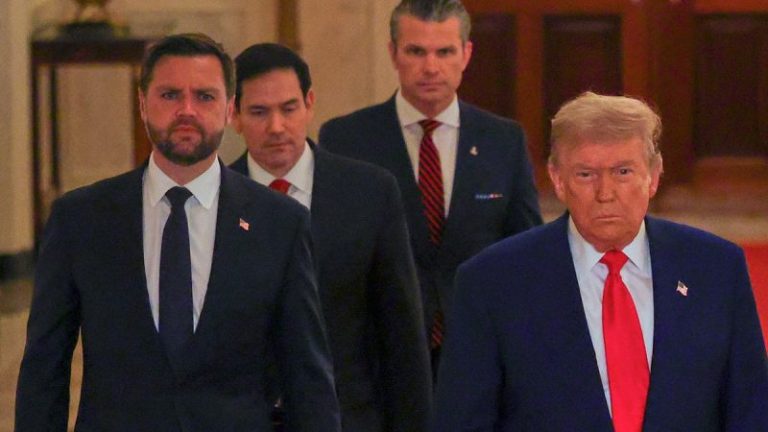
Vice President JD Vance said Sunday that America ‘is not at war with Iran,’ but rather is at war with the Iranian nuclear program, which was ‘substantially’ set back by U.S. strikes.

In an appearance on ABC’s ‘This Week,’ Vance praised President Donald Trump’s ‘decisive action to destroy the program’ and expressed an ‘incredible amount of gratitude’ to the U.S. troops, who, he says, flew thousands of miles on a 30-hour non-stop flight, ‘never touched down on the ground’ and dropped a 30,000-pound bomb ‘on a target about the size of a washing machine.’ 

‘No military in the world has the training, the skills, and the equipment to do what these guys did last night,’ Vance said. ‘I know the president and I are both very proud of them, and I think what they did was accomplish a very core American national objective. Iran cannot have a nuclear weapons program. The president’s been very clear about this, and thanks to the bravery and competence and skill of our great pilots and everybody who supported this mission, we took a major step forward for that national objective last night.’ 

Vance was hesitant to disclose too much sensitive information about the mission, which reportedly involved 125 aircraft. 

ABC’s Jonathan Karl asked the vice president, ‘Can you say definitively that Iran’s nuclear program has now been destroyed?’ 

‘I don’t want to get into sensitive intelligence here, but we know that we set the Iranian nuclear program back substantially last night. Whether it’s years or beyond that, we know it’s going to be a very long time before Iran can even build a nuclear weapon if they want to,’ Vance said. 

Pressed on the extent of the damage, the vice president again declined to disclose sensitive intelligence but added, ‘I feel extremely confident, and I can say to the American people with great confidence that they are much further away from a nuclear program today than they were 24 hours ago.’

‘That was the objective of the mission –  to destroy that Fordow nuclear site –  and, of course, do some damage to the other sites as well,’ he said. ‘But we feel very confident that the Fordow nuclear site was substantially set back and that was our goal.’ 

Vance separately told NBC’s ‘Meet The Press’ that the U.S. had engaged in a diplomatic process with the Iranians to no avail until around mid-May when Trump then ‘decided to issue some private ultimatums to the Iranians.’ 

‘My message to the Iranians is it would be the stupidest thing in the world,’ Vance said about potential retaliation after the U.S. strikes. ‘If you look at what happened last night, we had an incredibly targeted, precise surgical strike on the nuclear facilities that are the target of the American operation. Our national interest is for Iran to not get a nuclear weapon. Our strikes last night facilitated that national objective. If the Iranians want to enlarge this by attacking American troops, I think that would be a catastrophic mistake.’

Vance reiterated how Trump mentioned in his late Saturday night address from the White House that the United States wants Iran to give up their nuclear program peacefully – but allowing Iran to obtain a nuclear weapon remains off the table. 

‘There is no way that the United States is going to let Iran have a nuclear weapon. And so they really have to choose a pathway,’ Vance told ABC. ‘Are they going to go down the path of continued war, of funding terrorism, of seeking a nuclear weapons? Or are they going work with us to give up nuclear weapons permanently? If they’re willing to choose the smart path, they’re certainly going to find a willing partner in the United States to dismantle that nuclear weapons program.’ 

He also issued a warning.

‘But if they decide they’re going to attack our troops, if they decide they’re going to continue to try to build a nuclear weapon. Then we are going to respond to that with overwhelming force. So really, what happens next is up to the Iranians.’

Trump warned Saturday that ‘any retaliation by Iran against the United States of America will be met with force far greater than what was witnessed tonight.’ The U.S. military carried out ‘massive precision strikes’ on the three key nuclear facilities in the Iranian regime: Fordow, Natanz and Isfahan,’ which Trump said for years carried on a ‘horribly destructive enterprise’ and have now been ‘completely and totally obliterated.’ 

This post appeared first on FOX NEWS

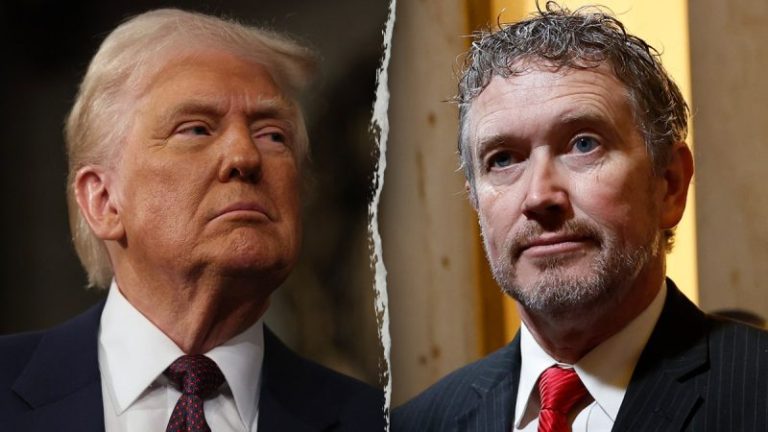
Rep. Thomas Massie is accusing President Donald Trump of falling short of his campaign pledges with his Saturday-night strikes on Iran.

‘I feel a bit misled,’ Massie told Fox News Digital in a Sunday afternoon interview. ‘I didn’t think he would let neocons determine his foreign policy and drag us into another war.’ 

‘Other people feel the same way, who supported Trump — I think the political danger to him is he induces a degree of apathy in the Republican base, and they fail to show up to keep us in the majority in the midterms.’

Massie, a conservative libertarian who has long been wary of foreign intervention by the U.S., has been one of the most vocal critics of the Trump administration’s recent operation.

U.S. stealth bombers struck three major nuclear enrichment facilities in Iran Saturday night. 

Trump and other GOP leaders hailed the operation as a victory, while even pro-Israel Democrats also offered rare praise.

‘Iran’s nuclear enrichment facilities have been completely and totally obliterated,’ Trump said Saturday night. ‘And Iran, the bully of the Middle East, must now make peace. If they do not, future attacks would be far greater and a lot easier.’ 

But progressives and the growing isolationist wing of the GOP blasted it as a needless escalation of tensions in the Middle East, at a time when Israel has been engaged in a weeklong conflict with Iran as well.

Top officials up to Trump himself have said the U.S. is not seeking war with Iran. 

Vice President JD Vance told NBC News’ ‘Meet The Press’ Sunday, ‘We’re not at war with Iran. We’re at war with Iran’s nuclear program.’

Massie told Fox News Digital those assurances were ‘ludicrous.’

‘He’s engaged in war. We are now a co-belligerent in a hot war between two countries,’ the Kentucky Republican said, arguing that conflict separates this action from Trump’s strikes that killed deceased Iranian General Qassem Soleimani.

‘You can’t say this isn’t an act of war, that it’s a strike outside of a war,’ he said. ‘This is inside, geographically and temporally, of a war.’

The Kentucky Republican notably has broken from Trump on several other occasions and has been one of the few GOP officials to openly clash with the president — particularly on government spending and foreign intervention.

He’s co-leading a resolution to prevent the ‘United States Armed Forces from unauthorized hostilities in the Islamic Republic of Iran’ alongside Rep. Ro Khanna, D-Calif., which they introduced days before the strikes. Sen. Tim Kaine, D-Va., is leading a Senate counterpart.

Massie noted that his team was looking at ways to get the resolution on the House floor — while conceding likely opposition from pro-Israel groups and congressional leaders.

‘We’re going to try to use the privileges of the House to get this to the floor,’ he said. 

‘People were saying, ‘Why did you introduce this resolution? The president’s not going to strike Iran.’ He has struck Iran. And now the naysayers said, ‘Oh, well, you don’t need this resolution.’

Secretary of Defense Pete Hegseth said during a Sunday morning press conference that the administration had properly notified Congress about the strikes within existing statute — even as progressives and some conservatives accuse him of bypassing a co-equal branch of government.

‘They were notified after the planes were safely out,’ Hegseth said. ‘We complied with the notification requirements of the War Powers Act.’ 

But Massie noted that that law also requires Congress to vote on U.S. military intervention in foreign countries within 60 days, if the conflict continues.

‘Even if they’re able to circumvent a vote on the resolution that Ro Khanna and I have introduced, we’re going to have to vote at some point if this becomes a protracted engagement,’ he said.

War powers resolutions can be called up for a House vote after 15 days of inaction by the relevant committee, after the legislation is referred to that committee.

When reached for comment, the White House pointed Fox News Digital to Trump’s most recent Truth Social post calling Massie a ‘grandstander’ and threatening to recruit a primary challenger against him.

‘Congressman Thomas Massie of Kentucky is not MAGA, even though he likes to say he is,’ Trump wrote. ‘Actually, MAGA doesn’t want him, doesn’t know him, and doesn’t respect him. He is a negative force who almost always Votes ‘NO,’ no matter how good something may be.’ 

‘MAGA should drop this pathetic LOSER, Tom Massie, like the plague! The good news is that we will have a wonderful American Patriot running against him in the Republican Primary, and I’ll be out in Kentucky campaigning really hard. MAGA is not about lazy, grandstanding, nonproductive politicians, of which Thomas Massie is definitely one. Thank you to our incredible military for the AMAZING job they did last night. It was really SPECIAL!!!’

Fox News Digital also reached out to Speaker Mike Johnson’s office for comment.

This post appeared first on FOX NEWS

President Donald Trump reported to the West Wing’s Situation Room multiple times across the past week as the conflict in Iran came to a rolling boil and the president ordered strikes on a trio of Iranian nuclear facilities Saturday evening in a surprise operation that took the world by surprise. 

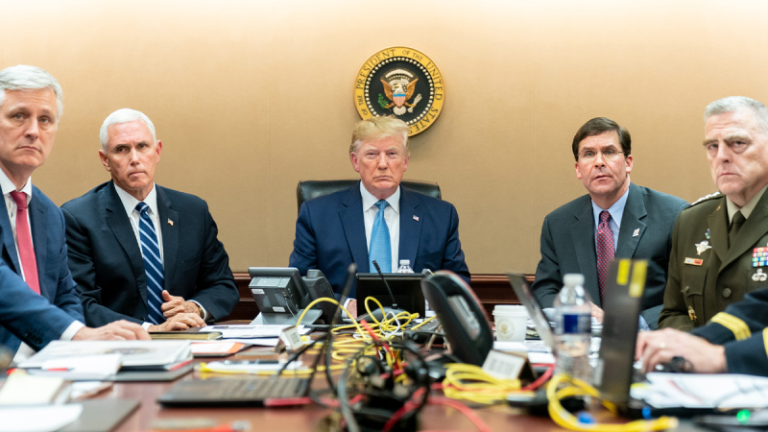
Trump returned to the Situation Room Saturday as the U.S. targeted Iran’s nuclear facilities, and was flanked by key officials such as Vice President JD Vance, Secretary of State Marco Rubio, White House Chief of Staff Susie Wiles, Chairman of the Joint Chiefs of Staff Gen. Dan Caine and CIA Director John Ratcliffe, according to photos from inside the room published late Saturday. Director of National Intelligence Tulsi Gabbard was also in the Situation Room, the White House confirmed to Fox Digital. 

Trump publicly announced the strikes in a Truth Social post Saturday evening, which came as a surprise to the world, as there were no media leaks or speculation such an attack was imminent. He then delivered an address to the nation on the strikes, lauding them as a ‘spectacular military success.’

‘A short time ago, the U.S. military carried out massive precision strikes on the three key nuclear facilities in the Iranian regime: Fordow, Natanz and Isfahan,’ he said. ‘Everybody heard those names for years as they built this horribly destructive enterprise. Our objective was the destruction of Iran’s nuclear enrichment capacity, and a stop to the nuclear threat posed by the world’s number one state sponsor of terror. Tonight, I can report to the world that the strikes were a spectacular military success.’ 

‘For 40 years, Iran has been saying, ‘Death to America. Death to Israel.’ They have been killing our people, blowing off their arms, blowing off their legs with roadside bombs,’ Trump continued. ‘That was their specialty. We lost over a thousand people, and hundreds of thousands throughout the Middle East and around the world have died as a direct result of their hate in particular.’

Ahead of the strikes, Trump floated Wednesday he might order an attack on Iran as negotiations on its nuclear program fell apart and the president made repeated trips to the Situation Room.

‘Yes, I may do it. I may not do it. I mean, nobody knows what I’m going to do. I can tell you this that Iran’s got a lot of trouble, and they want to negotiate,’ Trump told reporters Wednesday on the U.S. potentially striking Iran as it continues trading deadly strikes with Israel. ‘And I said, why didn’t you negotiate with me before all this death and destruction? Why didn’t you go? I said to people, why didn’t you negotiate with me two weeks ago? You could have done fine. You would have had a country. It’s very sad to watch this.’

Fox News Digital spoke to previous presidential administration officials — Fox News host and former Press Secretary Kayleigh McEnany, who served under the first Trump administration, and former National Security Advisor under the first Trump administration John Bolton, who also served as ambassador to the U.N. under President George W. Bush’s administration. They both conveyed the serious and historic tone the room and its meetings typically hold. 

The Situation Room is a high-tech 5,000-square-foot complex in the West Wing of the White House that includes multiple conference rooms. President John F. Kennedy commissioned the complex in 1961 following the failed Bay of Pigs invasion to overthrow the Castro regime in Cuba that same year, according to the National Archives. The complex was built in order to provide future presidents a dedicated area for crisis management, and was revamped in 2006 and renovated again in 2023. 

‘I often would sit there and think about the Osama bin Laden raid,’ McEnany told Fox News Digital in a phone interview Thursday morning. ‘This is where we saw our heroic Special Forces take out Osama bin Laden during the Obama administration. And I think we’re at another point where similar decisions are being made, and even bigger decisions that may change the course of history are happening right now in that room.’

Trump had spent hours in the Situation Room since June 16, including on Thursday morning, when he received an intelligence briefing with national security advisers, which followed a Situation Room meeting on Wednesday afternoon, another meeting on Tuesday afternoon with national security advisers and a Monday evening meeting upon his abrupt return from the G7 summit in Canada this week. 

Top national security officials, including  Hegseth, Gabbard, Vance, Rubio and Special Envoy to the Middle East Steve Witkoff, were among officials who joined Trump in the meetings as the administration weighs the spiraling conflict. 

Bolton explained to Fox Digital in a Thursday morning phone interview that two types of top-level meetings are held in the Situation Room. 

The first is known as a ‘principals meeting,’ he said, which includes Cabinet secretaries, such as the secretary of state and secretary of defense, and is chaired by the national security advisor — a role currently filled by Secretary of State Marco Rubio.

‘The principals committee usually meets to try and get everything sorted out so that they know what decisions the president is going to be confronted with,’ Bolton said. ‘They try and make sure all the information is pulled together so we can make an informed decision, set out the options they see, what the pros and cons are, and then have (the president) briefed.’ 

The second type of Situation Room meeting at the top level are official National Security Council meetings, which the president chairs. 

‘He chairs a full NSC meeting, and people review the information, update the situation, and the president can go back and forth with the advisors about asking questions, probing about the analysis, asking for more detail on something, kind of picking and choosing among the options, or suggesting new options,’ said Bolton, who served as Trump’s national security advisor between April 2018 and September 2019. 

‘And out of that could well come decisions,’ he added. 

McEnany served as the first Trump administration’s top spokeswoman at the height of the COVID-19 pandemic, when the Coronavirus Task Force operated out of the Situation Room as COVID-19 swept across the nation. 

‘A lot of critical decisions were made during the pandemic,’ she said. ‘It’s a humbling encounter. Every time you go in, you leave your phone at the door. You go in, I think it’s like 5,000 square feet, you’re sitting there, there’s clocks up from every country around the world, the different time zones. And you’re just sitting there as critical decisions are made. And, in my case, it was regarding the pandemic, and there’s back and forth, there’s deliberation, and these decisions are made with the president there, obviously.’ 

She continued that during the pandemic, the task force would spend hours in the Situation Room on a daily basis as the team fielded an onslaught of updates from across the country. Trump frequently received the top lines from the meetings and joined the Situation Room during key decisions amid the spread of the virus. 

‘When he was in there, absolutely, there’s a deference,’ she said, referring to how the tone of the room would change upon Trump’s arrival. ‘Yet, you had key officials who spoke up, who were not afraid to give their point of view to him. But I think there’s a recognition he’s the commander in chief.’

Press secretaries typically do not attend high-profile National Security Council meetings in the Situation Room, but have security clearances and can call into the room if needed, and are given updates from senior officials. 

McEnany added that press secretaries wouldn’t typically want to be in the room for high-stakes talks because ‘you don’t want your head filled with these sensitive deliberations of classified information’ when speaking with the media.

Bolton explained that for an issue such as Iran, the Situation Room meetings were likely restrictive and included top national security officials, such as the secretary of defense, director of national intelligence and the chairman of the Joint Chiefs of Staff. 

‘Sometimes it includes many more people, the Secretary of Homeland Security, the Commerce Secretary, things like that,’ he said. ‘But in with this kind of decision, it could be very restrictive, so maybe just – well, there is no national security advisor – but, Secretary of State, Secretary of Defense, Director of National Intelligence, CIA Director, Chairman of the Joint Chiefs of Staff, maybe the attorney general.’

Trump’s first national security advisor under the second administration, Mike Waltz, was removed from the role and nominated as the next U.S. ambassador to the UN in May, with Rubio taking on the additional role. The White House has also slashed NSC staffing since Trump took office, including after Rubio took the helm. 

Ahead of the surprise strikes on Saturday, White House press secretary Karoline Leavitt held a press conference on Thursday — the first since Israel launched preemptive strikes on Iran June 12 — and said the next two weeks would be a critical time period as U.S. officials map out next steps. 

‘I have a message directly from the president, and I quote: ‘Based on the fact that there’s a substantial chance of negotiations that may or may not take place with Iran in the near future. I will make my decision whether or not to go within the next two weeks.’ That’s a quote directly from the president,’ she said Thursday. 

Israel launched pre-emptive strikes on Iran June 12 after months of attempted and stalled nuclear negotiations and subsequent heightened concern that Iran was advancing its nuclear program. Prime Minister Benjamin Netanyahu declared soon afterward that the strikes were necessary to ‘roll back the Iranian threat to Israel’s very survival.’

He added that if Israel had not acted, ‘Iran could produce a nuclear weapon in a very short time.’ 

Dubbed ‘Operation Rising Lion,’ the strikes targeted Iran’s nuclear and missile infrastructure and killed a handful of senior Iranian military leaders.

Trump had repeatedly urged Iran to make a deal on its nuclear program, but the country pulled out of ongoing talks with the U.S. scheduled for Sunday in Oman. 

‘Iran should have signed the ‘deal’ I told them to sign,’ Trump posted to Truth Social Monday evening, when he abruptly left an ongoing G7 summit in Canada to better focus on the Israel–Iran conflict. ‘What a shame, and waste of human life. Simply stated, IRAN CAN NOT HAVE A NUCLEAR WEAPON. I said it over and over again! Everyone should immediately evacuate Tehran!’ 

Trump said during his address to the nation on Saturday evening following the strikes that Iran’s nuclear facilities had been ‘obliterated’ and that the country has been backed into a corner and ‘must now make peace.’

‘Iran’s nuclear enrichment facilities have been completely and totally obliterated,’ Trump said. ‘And Iran, the bully of the Middle East, must now make peace. If they do not. future attacks would be far greater and a lot easier.’ 

Leavitt added during Thursday’s briefing that Trump is the ‘peacemaker-in-chief,’ while noting that he is also not one to shy from flexing America’s strength. 

‘The president is always interested in a diplomatic solution to the problems in the global conflicts in this world. Again, he is a peacemaker in chief. He is the peace-through-strength president. And so, if there’s a chance for diplomacy, the president’s always going to grab it. But he’s not afraid to use strength as well,’ she said. 

Fox News Digital reached out to the White House for additional comment on the high-level talks but did not immediately receive a reply. 

This post appeared first on FOX NEWS

Tesla has inked its first deal to build a grid-scale battery power plant in China amid a strained trading relationship between Beijing and Washington.

The U.S. company posted on the Chinese social media service Weibo that the project would be the largest of its kind in China when completed.

Utility-scale battery energy storage systems help electricity grids keep supply and demand in balance. They are increasingly needed to bridge the supply-demand mismatch caused by intermittent energy sources such as solar and wind.

Chinese media outlet Yicai first reported that the deal, worth 4 billion yuan ($556 million), had been signed by Tesla, the local government of Shanghai and financing firm China Kangfu International Leasing, according to the Reuters news agency.

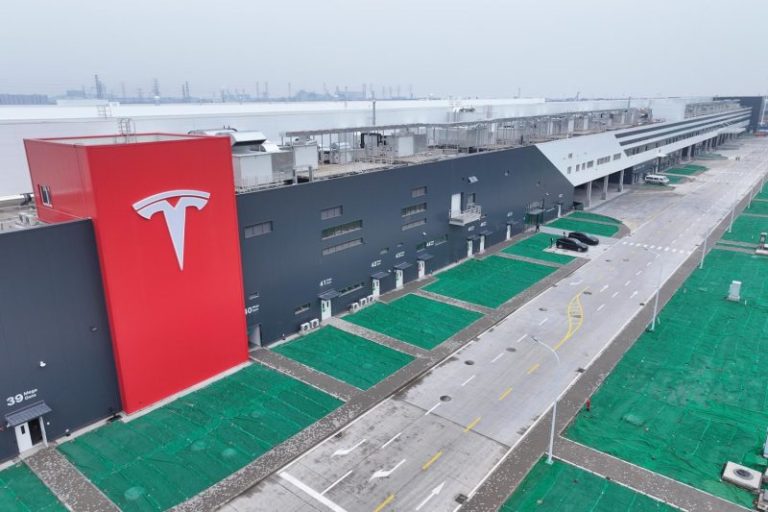
Tesla said its battery factory in Shanghai had produced more than 100 Megapacks — the battery designed for utility-scale deployment — in the first quarter of this year. One Megapack can provide up to 1 megawatt of power for four hours.

“The grid-side energy storage power station is a ‘smart regulator’ for urban electricity, which can flexibly adjust grid resources,” Tesla said on Weibo, according to a Google translation.

This would “effectively solve the pressure of urban power supply and ensure the safe, stable and efficient electricity demand of the city,” it added. “After completion, this project is expected to become the largest grid-side energy storage project in China.”

According to the company’s website, each Megapack retails for just under $1 million in the U.S. Pricing for China was unavailable.

The deal is significant for Tesla, as China’s CATL and carmaker BYD compete with similar products. The two Chinese companies have made significant inroads in battery development and manufacturing, with the former holding about 40% of the global market share.

CATL was also expected to supply battery cells and packs that are used in Tesla’s Megapacks, according to a Reuters news source.

Tesla’s deal with a Chinese local authority is also significant as it comes after U.S. President Donald Trump slapped tariffs on imports from China, straining the geopolitical relationship between the world’s two largest economies.

Tesla Chief Executive Elon Musk was also a close ally of President Trump during the initial stages of the trade war, further complicating the business outlook for U.S. automakers in China.

The demand for grid-scale battery installation, however, is significant in China. In May last year, Beijing set a new target to add nearly 5 gigawatts of battery-powered electricity supply by the end of 2025, bringing the total capacity to 40 gigawatts.

Tesla has also been exporting its Megapacks to Europe and Asia from its Shanghai plant to meet global demand.

Capacity for global battery energy storage systems rose 42 gigawatts in 2023, nearly doubling the total increase in capacity observed in the previous year, according to the International Energy Agency.

— CNBC’s Arjun Kharpal contributed reporting.

This post appeared first on NBC NEWS

Crude oil futures rose more than 1% on Thursday, after Prime Minister Benjamin Netanyahu ordered Israel’s military to intensify attacks against Iran.

U.S. crude oil was last up $1.36, or 1.81%, to $76.50 per barrel by 9:38 a.m. ET, while global benchmark Brent added $1.10, or 1.43%, to $77.80 per barrel. Prices have gained more than 11% over the seven days since Israel began pounding Iran’s nuclear and missile programs.

Follow along for live coverage

Netanyahu ordered Israel’s military to intensify attacks on “strategic targets” in Iran and “government targets” in the country’s capital, Tehran, Israel Defense Minister Israel Katz said in a social media post. The goal of the strikes is to “undermine the ayatollah’s regime,” Katz said.

Israel’s decision to escalate its military operation against the Islamic Republic comes after an Iranian missile reportedly struck a major hospital in the southern city of Beersheba. Katz threatened Iran’s leader Ayatollah Ali Khamenei in the wake of the hospital strike.

Katz said Israel’s military “has been instructed and knows that in order to achieve all of its goals, this man absolutely should not continue to exist,” referring to Khamenei.

President Donald Trump is still considering whether to order a U.S. strike on Iran’s nuclear program. “I may do it, I may not do it, I mean nobody knows what I’m going to do,” Trump told reporters Wednesday.

JPMorgan warned on Wednesday that regime change in a major oil producing country like Iran could have a profound impact on global oil prices. Iran is one of the top producers in OPEC.

“If history serves as a guide, further destabilization of Iran could lead to significantly higher oil prices sustained over extended periods,” Natasha Kaneva, head of global commodities research at JPMorgan, told clients in a note.

Supply losses in the wake of a regime change “are challenging to recover quickly, further supporting elevated prices,” Kaneva said.

This post appeared first on NBC NEWS

Apple has plans to make a folding iPhone starting next year, reliable analyst Ming-Chi Kuo said on Wednesday.

Kuo said Apple’s folding phone could have a display made by Samsung Display, which is planning to produce as many as eight million foldable panels for the device next year. However, other components haven’t been finalized, including the device’s hinge, Kuo wrote. He expects it to have “premium pricing.”

Kuo is an analyst for TF International Securities, and focuses on the Asian electronics supply chain and often discusses Apple products before they’re launched.

He wrote in a post on social media site X that Apple’s plans for the foldable iPhone aren’t locked in yet and are subject to change. Apple did not respond to CNBC’s request for comment.

Apple’s iPhone makes up over half of Apple’s business and remains an incredibly profitable product, accounting for $201 billion in sales in the company’s fiscal 2024. But iPhone revenue peaked in 2022, and Apple is constantly looking for ways to attract new customers and convince its current customers to upgrade to more expensive devices.

Several of Apple’s rivals, including Huawei and Samsung, have been releasing folding smartphones since 2019.

The devices promise the screen size of a tablet in a format that can be stored in pants pockets. But folding phones still have hardware issues, including creases in the display where it is folded.

Folding phones also have yet to prove they drive significant demand after the novelty wears off.

Research firm TrendForce said last year that only 1.5% of all smartphones sold can fold. Counterpoint, another research firm tracking smartphone sales, said earlier this year that the folding market only grew about 3% in 2024 and is expected to shrink in 2025.

This post appeared first on NBC NEWS

Kim Kardashian fans are going to have to wait a little longer for the highly anticipated NikeSKIMS line.

The activewear line will launch later this year instead of in the spring, like the companies had originally announced, because of production delays, according to a person familiar with the matter who requested anonymity to speak candidly. The person added that the delays are internal and not because of a supplier or shipping issue.

No date has been determined for the new launch date, the person added.

The person also said the relationship with Kardashian and the brand is still strong and that everyone is on the same page, but they want to make sure they take their time and get the products right.

Nike first announced the Skims partnership in February and said it would include apparel, footwear and accessories. Since then, Heidi O’Neill, one of the key leaders behind the partnership, has left the company.

New Nike CEO Elliott Hill has been betting big on the Skims brand as he looks to re-invigorate the company after recent declines in sales and its business. For Skims, which was last valued at $4 billion, the partnership with Nike brings a growth opportunity as it expands into athleisure.

Nike’s stock is down more than 20% year-to-date.

“The origin of NikeSKIMS is rooted in a desire to bring something new and unexpected to an industry that is craving something different, and to invite a new generation of women into fitness with disruptive product designed to meet their needs in both performance and style,” the company said about the line when they introduced it.

The news was first reported by Bloomberg.

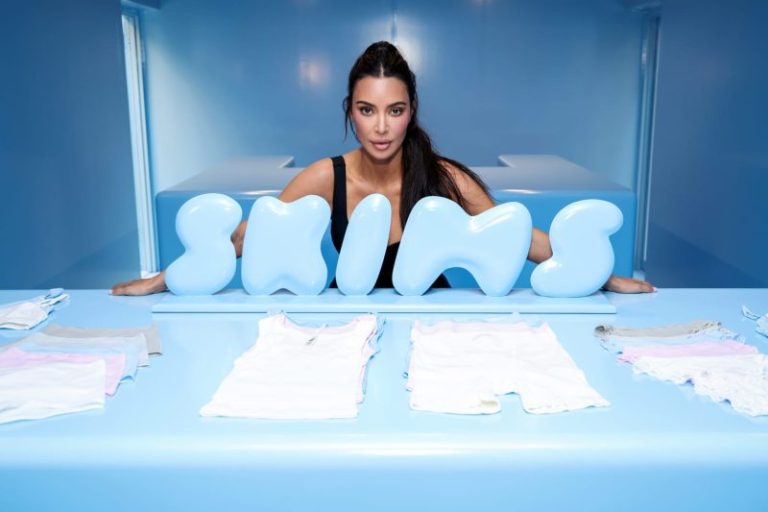
Nike and SKIMS collaboration featuring Kim Kardashian, Co-Founder and Chief Creative Officer, SKIMS.Courtesy: Nike Inc.

This post appeared first on NBC NEWS

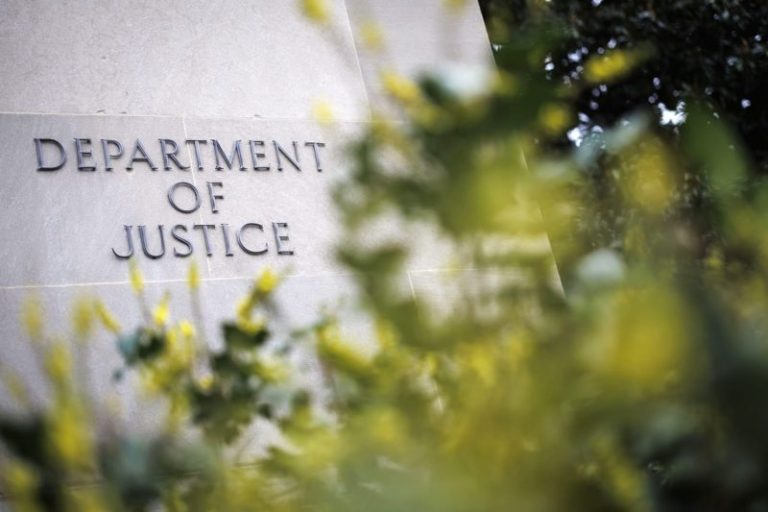
The Justice Department announced Wednesday the largest-ever U.S. seizure of cryptocurrency linked to so-called “pig butchering” scams that have cost victims billions globally.

Federal prosecutors filed a civil forfeiture action targeting more than $225 million in cryptocurrency traced to a sprawling web of fraudulent investment platforms. Victims were tricked into believing they were investing in legitimate crypto ventures, only to be scammed by criminal networks often operating overseas.

“This seizure of $225.3 million in funds linked to cryptocurrency investment scams marks the largest cryptocurrency seizure in U.S. Secret Service history,” said Shawn Bradstreet, special agent in charge of the U.S. Secret Service’s San Francisco Field Office, in a statement.

Authorities said the network was connected to at least 400 suspected victims worldwide, including dozens in the U.S. Crypto fraud was responsible for more than $5.8 billion in reported losses last year, according to FBI data.

The seized funds are now subject to forfeiture proceedings aimed at eventually returning money to victims.

The U.S. Secret Service and FBI used blockchain analysis and other tools to trace the cryptocurrency back to stolen assets. The DOJ credited Tether, the world’s largest stablecoin issuer, for assisting in the operation.

According to the complaint, the funds were linked to the theft and laundering of money from victims of cryptocurrency investment fraud schemes, commonly known as confidence scams that often involve romance.

The network relied on hundreds of thousands of transactions to obscure the origin of the funds, using sophisticated blockchain maneuvers to conceal the flow of stolen assets.

This post appeared first on NBC NEWS