Author

admin

Browsing

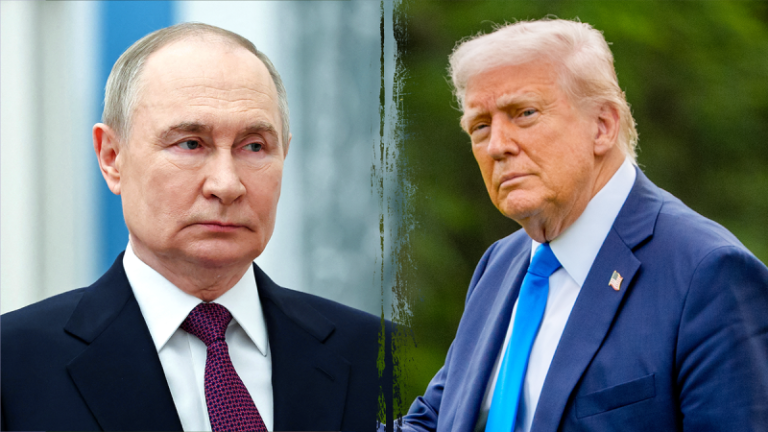
Ukrainian President Volodymyr Zelenskyy on Sunday thanked European leaders for backing his push to join this week’s U.S.–Russia summit, as Kyiv fears Washington and Moscow could strike a deal to end the war but in a way that undermines Ukraine’s sovereignty.

‘The end of the war must be fair, and I am grateful to everyone who stands with Ukraine and our people today for the sake of peace in Ukraine, which is defending the vital security interests of our European nations,’ Zelenskyy said.

The leaders of Britain, France, Germany, Italy, Poland, Finland and the European Commission said in a joint statement that any diplomatic solution brokered between President Donald Trump and Russian President Vladimir Putin must protect the security interests of Ukraine and Europe.

‘The U.S. has the power to force Russia to negotiate seriously,’ EU foreign policy chief Kaja Kallas told Reuters on Sunday. ‘Any deal between the U.S. and Russia must have Ukraine and the EU included, for it is a matter of Ukraine’s and the whole of Europe’s security,’ she added.

NATO Secretary General Mark Rutte said the upcoming summit ‘will be about testing Putin’ and will serve as a measure of how serious the Russian leader is about ‘bringing this terrible war to an end.’

Both the White House and the Kremlin have acknowledged Zelenskyy’s request to join the talks, though no formal invitation has been issued. Trump and Putin are scheduled to meet in Alaska on Aug. 15. If Zelenskyy were to take part, the meeting would mark the first between Putin and Zelenskyy since the start of Moscow’s war.

The meeting, which Trump announced in a Truth Social post on Friday, comes on the heels of Washington’s threats to impose steep tariffs on the Kremlin and its allies.

Trump has previously singled out countries like India and China—top buyers of discounted Russian crude — for undermining G7 price caps and weakening the impact of Western sanctions.

In response, bipartisan lawmakers introduced the Sanctioning Russia Act, which would impose a 500% tariff targeting the core of Russia’s economy — its oil and gas exports — if Moscow continues to resist peace efforts or escalates the conflict.

Meanwhile, a senior member of Putin’s inner circle warned that multiple countries are mounting ‘titanic efforts’ to undermine the upcoming summit between the Russian leader and Trump.

‘Undoubtedly, a number of countries interested in continuing the conflict will make titanic efforts to disrupt the planned meeting between President Putin and President Trump,’ wrote Russia’s investment envoy, Kirill Dmitriev, in a Telegram post on Saturday, referencing the Kremlin’s ongoing war in Ukraine.

While Dmitriev did not name specific countries, he warned that critics of the upcoming talks could seek to sabotage the summit through diplomatic maneuvers or disinformation through the media.

This post appeared first on FOX NEWS

China’s bid to strangle the world’s supply of heavy rare-earth elements was about to hit a wall. Vietnamese entrepreneur Luu Anh Tuan had lined up U.S. backing for a technology that could break Beijing’s chokehold on the critical minerals behind everything from smartphones to missile-guidance systems.

Tuan and his family had fled Vietnam for the U.S. to escape Beijing’s tightening grip over Hanoi, where the Chinese Communist Party exerts a heavy influence on domestic governance.

In July 2023, he signed a technology transfer agreement, seen by Fox News Digital, to bring the heavy rare earth separation technology he was using at his Vietnam-based company, Vietnam Rare Earth (VTRE) to VTRU Corporation, a company registered in Nevada. VTRE had also signed a series of memoranda of understanding (MOU) agreements with Western companies. 

‘He had a bad sense of insecurity about being in Vietnam. He was determined to transfer his technology to the US as quickly as possible,’ a source familiar with the rare earth industry, granted anonymity to speak without fear of retribution, told Fox News Digital. 

At the time, the world was entirely dependent on Chinese companies to separate their heavy rare earth metals.

‘China has been really working for the better part of over 20 years now on building this dominance,’ Gracelin Baskaran, director of the Critical Minerals Security Program at the Center for Strategic and International Studies, said in an interview. 

And while companies like U.S.-based MP Materials and Australia-based Lynas are in the process of developing their own separation technologies, China still controls up to 90% of the rare earths separation and refining capacity and over half of mining output. 

In October 2023, Tuan, then a U.S. permanent resident and green card holder in the process of becoming a citizen, was back in his Hanoi office when Vietnamese authorities raided the building, seizing all laptops and records. Seventeen employees were arrested, according to Tuan’s American business partner, Richard Dunham, and all but one, Do Hanh Huong, Tuan’s sister-in-law and COO of VTRE, have since been released.

The arrest came shortly after President Joe Biden visited Vietnam and signed cooperation agreements on rare earth minerals. 

In December, China banned rare earth extraction and separation, in what the industry saw as another effort to maintain its monopoly on the market. 

‘When China put in these restrictions, it really made countries like the U.S. and Australia realize that they didn’t actually even have the technical know-how to do it themselves,’ said Baskaran. 

‘The process itself is just very labor-intensive and very toxic,’ said Josh Birenbaum, a minerals expert at the Foundation for Defense of Democracies, adding China cornered the market through state subsidies and lax environmental concerns. 

While the U.S. has one major rare earths mine, MP Materials’ Mountain Pass, until this year, the company was exporting those rare earths to China for separation. The trade war and export controls that followed prompted the U.S. to stockpile its rare earths until separation capacity was up to scale at home. 

Tuan was accused of forging a value-added tax receipt while trading rare earths with Thai Duong Group, which operates a mine in the northern Vietnamese province of Yen Bai. 

VTRE had partnered with Australian mining companies Australian Strategic Materials and Blackstone Minerals Ltd. Tuan and Dunham had also met with officials from the state of Nevada and the Department of Energy to discuss plans to bring the separation technology to the U.S. through VTRE. Both were ‘enthusiastic’ about the proposal, which ultimately led to the signing of the transfer agreement, according to Dunham.

The arrest also came as Vietnam prepared to auction the Dong Pao mine. VTRE, backed by Western partners, was the only qualified bidder, according to Dunham.

This year, Tuan pleaded guilty in exchange for a lighter sentence. He’ll spend 16 years in prison with a fine of $10 million, but his advocates say he was ‘coerced.’ Huong was sentenced to six years in prison. 

‘We believe these charges to be manipulated, charges that were founded by Vietnamese state actors who have realigned themselves with China,’ said Dunham. ‘He was tortured to obtain a guilty plea.’ 

Fox News Digital could not independently verify this claim. The State Department documents credible reports of arbitrary arrests, torture and inhumane treatment by authorities, affecting both political detainees and others in custody.  Medical neglect and forced confessions are frequently reported.

Tuan’s advocates say the company he was purchasing ore from, Thai Duong, refused to provide invoices at the actual rate VTRE was paying for ore. It only provided invoices that claimed it was selling ore at a lower rate, reducing its taxable income. 

According to Dunham, Thai Duong refused to issue invoices reflecting the actual sale price to VTRE, allegedly to avoid environmental, natural resource and corporate income taxes, obligations that fell on Thai Duong, not Tuan.

Tuan was faced with a choice: accept the lower-rate invoices and make up the tax discrepancies with his own money or allow his state-funded minerals project, and in turn, his business, to collapse, per Dunham. 

Though Tuan was convicted on criminal charges, Dunham said the violation of accounting regulations lacks evidence of criminal intent. 

‘Even if he were guilty of an accounting issue, it’s not something that is criminally liable for what they’re trying to do. No place in Vietnam has there ever been an issue with this type of sentencing. It’s totally unheard of. Typically you would pay a fine and that’s it.’

‘He is the only individual outside of China that has a fully integrated rare earth company that’s from mining to metallization; in other words, from digging it out of the ground to the manufacturing of magnets.’

Tuan was also convicted of smuggling rare earth materials, but customs documents show clearance of 63 shipments of heavy rare earth oxide mixtures under tax code 2846, which corresponds to rare earth compounds. The court misclassified the exports under tax code 2530 (raw ore), to falsely claim they were illegal, according to Dunham. 

The Vietnamese Ministry of Public Security’s investigation concluded that customs officers who signed the 63 export declarations for VTRE verified Tuan’s compliance.

China’s crackdown since then has only accelerated. Minerals experts have been ordered to surrender their passports to prevent them from sharing any technology outside the country. Beijing has tightened controls on exports of rare earths, prompting major concerns from within the U.S. defense industry. While China allowed them to flow again during trade negotiations with the Trump administration, they remain banned for defense purposes. 

According to Dunham, VTRE has developed the technology to produce heavy rare earth oxides from xenotime, monazite and ion-absorption clay at a purity of 95% through a solvent extraction system. The technology was capable of processing diverse ore types and recycling NdFeB magnets.

Requests for assistance from the U.S. government have not been fruitful, according to Tuan’s advocates. 

Tuan is essentially cut off from his family and lawyers. He’s seen family members around five times since his arrest nearly two years ago. 

‘We are deeply concerned about his physical and mental well-being,’ the source said. ‘He is mentally resilient. He continues to believe the truth will eventually come to light.’

Fox News Digital has reached out to the White House, State Department, Chinese Embassy and Vietnamese Embassy for comment. 

This post appeared first on FOX NEWS

The White House, faced with an ongoing and growing tsunami of murderous attacks by Islamic State-allied groups against Christians in sub-Saharan Africa, is now working closely with the State Department to find ways to stop the killing.

Last week, the White House told Fox News Digital, ‘The Trump administration condemns in the strongest terms this horrific violence against Christians,’ after the U.N. reported 49 Christians were butchered with machetes on July 27 in and around a church in the Eastern Democratic Republic of Congo (DRC), while Catholic worshipers were praying for peace. Authorities say the killers were Islamist militants from the Allied Democratic Forces, also known as Islamic State DRC.

In neighboring Nigeria last month, 27 Christians were reported killed by Islamist Fulani tribesmen in the village of Bindi Ta-hoss, where residents are predominantly Christian. Eyewitness Solomon Sunday said, ‘I advised my family to seek refuge in the church, which seemed the safest place at the time. I lost my wife and second daughter in the attack; they were burned [alive] by Fulani militias.’ 

Local youth leader D’Young Mangut, who helped retrieve the bodies, added, ‘People are being killed like chickens, and nothing is being done.’

‘Such grisly proceedings have become commonplace in central Nigeria,’ John Eibner, president of Christian human rights organization Christian Solidarity International, told Fox News Digital. ‘It is part of a longstanding process of violent Islamization, of ethno-religious cleansing. Last Palm Sunday, 50 Christians were similarly slaughtered in nearby Bassa. Over 165 Christians have been killed in the last 4 months in Plateau State (one of Nigeria’s provinces) alone,’ he added.

‘Massacres of the sort that happen in central Nigeria are also happening with increasing frequency in predominately Christian places like Congo and Mozambique. There is no simple solution.’

The U.K. division of Open Doors, a global Christian charity which supports and speaks up for Christians persecuted for their faith, told Fox News Digital, ‘The crisis facing large areas of sub-Saharan Africa is hard to overstate. It is potentially existential for the future peace and stability of several nations in the region, not least Nigeria.’

‘Around 150,000 people have been killed in Jihadist violence over the last ten years. Over 16 million Christians have been driven from their homes and their land across the region.’

The Trump administration appears to be preparing for action. This week, a State Department spokesperson told Fox News Digital, ‘The Department of State is working closely with the White House to identify opportunities to further the cause of religious freedom around the world.’

The spokesperson added, ‘Religious freedom for all people worldwide is a moral and national security imperative and a U.S. foreign policy priority.  As President Trump has stated, the United States will vigorously promote this freedom.’

Nigeria is among the most dangerous places in the world to be a Christian. Recent Open Doors research shows that more Christians are killed for their faith in Nigeria than the rest of the world combined. Local bishop Wilfred Anagbe was threatened, and some 20 of his parishioners killed, after he spoke out against the killings to a Congressional Committee in March. 

This week, the bishop spoke exclusively to Fox News Digital, declaring that ‘the attackers form part of the larger Islamic- Jihadists family headed in Nigeria by the likes of Boko Haram, ISIS West Africa and similar groups. Nigeria has had a long history with Islamic fundamentalism. (But) the violence, killing and displacements without consequences suggests a new pattern where the Islamists have resorted to use their control of official government and apparatus to continue this jihad.

‘There is a strong tendency by fundamentalist Muslims in Nigeria to turn the whole or part of Nigeria (in)to an Islamic State.’

‘This is what the Nazis did to the Jews,’ David Onyillokwu Idah, director of the International Human Rights Commission, told Open Doors, adding, ‘It’s ethnic cleansing, step by step.’

John Samuel, legal expert for Open Doors, told Fox News Digital that where the Islamist groups are operating, if Christians gather for ‘a prayer meeting, let’s say, or go to a church, (it) could be a one-way ticket, or something very deadly.’

‘If you’re a Christian, you either convert to Islam or die.’

Samuel gives an example of a Nigerian Christian who was ambushed by Boko Haram fighters. According to his widow, ‘he was asked to deny his faith and say an Islamic prayer. He refused and he was killed instantly. You are a target. You are a target by the mere fact that you identify with Christ.’

Across the region, it’s claimed the Islamist attackers want the land belonging to the Christians they attack. Lawyer Jabez Musa fights in court in Nigeria to get this land back. He told Fox News Digital the displaced Christians ‘want their land restored back to them for their livelihood. The cry is always I have been dispossessed of what belongs to me, my house, the food, foodstuff, the land. As we speak, over 64 communities in Plateau State have been dispossessed and taken over by the Fulani militants.’

‘Only Christians are targeted, they’re killed, displaced, and their lands are taken over.’

Henrietta Blyth, CEO of Open Doors U.K. and Ireland, told Fox News Digital that ‘African governments must urgently provide three things: justice – because very few of these perpetrators are ever held to account, and this impunity emboldens them.  Restoration – people want their lives back, an opportunity to rebuild their homes, send their kids to school, have a future together.  And protection – the state must protect them from these attacks.  The security forces need to get out of their barracks and be deployed around the most vulnerable.

‘For too long, nobody has been talking about the horrific wholesale slaughter of Christians and moderate Muslims in Africa. The Western world needs to wake up and be outraged,’ she said.

One grieving relative told reporters after the massacre in Nigeria’s Bindi Ta-hoss this past month, ‘We are tired of condolences and statements. What we need is real security, not sympathy.’ 

Fox News Digital reached out to the governments of both Nigeria and the DRC but received no response.

Lawyer Jabez Musa pleaded ‘I urge the American government, especially President Trump personally … to come to the help of Christians.’

This post appeared first on FOX NEWS

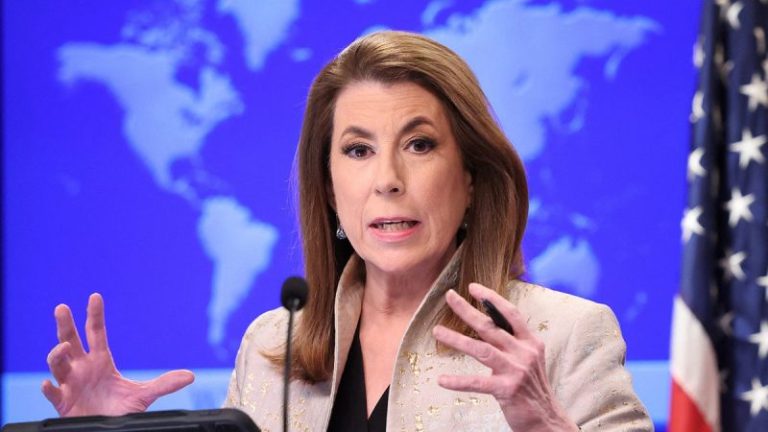
President Donald Trump said Saturday he was nominating U.S. State Department spokeswoman Tammy Bruce to become the next deputy representative to the United Nations. 

‘I am pleased to announce that I am nominating Tammy Bruce, a Great Patriot, Television Personality, and Bestselling Author, as our next Deputy Representative of the United States to the United Nations, with the rank of Ambassador,’ the president wrote on social media.

‘Since the beginning of my Second Term, Tammy has been serving with distinction as Spokesperson of the State Department, where she did a fantastic job. Tammy Bruce will represent our Country brilliantly at the United Nations. Congratulations Tammy!’

Bruce has defended the Trump administration’s immigration policies and its position on the wars in Ukraine and Gaza. 

Last week, she warned Russia on Fox News that it needs to take Trump ‘seriously’ on his deadline for a ceasefire. 

Bruce has been with the administration since Trump took office. 

Before Trump tapped her as State Department spokesperson, she was a longtime conservative commentator and contributor to Fox News. 

When Trump chose her for the State Department, he described her as a ‘highly respected political analyst who understood the power and importance of ‘MAGA’ early on.’

‘As one of the longest-serving News Contributors, Tammy has brought TRUTH to the American People for over two decades,’ Trump added. ‘I know she will bring that same strength of conviction and fearless spirit to her new position as State Department Spokesperson.’ 

Dorothy Shea, who served as deputy ambassador last year, is the current acting ambassador. 

Trump’s nominee for U.N. ambassador, Mike Waltz, is still awaiting confirmation.

This post appeared first on FOX NEWS
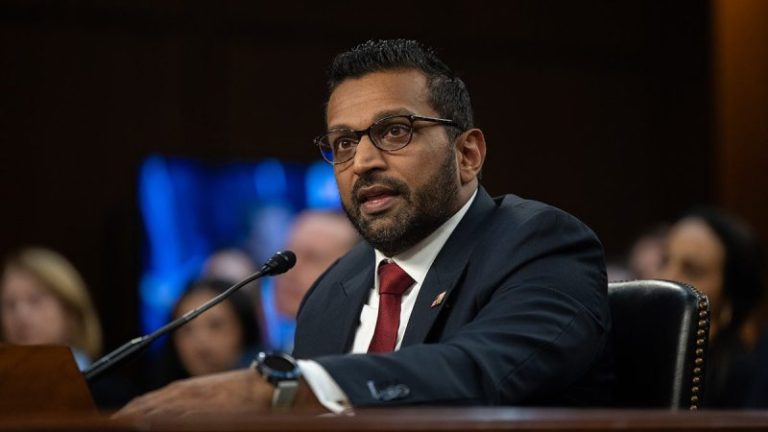
FBI Director Kash Patel took to social media on Saturday to celebrate the bureau’s successes in the first 200 days of the Trump administration. 

‘200 Days of Trump Admin, From Jan 20 to Present: FBI has arrested over 1,600 people for violent crimes against children, to include 270 arrests for human trafficking,’ Patel wrote on his official X account.

Patel added that 1,500 kilos of fentanyl – ‘enough lethal doses to kill 113,850,000 Americans’ – has also been seized in that time, which he said was a 25% increase from the same time last year, and the ‘most ever.’

He added, ‘We look forward to working with our @SecDef and DoD partners to getting after it even more, thanks @realDonaldTrump for the new authorities.’ 

In a third post, Patel said the FBI had identified and located 4,000 child victims. 

‘FBI investigations targeting Foreign Terrorist Organizations has resulted in 1,000 arrests of those wanting to harm our nation. Seized 6,300 Kilos of methamphetamines = lives saved,’ he wrote, adding the hashtag ‘#SummerHeat.’

The White House also posted an article on X on Saturday, touting ‘200 Days of American Renewal,’ including ‘historic border security to infrastructure revitalization.’ 

Deputy FBI Director Dan Bongino, who had considered resigning over the administration’s handling of the Epstein files earlier this summer, according to a source, reposted Patel’s post, writing, ‘This isn’t even the beginning of the beginning. More coming.’ 

Many in MAGA world have also been frustrated with the lack of transparency over the Epstein files. 

The U.S. Department of Justice has denied the existence of an Epstein client list, and President Trump defended Attorney General Pam Bondi last month, saying ‘she’s really done a very good job.’ 

This post appeared first on FOX NEWS
As Japan marks the 80th anniversary of the atomic bombings, the mayor of Nagasaki is warning that the world could see the same kind of devastating attack again.

Approximately 2,600 people, including representatives from 90 countries, attended the memorial event on Saturday at Nagasaki Peace Park, according to the Associated Press. At 11:02 a.m., the exact time the bomb exploded over the city, the attendees held a moment of silence. Nagasaki Mayor Shiro Suzuki, whose parents survived the 1945 attack, addressed the crowd and called for global action against nuclear weapons.

‘Conflicts around the world are intensifying in a vicious cycle of confrontation and fragmentation,’ Suzuki told a crowd on Saturday, according to a translation by The Mainichi. ‘If we continue on this trajectory, we will end up thrusting ourselves into a nuclear war. This existential crisis of humanity has become imminent to each and every one of us living on Earth.’

Mayors for Peace, which brings together mayors and city leaders from across the globe, is holding its 11th General Conference in Nagasaki this weekend as the city mourns the tragic day. The organization’s aim is to abolish nuclear weapons, a point Suzuki emphasized in his remarks.

‘In order to make Nagasaki the last atomic bombing site, it is essential to show a specific course of action for achieving the abolition of nuclear weapons. Procrastination can no longer be tolerated,’ Suzuki said, according to The Mainichi. 

The mayor also noted that the 2026 Review Conference of the Parties to the Treaty on the Non-Proliferation of Nuclear Weapons (NPT) ‘will represent a crucial moment capable of swaying the fate of humanity.’

Every five years, world leaders meet to review the provisions of the NPT, which was opened for signature in 1968 and entered into force in 1970, 25 years after the bombings of Hiroshima and Nagasaki.

The U.S. dropped two atomic bombs on Japan three days apart. The first was dropped on Hiroshima on Aug. 6, 1945, and the second was dropped on Nagasaki three days later, on Aug. 9. The bombs decimated both cities, leading to Japan’s surrender on Aug. 15, 1945, and later the end of World War II.

A bomb nicknamed ‘Little Boy,’ weighing approximately 9,000 pounds and producing an explosive force equivalent to 20,000 tons of TNT, detonated 1,800 feet over Hiroshima, causing massive devastation. ‘Fat Man,’ the bomb dropped on Nagasaki, weighed 10,000 pounds and detonated at approximately the same altitude as ‘Little Boy.’

‘I would like to express my deepest condolences for the lives claimed by the atomic bombings, and to all of the victims of war,’ Suzuki said, according to The Mainichi. ‘In marking 80 years from the atomic bombing, Nagasaki has resolved to continue our duty to relay, both inside Japan and overseas, the memories of the bombing, which are a common heritage to all humanity and should be passed down for generations throughout the world.’

He concluded with a declaration, which was also translated by The Mainichi: ‘I hereby declare that in order to make Nagasaki the last atomic bombing site now and forever, we will go hand-in-hand with global citizens and devote our utmost efforts towards the abolition of nuclear weapons and the realization of everlasting world peace.’

This post appeared first on FOX NEWS

Statistics Canada released July’s labor force survey on Friday (August 8). The data shows that the Canadian economy shed 41,000 workers during the month and registered a 0.2 percent decline in the employment rate to 60.7 percent.

However, the unemployment rate was unchanged at 6.9 percent.

The most significant segment for the decline was among youth aged 15 to 24, with a drop of 34,000. That pushed the youth unemployment rate up to 14.6 percent, its highest rate since September 2010 apart from the pandemic.

In terms of industry, construction saw the steepest decline as it lost 22,000 workers during the month.

South of the border, the US imposed a 39 percent tariff on imports of 1 kilogram and 100 ounce gold bars from Switzerland.

In a ruling posted to US Customs and Border Protection’s (CBP) Customs Rulings Online Search System on Friday, the CBP states that reciprocal tariffs will be applied to these bars. Switzerland is the world’s biggest refining and transit hub, and imports of the 1 kilogram and 100 ounce bars are typically used to back transactions on the COMEX.

The ruling caused some uncertainty among gold traders, who paused imports of the precious metal to the US and pushed the price for December contracts on the COMEX to a high of US$3,534 per ounce in morning trading.

While the price has since retreated, it’s still up more than 1 percent on the day at US$3,491.

The gold spot price is also up significantly this week, gaining 3.26 percent by 4:00 p.m. EDT on Friday to US$3,398.42. Silver was up even more; it rose 4.58 percent to US$38.38 and is closing in on its recent highs.

Markets and commodities react

In Canada, equity markets were in positive territory this week.

The S&P/TSX Composite Index (INDEXTSI:OSPTX) posted steady gains through the week, moving up 2.16 percent to close at 27,758.68 on Friday. The S&P/TSX Venture Composite Index (INDEXTSI:JX) registered a 2.71 percent rise to 787.22. Meanwhile, the CSE Composite Index (CSE:CSECOMP) soared, gaining 8.99 percent to 142.78.

US equity markets were broadly down on Friday on new US tariffs and poor jobs data. The S&P 500 (INDEXSP:INX) rose 1.62 percent to 6,389.44, the Nasdaq 100 (INDEXNASDAQ:NDX) jumped 2.86 percent to 23,603.05 and the Dow Jones Industrial Average (INDEXDJX:.DJI) gained 0.90 percent to 44,175.60.

In base metals, copper prices fell as low as US$4.41 per pound on Tuesday (August 5), but recovered to finish the week with a 0.67 percent gain to US$4.52.

Top Canadian mining stocks this week

How did mining stocks perform against this backdrop?

Take a look at this week’s five best-performing Canadian mining stocks below.

Stock data for this article was retrieved at 4:00 p.m. EDT on Friday using TradingView’s stock screener. Only companies trading on the TSX, TSXV and CSE with market capitalizations greater than C$10 million are included. Mineral companies within the non-energy minerals, energy minerals, process industry and producer manufacturing sectors were considered.

1. Kirkland Lake Discoveries (TSXV:KLDC)

Weekly gain: 88.24 percent
Market cap: C$15.2 million
Share price: C$0.16

Kirkland Lake Discoveries is a gold-copper explorer focused on projects in its district-scale land package located in the Kirkland Lake area of Ontario, Canada. Its holdings span approximately 38,000 hectares in the Abitibi greenstone belt, an area that holds past-producing gold and copper mines. Its land is broadly divided into KL West and KL East, which contain the Goodfish-Kirana and Lucky Strike gold projects, respectively, among others.

On April 29, the company entered a mining option agreement with Val-d’Or Mining (TSXV:VZZ) to acquire the Winnie Lake and Amikougami properties, as well as mining claim purchase agreements with two vendors to acquire further claims around the Winnie Lake Pluton. The properties expand KL West’s southern portion.

On Wednesday (August 6), the company initiated an inaugural diamond drill program at KL West and Winnie Lake. The program is designed to follow up on historic drill results as well as recent surface exploration.

About 2,000 meters of drilling are planned, and the company expects it to be completed by the end of August. Kirkland stated that assays will be released as they are received and interpreted.

2. Avanti Helium (TSXV:AVN)

Weekly gain: 78.95 percent
Market cap: C$15.2 million
Share price: C$0.17

Avanti Helium is an explorer and developer focused on advancing helium assets in Canada and the US toward production. Its Greater Knappen projects are composed of several areas in Southern Alberta, Canada, and Northern Montana, US. The combined land packages cover approximately 74,000 acres with multiple targets.

According to its project page, Avanti has drilled three exploration wells in Montana, with two testing for a combined 18.5 million cubic feet per day gas rate with 1.1 percent helium concentration.

The company’s Leader project consists of a combined land package of 91,000 acres in Southern Saskatchewan. The surrounding region has seen 84 wells drilled by other companies since 2016, and as of September 2023, it hosted approximately 25 wells producing 450,000 cubic feet of helium per day.

Avanti gained this week after it announced on Thursday (August 7) that it has signed a multi-year offtake agreement with a global industrial gas supplier. The buyer has committed to a minimum monthly volume from Avanti’s Sweetgrass helium recovery unit in Montana, for 33 percent of the initial plant output and 25 percent following a planned expansion.

3. Discovery Energy Metals (CSE:DEMC)

Weekly gain: 68.57 percent
Market cap: C$17.08 million
Share price: C$0.295

Discovery Energy Metals is a lithium explorer working to advance interests in Québec and BC, Canada. Most of the company’s land holdings are in Québec, where it has interests in over 225,000 hectares.

On March 20, the company released assays from a fall 2024 exploration program focused on its Eeyou Istchee James Bay properties. It reported values including 82 parts per million tantalum pentoxide and 101 parts per million cesium oxide at Cirrus East, and 0.66 g/t gold and 0.56 percent zinc at its Mantle property.

Discovery announced on June 25 that it had completed the acquisition of eight mineral claims over 5,283 hectares at the Crystal Lake property in BC. The company acquired the property in a deal with Zimtu Capital (TSXV:ZC).

Early stage exploration work at the property was carried out between 2009 and 2010, and included a magnetic survey and grab samples, which returned up to 0.7 percent copper with elevated gold and silver.

The most recent news from Discovery came on July 15, when it announced a non-brokered private placement for up to 10 million units for gross proceeds of up to C$1 million.

4. Abcourt Mines (TSXV:ABI)

Weekly gain: 66.67 percent
Market cap: C$45.53 million
Share price: C$0.075

Abcourt Mines is a gold exploration and development company focused on operations at its Sleeping Giant mine in the Abitibi region of Québec. The property consists of four mining leases covering an area of 458 hectares and 69 claims. The site hosts an underground mine along with a mill capable of processing 750 metric tons per day.

A July 2023 preliminary economic assessment demonstrates an after-tax net present value of US$77.5 million with an internal rate of return of 33.3 percent over a payback period of 2.2 years.

The company has been working on restarting mining operations at the site throughout 2025.

On Thursday, it provided an update on progress from Sleeping Giant, stating that teams had begun the rehabilitation of underground openings, as well as preparations at the mill for the first stope at the end of July. It also said it had built a surface stockpile of approximately 1,000 metric tons of ore and started work on a tailings facility. Once complete, pulp storage will be good until 2032 at the proposed mining rate of 100,000 to 125,000 metric tons per year.

5. Scorpio Gold (TSXV:SGN)

Weekly gain: 64.71 percent
Market cap: C$60.93 million
Share price: C$0.28

Scorpio Gold is an exploration and development company focused on the advancement of its Manhattan District in the Walker Lane Trend in Nevada, US. The district is composed of the 6,071 acre Manhattan project, which hosts two past-producing open-pit mines, Reliance and Manhattan, as well as the fully permitted Goldwedge underground mine.

Scorpio acquired the project from Kinross Gold (TSX:K,NYSE:KGC) in 2021.

The most recent update from the project came on June 19, when Scorpio announced it was commencing a Phase 1 diamond drill program. The focus is on targets at the Gap zone, the Zanzibar trend and Mustang Hill. Up to 3,400 meters have been planned, with results contributing to an initial mineral resource estimate, which is expected in Q3.

FAQs for Canadian mining stocks

What is the difference between the TSX and TSXV?

The TSX, or Toronto Stock Exchange, is used by senior companies with larger market caps, and the TSXV, or TSX Venture Exchange, is used by smaller-cap companies. Companies listed on the TSXV can graduate to the senior exchange.

How many mining companies are listed on the TSX and TSXV?

As of February 2025, there were 1,572 companies listed on the TSXV, 905 of which were mining companies. Comparatively, the TSX was home to 1,859 companies, with 181 of those being mining companies.

Together the TSX and TSXV host around 40 percent of the world’s public mining companies.

How much does it cost to list on the TSXV?

There are a variety of different fees that companies must pay to list on the TSXV, and according to the exchange, they can vary based on the transaction’s nature and complexity. The listing fee alone will most likely cost between C$10,000 to C$70,000. Accounting and auditing fees could rack up between C$25,000 and C$100,000, while legal fees are expected to be over C$75,000 and an underwriters’ commission may hit up to 12 percent.

The exchange lists a handful of other fees and expenses companies can expect, including but not limited to security commission and transfer agency fees, investor relations costs and director and officer liability insurance.

These are all just for the initial listing, of course. There are ongoing expenses once companies are trading, such as sustaining fees and additional listing fees, plus the costs associated with filing regular reports.

How do you trade on the TSXV?

Investors can trade on the TSXV the way they would trade stocks on any exchange. This means they can use a stock broker or an individual investment account to buy and sell shares of TSXV-listed companies during the exchange’s trading hours.

Article by Dean Belder; FAQs by Lauren Kelly.

Securities Disclosure: I, Dean Belder, hold no direct investment interest in any company mentioned in this article.

Securities Disclosure: I, Lauren Kelly, hold no direct investment interest in any company mentioned in this article.

This post appeared first on investingnews.com

By Darren Brady Nelson

One of the underrated, and easily dismissed, stories from the first 100 days of the second Donald J. Trump presidency was in March 2025, when the president said: “We’re actually going to Fort Knox to see if the gold is there, because maybe somebody stole the gold. Tonnes of gold.”

Two developments have happened since. First was his May 2025 executive order “Restoring Gold Standard Science.” Second was his signing the July 2025 GENIUS Act. The former could be a word teaser for “Restoring The Gold Standard.” The latter seems to be a step in that direction.

Source: The White House.

Fort Knox gold

The US Department of the Treasury’s Weekly Release of US Foreign Exchange Reserves shows the levels of various official assets, including gold. It reported gold of 261.499 million fine troy ounces. An estimated 56 percent of that is in Fort Knox, with the remainder in West Point, Denver and New York.

The Federal Reserve Act 1913 still gives the power to the US Federal Reserve: “To deal in gold coin and bullion at home or abroad, to make loans thereon, exchange Federal reserve notes for gold, gold coin, or gold certificates, and to contract for loans of gold coin or bullion (and much more).”

The question of how much gold is in Fort Knox and elsewhere is not only important for the purposes of DOGE, but even more so in the case of a potential return to a gold standard. And such an incredible return is not mere speculation, but is due to some credible public comments.

Source: Visual Capitalist.

Trump gold standard

Private citizen Trump commented, as a presidential candidate, about a possible return to a gold standard in June 2016, when he said: “Bringing back the gold standard would be very hard to do, but, boy, would it be wonderful. We’d have a standard on which to base our money.”

More recently, Steve Bannon stated in December 2023: “Nixon took us off the gold standard … over a weekend … in an emergency executive order. That is going to be reviewed strongly in the second Trump term … getting rid of the Fed, yeah, maybe you start with converting back into gold.”

Economist Judy Shelton has an October 2024 book as a guide: “When the US dollar is backed by gold, America prospers, and so does the rest of the world. But this is no curmudgeonly demand to return to the gold standard of yore; (but) gold for a new international monetary order.”

Some sort of gold standard might dovetail with a new global trading system, as outlined in the “Mar-a-Largo Accord” of November 2024, as well as with the GENIUS Act of July 2025, which: “establishes a regulatory framework for payment stablecoins (must redeem for a fixed value).”

Shadow gold price I

Shadow pricing is a method long used in cost benefit analysis that adjusts prices from, or creates prices for, failed or non-existent markets. The shadow price of gold (SPoG) in August 2018 was defined as: “The linkage between the US monetary base and the implied price of gold.”

The In Gold We Trust (IGWT) annual report from May 2025 uses a similar definition: “The theoretical gold price in the event of full gold backing of the base money supply.” The report adds: “The reciprocal value of the (SPoG) gives the degree of coverage of the monetary base.”

The reciprocal SPoG, based on current market prices, is the “Gold Coverage Ratio” (GCR). The report explains further that: “Currently, the (GCR) in the US is only 14.5%. To put it crudely: Only 14.5 cents of every US dollar currently consists of gold, the remaining 85.5% is air.”

Gold backing of monetary base, in percent, 01/1920 to 03/2025.

Source: Incrementum.

Shadow gold price II

According to IGWT: “In the gold bull market of the 2000s, (GCR) tripled from 10.8% to 29.7%. A comparable (GCR) today would only arise if the gold price were to almost double to over $6,000. The record value of 131% from 1980 would correspond to a gold price of around $30,000.”

IGWT goes beyond just $USD: “The international shadow gold price (ISPoG) shows how high the gold price would have to rise if the money supply (M0 or M2) of the leading currency areas were covered by the central banks’ gold reserves in proportion to their share of global GDP.”

“This view impressively reveals the extent of the monetary expansion: With an — admittedly purely theoretical — 100% coverage of the broad money supply M2, the gold price (per ounce) would be over $231,000; even with a moderate 25% coverage, it would be around $58,000.”

International shadow gold price at different gold coverage levels (log), in USD, 12/2024.

Source: Incrementum.

Shadow gold price III

In May 2024, James Rickards predicted: “My latest forecast is that gold may actually exceed $27,000. I don’t say that to get attention or to shock people. It’s not a guess; it’s the result of rigorous analysis.”

This was based on a similar approach to SPoG and GCR that he called “the implied non-deflationary price of gold under a new gold standard (iPoG).” Rickards calculated a gold price, based on iPoG, of $27,533 per ounce.”

He divided US$7.2 trillion of M1 money supply by 261.5 million of gold troy ounces (or 8,133 metric tonnes) in official US reserves estimated by the World Gold Council. The M1 figure is 40 percent of US$17.9 trillion as: “this percentage was the legal requirement for the US Federal Reserve from 1913 to 1946.”

In summary, the sort of gold prices that might be reached under a return to a gold standard, using the shadow price of gold approach, range from lows of US$6,000 to highs of US$231,000, with US$27,533, US$30,000 and US$58,000 in between.

Whatever the gold price ends up at, it would be a once-in-a-lifetime windfall for those holding gold at that time. After that, gold would cease to be an investment, as it has been since 1971 and 1974. Because gold would be actual money once again, and it would be sound money at that.

About Darren Brady Nelson

Darren Brady Nelson is chief economist with Fisher Liberty Gold and policy advisor to The Heartland Institute. He previously was economic advisor to Australian Senator Malcolm Roberts. He authored the Ten Principles of Regulation and Reform, and the CPI-X approach to budget cuts.

Click here to read Goldenomics 101: Follow the Money.

This post appeared first on investingnews.com

(TheNewswire)

Vancouver, British Columbia, August 8th, 2025 TheNewswire Prismo Metals Inc. (‘ Prismo ‘ or the ‘ Company ‘) (CSE: PRIZ,OTC:PMOMF) (OTCQB: PMOMF) is pleased to announce that further to its news releases dated July 3, 2025, July 18, 2025 and July 31, 2025, the Company has proceeded with an upsized closing of its previously announced non-brokered private placement (the ‘Private Placement’ ) of units of the Company (‘ Units ‘) at an issue price of $0.06 per Unit (the ‘ Third Closing ‘). The closing was increased from 6,000,000 Units to the issuance of 6,425,000 Units for gross proceeds of $385,500.

Each Unit consists of one common share of the Company (a ‘ Share ‘) and one-half of one common share purchase warrant of the Company (each whole warrant, a ‘ Warrant ‘). Each Warrant entitles the holder to purchase one Share for a period of twenty-four (24) months from the date of issue at an exercise price of $0.10.

‘In the past few weeks, we have raised a total of $1,077,500 in gross proceeds reflecting investors’ interest in our recently optioned silver projects in Arizona, the historical high-grade Silver King and Ripsey mines,’ said Alain Lambert, CEO. ‘Exploration at Silver King is currently underway and our Chief Exploration Officer, Dr. Craig Gibson, has put in place a comprehensive first year exploration plan which includes a phase one drill program of a minimum of 1,000 meters.’

Dr. Craig Gibson, Prismo’s Chief Exploration Officer said: ‘The team has arrived on site, and we have begun a detailed mapping and sampling program at both projects at surface exposures and in accessible underground workings. A drill program is planned for Silver King, with about 1,000 metres initially. The Silver King drill program is designed to test the mineralized body at four elevations, as well as lateral to the pipelike body. Dewatering of the Silver King shaft to gain access to the upper levels may also be undertaken as submersible pumps are in place.’

The Company previously announced a first closing of the Private Placement on July 18, 2025 for aggregate gross proceeds of $575,000 and a second closing of the Private Placement on July 31, 2025 for aggregate gross proceeds of $ 117,000 . Due to strong investor demand, the Company has now raised aggregate gross proceeds of $1,077,500. The Company intends to use the aggregate proceeds from the Private Placement for exploration at the Company’s Silver King project as well as for working capital and general corporate purposes. There may be circumstances, however, where for sound business reasons, a reallocation of funds may be necessary.

Prismo also announces that further to its news release dated July 31, 2025, it has settled the debt settlement agreement (the ‘ Agreement ‘) with a creditor of the Company (the ‘ Creditor ‘) pursuant to which the Company issued to the Creditor, and the Creditor accepted, an aggregate of 1,375,000 common shares of the Company (each, a ‘ Settlement Share ‘) at a price of $0.06 per Settlement Share in full and final settlement of accrued and previously outstanding indebtedness owing to the Creditor in the aggregate amount of US $60,000 (CA $82,500) (the ‘ Debt Settlement ‘). The Creditor is one of the original optionors of the Palos Verdes silver project in Mexico, and the Debt Settlement was the final payment owed to the Creditor.

‘The Palos Verdes project remains an important asset for Prismo Metals,’ said Alain Lambert, CEO. ‘We continue to monitor Vizsla Silver’s exploration activities in the Panuco district and how it might impact our exploration plan at Palos Verdes. Mr. Lambert noted: ‘In their July 29 th , 2025 news release , Vizsla Silver stated: Notable targets to be tested in the central, and east area of the district with potential to host similar mineral resources to that outlined in Project #1 in the west include: Jesusita-Palos Verdes is a northeast trending vein target in the east area of the district. Positive drill results and alteration-based interpretations done by Prismo Metals, combined with significant silver anomalies on surface and extensive vein outcrops warrant additional drilling at depth.

The Palos Verdes project is located in the historic Panuco-Copala silver-gold district in southern Sinaloa, Mexico, approximately 65 kilometers NE of Mazatlán, Sinaloa, in the Municipality of Concordia. The Palos Verdes concession (claim) covers 700 meters of strike length of the Palos Verdes vein, a member of the north-easterly trending vein family located in the eastern part of the district outside of the area of modern exploration. The project is surrounded on three sides by Vizsla Silver Corp. (TSE: VZLA).

Shallow drilling (

In connection with the Third Closing, the Company issued an aggregate of 288,900 finder’s warrants (the ‘Finder’s Warrants’ ) and paid finder’s commissions of $17,334.00 to a qualified finder. Each Finder’s Warrant is exercisable for a period of 24 months from the date of issuance to purchase one Share at a price of $0.10.

All securities issued or issuable in connection with the Private Placement and the Debt Settlement are subject to a four-month hold period from the closing date under applicable Canadian securities laws, in addition to such other restrictions as may apply under applicable securities laws of jurisdictions outside Canada.

Multilateral Instrument 61-101

The Company has issued an aggregate of 10,000 Units pursuant to the Third Closing to a ‘related party’ of the Company (the ‘ Interested Party ‘), constituting, to that extent, a ‘related party transaction’ as defined under Multilateral Instrument 61-101 – Protection of Minority Securityholders in Special Transactions (‘ MI 61-101 ‘). The Company is exempt from the requirements to obtain a formal valuation and minority shareholder approval in connection with the participation of the Interested Party in the Third Closing in reliance on sections 5.5(a) and 5.7(1)(a) of MI 61-101, as neither the fair market value of the Third Closing nor the securities issued in connection therewith, in so far as the Third Closing involves the Interested Party, exceeds 25% of the Company’s market capitalization. The Company did not file a material change report more than 21 days before the expected closing of the Third Closing as the details of the Third Closing and the participation therein by the Interested Party therein were not settled until recently and the Company wishes to close on an expedited basis for sound business reasons.

About Prismo Metals Inc.

Prismo (CSE: PRIZ,OTC:PMOMF) is mining exploration company focused on three silver projects (Palos Verdes, Silver King and Ripsey) and a copper project in Arizona (Hot Breccia).

Please follow @PrismoMetals on , , , Instagram , and

Prismo Metals Inc.

1100 – 1111 Melville St., Vancouver, British Columbia V6E 3V6

Phone: (416) 361-0737

Contact:

Alain Lambert, Chief Executive Officer alambert@cpvcgroup.ca

Gordon Aldcorn, President gordon.aldcorn@prismometals.com

Neither the Canadian Securities Exchange nor its Market Regulator (as that term is defined in the policies of the Canadian Securities Exchange) accepts responsibility for the adequacy or accuracy of this release.

Cautionary Note Regarding Forward-Looking Information

This release includes certain statements and information that may constitute forward-looking information within the meaning of applicable Canadian securities laws. Forward-looking statements relate to future events or future performance and reflect the expectations or beliefs of management of the Company regarding future events. Generally, forward-looking statements and information can be identified by the use of forward-looking terminology such as ‘intends’ or ‘anticipates’, or variations of such words and phrases or statements that certain actions, events or results ‘may’, ‘could’, ‘should’, ‘would’ or ‘occur’. This information and these statements, referred to herein as ‘forward‐looking statements’, are not historical facts, are made as of the date of this news release and include without limitation, statements regarding discussions of future plans, estimates and forecasts and statements as to management’s expectations and intentions with respect to, among other things: the intended use of any proceeds raised under the Private Placement.

These forward‐looking statements involve numerous risks and uncertainties and actual results might differ materially from results suggested in any forward-looking statements. These risks and uncertainties include, among other things: the potential inability of the Company to utilize the anticipated proceeds of the Private Placement as anticipated; and other risk factors as detailed  from  time  to  time  and  additional  risks  identified  in  the  Company’s  filings  with  Canadian securities regulators on SEDAR+ in Canada (available at www.sedarplus.ca ).

Although management of the Company has attem pted to identify important factors that could cause actual results to differ materially from those contained in forward-looking statements or forward-looking information, there may be other factors that cause results not to be as anticipated, estimated or intended. There can be no assurance that such statements will prove to be accurate, as actual results and future events could differ materially from those anticipated in such statements. Accordingly, readers should not place undue reliance on forward-looking statements and forward-looking information. Readers are cautioned that reliance on such information may not be appropriate for other purposes. The Company does not undertake to update any forward-looking statement, forward-looking information or financial out-look that are incorporated by reference herein, except in accordance with applicable securities laws. We seek safe harbor.

NOT FOR DISTRIBUTION TO UNITED STATES NEWS WIRE SERVICES
OR FOR DISSEMINATION IN THE UNITED STATES

Copyright (c) 2025 TheNewswire – All rights reserved.

News Provided by TheNewsWire via QuoteMedia

This post appeared first on investingnews.com

Fertilizer prices continued to rise in Q2, driven by supply shortages as well as fallout from US tariffs.

According to data from the World Bank, the average quarterly phosphate price rose to US$673.20 per metric ton (MT) during the April to June period, up from US$600.50 in Q1 and US$536.70 recorded in the second quarter of 2024.

On a monthly basis, the price averaged US$715.40 in June, up from US$582.70 in January.

Potash prices have also gained since the start of the year, with the quarterly average rising to US$359.20 per MT from US$319.20 in Q1. The monthly price posted consistent increases, rising to US$363.13 in June from US$302 in January.

What factors impacted phosphate in Q2?

Phosphate prices have risen over the last several years as China, the world’s largest supplier, continues to impose export restrictions on the amount of fertilizers allowed to leave the country.

Between 2021 and 2024, China’s phosphate exports experienced significant declines, falling from 9 million MT to 6.6 million MT. Then, in December 2024, China halted new export applications for phosphate due to the rising cost of sulfur, which is necessary for separating phosphates from rock.

In an April 22 article, Josh Linville, vice president of fertilizer at StoneX, noted that during the first three months of 2022, China exported 950,000 MT of phosphate, but only 13,000 MT during the same period in 2025.

At the time, Linville suggested that even if there were to be a shift in Chinese policy during the second quarter, it might not lead to an increase in exports due to a lack of inventory in the country.

“It appears that while they have increased their urea export quota, the same is not expected for phosphate. We continue to believe that domestic demand has been raised due to a combination of agriculture and industrial demand spikes.’

India is among the main drivers of agricultural demand, and the country has been working to rebuild its stockpiles of fertilizer since they reached a low of 1.1 million MT in late 2024. With Chinese supply missing from the equation, importers have had to pay premiums to other major producers in Morocco and Saudi Arabia.

The result has led to a 44 percent increase in Indian imports, which are expected to reach 1.09 million MT for July and 2.16 million MT for the April to July period, while also pushing prices for phosphate upward.

Adding to market stressors since the start of the year are tariffs on products entering the US. As Linville pointed out, phosphate production is limited mainly to five countries: China, Morocco, Russia, the US and Saudi Arabia.

The US is not able to meet domestic demand and has been reliant on Saudi Arabia, which was free of tariffs until it came under the umbrella of Trump’s 10 percent baseline tariffs when he announced them on April 1.

However, given the tightness in the phosphate market, suppliers are unlikely to absorb any additional costs.

“Globally, supplies are very tight, and demand continues to be high, so global manufacturers can be picky about where they send their products. Given that they want to make more money, they are likely deciding to send the product to their highest netback location. Saudi Arabia has been heard telling US customers that they have no problem sending products to the US if they pay the tariff rate,” Linville explained. He added that the extra 10 percent on the current phosphate prices is a significant cost, and will ultimately flow down to US farmers.

What factors impacted potash in Q2?

Potash prices have steadily increased since the start of the year, but the market has been relatively quiet.

“Today, potash is seeing a little price support due to perceived tight supplies and large demand,’ said Linville.

Since the start of the year, potash prices have increased by 20 percent, rising to US$363 in June from US$302 in January. On a year-on-year basis, the June price is up 17 percent from the US$310 recorded in 2024. However, prices are far from the all-time high of US$1,200 set in April 2022 as supply lines were disrupted after Russia’s invasion of Ukraine.

With minimal potash production of its own, the US is reliant on imports. Traditionally, those have come from Canada, which is the world’s top supplier of fertilizer, but also to a lesser extent, Russia, which is number two.

While uncertainty remains about whether tariffs will have a direct effect on prices for potash, Linville suggested that there may be some cost increases stemming from this uncertainty.

“To date, Russia has not had a duty or tariff regarding potash, so the product has been allowed to flow freely. Our belief is that Canadian potash has never been subjected to an actual tariff rate given its standing on the North American trade agreements. However, with so much confusion regarding what is real and what is not out there, the fear that it might be included helped to push prices higher almost constantly since the start of 2025,’ he said.

‘Again, those prices make their way to the farm gate.’

New supply set to come online includes BHP’s (ASX:BHP,NYSE:BHP,LSE:BHP) Jansen mine in Saskatchewan. It was originally set to start production in 2026; however, in its Q2 operational review, released on July 18, BHP announced that the project costs had ballooned to the US$7 billion to US$7.4 billion range, up from US$5.7 billion.

The increase has impacted the project’s timeline. Up until the announcement, development was ahead of schedule and was expected to start in 2026, but it has since reverted to the original timeline that will see it begin in 2027.

Additionally, BHP said it was considering pushing the second stage of production back to 2031 while it undergoes a CAPEX review, citing the potential for additional potash supply coming to market in the medium term.

“The comment about the medium-term supply outlook was a rather small and inconspicuous part of the announcement, but I continue to believe it says loads more about the outlook,” Linville said about BHP’s decision to review stage two.

Potash and phosphate price forecast for 2025

The phosphate market is unlikely to change in the near term.

There isn’t much expectation that China will increase supply, and while there are some significant projects in the works, how many will enter the production is yet to be seen as demand continues to increase from the battery sector.

Linville sees a continuation of current trends, noting that the market isn’t in a place to recover quickly:

“A major discussion point has been surrounding demand destruction that is anticipated. The hope is that this will help values to fall. Unfortunately, I think the market continues to underestimate how bad of a shape phosphate is in.’

As for potash, Linville expects the market to maintain stability.

“My longer-term outlook is that potash values will see relatively little price volatility, and that lower prices should become common. However, the stage appears set for 2025. Summer fill programs have been successful. Demand continues to look good. Anything is possible, but it appears price structures for potash are stable to higher,” he said.

Securities Disclosure: I, Dean Belder, hold no direct investment interest in any company mentioned in this article.

This post appeared first on investingnews.com