Author

admin

Browsing

State Department spokesperson Tammy Bruce said the United States does not support recent Israeli airstrikes on Syria and called for ‘dialogue’ between the two Middle East powers.

‘The United States unequivocally condemns the violence. All parties must step back and engage in meaningful dialogue that leads to a lasting ceasefire,’ Bruce announced at a State Department press briefing Thursday afternoon. 

On Wednesday, Israeli airstrikes in the Syrian capital of Damascus struck the country’s Defense Ministry headquarters and an area near the presidential palace, killing three and injuring dozens of others, according to reports. 

The Israeli military said it was intervening to defend the minority Druze population in southern Syria, a community that shares a border with Israel, amid armed skirmishes between local Bedouin Sunni tribes and the recently installed Syrian government.

‘We are acting decisively to prevent the entrenchment of hostile elements beyond the border, protect Israeli citizens and prevent harm to Druze civilians,’ Eyal Zamir, chief of the Israeli Defense Forces’ general staff, said during a situational assessment at the Syrian border.

Secretary of State Marco Rubio announced Wednesday afternoon that an agreement had been reached between Israel and Syria to end the ‘troubling and horrifying situation.’

‘This will require all parties to deliver on the commitments they have made, and this is what we fully expect them to do,’ he added.

‘Thankful to all sides for their break from chaos and confusion as we attempt to navigate all parties to a more durable and peaceful solution in Syria,’ U.S. Special Envoy to Syria Tom Barrack added.

When asked Thursday what prompted the Israeli strikes and whether the U.S. suspected any foreign fighters, like ISIS, of being involved in the conflict in Syria between the Bedouins and the Druze, Bruce said there will need to be continued investigation to figure out exactly why this Israeli airstrike occurred.

Rubio said Wednesday he believed Israel’s strike on the Syrian capital of Damascus was ‘likely’ due to ‘a misunderstanding.’

Bruce on Thursday responded to reporters’ questions about what U.S. officials meant when they said ‘confusion’ and ‘misunderstanding’ from Israel were what led to their involvement. 

‘This is an ancient rivalry between the Druze and the Bedouins and violence ensued, the Syrians moving to that area to quell and stop that violence. And the Israelis, who see that occurring to the Druze community and their concerns, then entered what they assessed was something larger than what, or even not what it was at all,’ Bruce said at Thursday’s briefing. 

‘The good news is, the story is, it stopped, as within the management of that larger conflict. Again, there’s still skirmishes and other issues. … The Syrian government is going to have to lead — obviously, there will be other involvement — but lead in to this de-escalation and to the stability.’

Fox News Digital’s Caitlin McFall contributed to this report.

This post appeared first on FOX NEWS

Gold has notched an extraordinary first half of 2025, climbing 26 percent in US dollar terms and setting 26 new all-time highs — but the rally now faces a murky and fragile second act shaped by inflation, monetary policy, and unresolved global tensions, according to the World Gold Council’s (WGC) recent mid-year report.

Investors around the globe turned to gold as both a tactical hedge and a strategic store of value, pushing trading volumes to an all-time high of US$329 billion per day in the first six months of the year.

The WGC’s mid-year outlook suggests the precious metal’s momentum could continue, but with significant caveats. Under current consensus forecasts, gold is likely to remain rangebound in the second half, potentially rising another 0 to 5 percent.

However, sharp deviations in macro conditions — particularly those involving stagflation, recession, or worsening geopolitical risks — could lift gold by an additional 10 percent to 15 percent before year-end.

A record-breaking first half

Gold’s 26 percent gain in H1 made it one of 2025’s top-performing major assets. The yellow metal benefited from a rare combination of global factors: a declining US dollar — which had its worst start to a year since 1973 — muted Treasury yields, and a sharp uptick in geopolitical tensions, many linked to US trade policies and regional flashpoints.

These factors created fertile ground for strong inflows into exchange-traded funds (ETFs), over-the-counter (OTC) markets, and futures.

Gold ETF holdings surged by 397 metric tons in the first half — the highest since August 2022 — bringing total holdings to 3,616 tonnes and pushing total assets under management to $383 billion, a 41 percent increase from the start of the year.

Central banks, too, continued to buy gold, albeit at a moderated pace compared to the record-setting quarters of 2022 and 2023. Although net purchases have slowed, they remain significantly above the pre-2022 average of 500–600 metric tons annually.

Why investors piled in

According to the WGC’s Gold Return Attribution Model (GRAM), three key drivers contributed to gold’s H1 surge: risk and uncertainty, opportunity cost, and momentum.

Investor demand stemming from heightened geopolitical and financial risks contributed approximately 4 percent of gold’s return, with half of that explained by a measurable increase in the Geopolitical Risk Index.

A further 7 percent of the return was attributed to changes in opportunity cost, primarily due to the weakening dollar and low bond yields, which made non-interest-bearing gold relatively more attractive.

Lastly, momentum effects, including continued ETF inflows and trend-following investment behavior, added another 5 percent, supporting the metal’s climb through positive feedback loops.

Altogether, these macro and market-based dynamics explained around 16 percentage points of gold’s 26 percent performance in the first six months of the year.

The outlook: Three scenarios for H2

While gold’s fundamentals remain supportive, analysts are cautious about expecting a repeat performance in H2. The WGC outlines three macroeconomic paths that could shape gold’s direction in the second half.

In the base case, moderate global growth and inflation settling near 5 percent could keep real yields subdued, especially if the US Federal Reserve cuts rates by 50 basis points in the fourth quarter.

This environment would likely support gold prices modestly, with forecasts pointing to gains of up to 5 percent. Continued interest from ETF and OTC investors could offset softer consumer demand and increased recycling, both of which may act as speed bumps for further upside.

The bull case envisions a sharp rise in gold if economic conditions worsen — either through stagflation or a full-blown recession.

A flight to safety could trigger renewed ETF inflows, central bank diversification away from the dollar, and heavier positioning in COMEX futures. Under this stress-driven rally, gold could surge another 10 to 15 percent in H2, echoing the strong performance seen during previous crises like 2008 and the early pandemic years.

On the flip side, a more stable geopolitical and macroeconomic environment, such as a resolution to major global conflicts or normalization in trade, would dampen demand for gold. In this bear case, stronger yields and renewed investor appetite for risk assets could pull gold down by as much as 12 to 17 percent.

No matter the outcome, gold continues to serve as a resilient portfolio hedge. Its strong showing in the first half of 2025 reaffirmed its utility in volatile markets, particularly as traditional safe havens like US Treasuries struggle to deliver.

Even if jewelry and retail demand sees pressure, structural support could come from institutional players — including reports that Chinese insurers are quietly upping their gold allocations.

For now, gold may consolidate. But should conditions turn, the metal still has plenty of room to move, in either direction.

Securities Disclosure: I, Giann Liguid, hold no direct investment interest in any company mentioned in this article.

This post appeared first on investingnews.com

Formal saving in developing economies surged to its highest level in more than a decade in 2024, powered largely by the widespread use of mobile phones and digital financial tools, the World Bank said in its new Global Findex 2025 report.

For the first time, 40 percent of adults in low- and middle-income countries reported saving money through a bank or other financial institution—marking a 16-percentage-point increase since 2021 and the sharpest three-year rise since the Findex survey began.

Mobile-money services played an outsized role: 10 percent of adults in these economies used mobile accounts to save, up from 5 percent just three years prior.

‘This is real progress,’ said Bill Gates, chair of the Bill & Melinda Gates Foundation, which supports the survey. ‘More people than ever have the financial tools to invest in their futures and build economic resilience, including women and others previously left behind.’

The data points to a broader trend: digital access is quickly becoming the defining factor in who gets to participate in formal financial systems. While nearly 80 percent of the world’s adults now have a financial account, 1.3 billion people still do not—and most of them live in countries where mobile-phone penetration is already high.

According to the report, around 900 million adults without financial accounts do own mobile phones, and more than half of those have smartphones.

“Financial inclusion has the potential to improve lives and transform entire economies,” said World Bank Group President Ajay Banga. “Digital finance can convert this potential into reality, but several ingredients need to be in place.”

Banga cited the Bank’s work supporting digital identification systems, social protection programs with direct cash transfers, and efforts to modernize national payment infrastructure. “We’re helping to remove regulatory roadblocks—so that people and businesses have the financing they need to innovate and create jobs,” he said.

The Findex also recorded an increase in digital merchant payments. In 2024, 42 percent of adults in developing economies made at least one in-store or online purchase using a card or mobile phone—up from 35 percent in 2021.

Among adults receiving wages or government payments, a growing majority are being paid directly into accounts, a shift that has been shown to reduce leakage and fraud.

At the same time, the rise in digital finance has exposed new gaps in consumer protection and digital literacy. Although 4 billion adults in low- and middle-income countries own mobile phones, only about half use passwords or other basic security tools. This leaves hundreds of millions vulnerable to scams, account theft, or misuse of their data.

For the first time, the report incorporated data on personal device ownership and internet use through a new Digital Connectivity Tracker. It found that 86 percent of adults globally now own a mobile phone, including 68 percent with smartphones.

These figures are even higher in some regions: mobile-phone ownership tops 94 percent in Europe and Central Asia, and smartphone use is highest in East Asia and the Pacific, where 86 percent of adults own one.

Sub-Saharan Africa showed the largest gains in mobile-money use, with 35 percent of adults now saving formally—up 12 percentage points since 2021. Meanwhile, women in low- and middle-income countries have made notable strides in account ownership, closing much of the gender gap: 73 percent now have accounts, compared with just 37 percent in 2011.

Still, challenges persist. In the Middle East and North Africa, only 53 percent of adults have an account, and formal saving remains low at 17 percent. In Latin America and the Caribbean, 70 percent have accounts, but usage patterns vary widely by country and income level.

Gates underscored the stakes: “The case for investing in inclusive financial systems, digital public infrastructure, and connectivity is clear—it’s a proven path to unlocking opportunity for everyone.”

The Global Findex, compiled every three years since 2011, remains the world’s most comprehensive database on how adults access, use, and trust financial services. The 2025 edition surveyed over 130,000 people in more than 120 countries.

Securities Disclosure: I, Giann Liguid, hold no direct investment interest in any company mentioned in this article.

This post appeared first on investingnews.com

President Donald Trump said Wednesday that Coca-Cola in the United States will begin to be made with cane sugar, but the company did not explicitly say that was the case when it was asked later about Trump’s claim.

Trump said Wednesday afternoon on Truth Social that he had been speaking to Coca-Cola about using cane sugar in the sodas sold in the United States and that the company agreed to his idea.

‘This will be a very good move by them — You’ll see. It’s just better!’ Trump wrote in the post.

But Coca-Cola did not commit to the change when NBC News asked it later about Trump’s post.

‘We appreciate President Trump’s enthusiasm for our iconic Coca-Cola brand,’ a company spokesperson said in a statement. ‘More details on new innovative offerings within our Coca-Cola product range will be shared soon.’

Donald Trump drinks a Diet Coke during the ProAm of the LIV Golf Team Championship at Trump National Doral Golf Club, on Oct. 27, 2022, in Doral, Fla.Lynne Sladky / AP file

It remains unclear whether Coca-Cola agreed to Trump’s proposal or whether the beloved soda will still be made with corn syrup.

The Trump administration’s Make America Healthy Again initiative, named for the social movement aligned with Health Secretary Robert F. Kennedy Jr., has pushed food companies to alter their formulations to remove ingredients like artificial dyes.

Coca-Cola produced for the U.S. market is typically sweetened with corn syrup, while the company uses cane sugar in some other countries, including Mexico and various European countries.

Coca-Cola announced in 1984 it was going to “significantly increase” the amount of corn syrup it was using in its U.S. products, The New York Times reported at the time.

Coca-Cola said it would use corn syrup to sweeten bottled and canned Coke, as well as caffeine-free Coke, but left itself “flexibility” to use other sweeteners, like sugar or high-fructose corn syrup, the Times reported.

Kennedy has criticized how much sugar is consumed in the American diet and has said updated dietary guidelines released this summer will advise people to ‘eat whole food.’

Trump has been known to enjoy Coca-Cola products. The Wall Street Journal reported that a Diet Coke button, which allows him to order the soda on demand, has joined him in the Oval Office for both of his terms.

This post appeared first on NBC NEWS

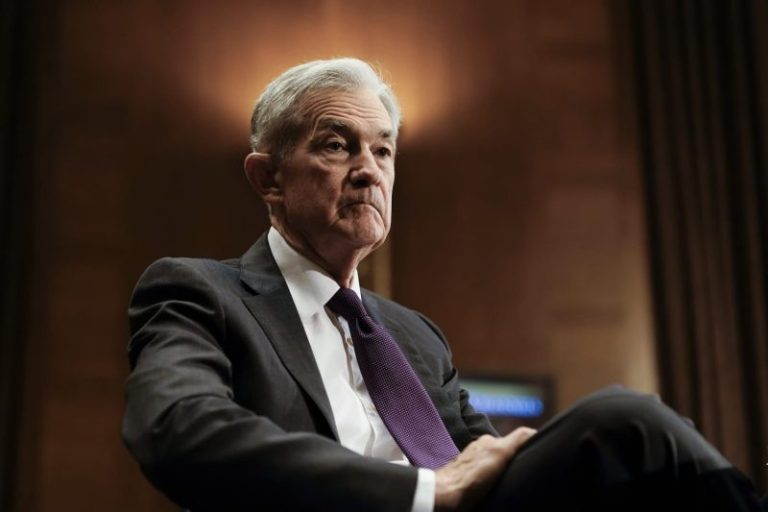
President Donald Trump said Wednesday it was ‘highly unlikely’ he would fire Jerome Powell as chair of the Federal Reserve.

His statements, made in the Oval Office, come less than 24 hours after telling a room full of Republican lawmakers that he was considering doing so.

“No, we’re not planning on doing anything,” Trump told reporters in response to a question about whether he wanted to fire Powell.

“I don’t rule out anything but I think it’s highly unlikely unless he has to leave for fraud,” Trump said, while criticizing Powell’s management of a Fed renovation project that the White House had recently floated as a pretext for removing the Fed chair.

Fed Chair Jerome Powell testifies before the Senate Banking, Housing and Urban Affairs Committee on June 25. Kent Nishimura / Getty Images

The president had asked GOP lawmakers late Tuesday how they felt about firing the Fed chair, according to a senior White House official. They expressed approval for firing him. The president then indicated he likely would soon but that no final decision had been made.

Still, Rep. Anna Paulina Luna, R-Fla., posted on X on Tuesday night that Powell’s firing was ‘imminent,’ something that prompted a sell-off in stock futures before Wednesday’s market open. By noon Wednesday, major stock indexes had recovered to trade almost flat on the day.

CBS News first reported the meeting. A Fed official declined comment to CNBC on the report about the Trump meeting Tuesday, which came after Republicans blocked a procedural vote on crypto legislation that the president favors.

Trump and other White House figures have launched a multipronged attack on Powell to push the central bank to lower its key borrowing rate. Most recently, they have blasted Powell over renovations to the Fed’s Washington headquarters, raising suspicion that Trump could try to remove him for cause.

A recent Supreme Court decision indicated that the president does not have the authority to remove Fed officials at will.

In a CNBC interview Wednesday, Rep. French Hill, R-Ark., the chair of the House Financial Services Committee, repeated that “I don’t see” Trump firing Powell. Treasury Secretary Scott Bessent also told Bloomberg News on Tuesday that he didn’t expect Trump to move in that direction.

However, Luna, who on Tuesday joined with other party members in blocking the crypto initiative, said on X that a move against Powell is forthcoming.

“Hearing Jerome Powell is getting fired! From a very serious source,” she said, later adding, “I’m 99% sure firing is imminent.”

This post appeared first on NBC NEWS

Former Biden administration staffer Annie Tomasini is expected to appear before congressional investigators on Friday after being subpoenaed by House Oversight Committee Chairman James Comer, R-Ky.

Tomasini, former Assistant to the President and Deputy Chief of Staff for ex-President Joe Biden, was previously scheduled to appear for a voluntary transcribed interview on Friday.

A committee aide told Fox News Digital earlier this week that Tomasini’s counsel requested the subpoena, but did not say why. 

When she arrives for the 10 a.m. closed-door deposition on Friday, she will be the third ex-Biden administration aide to come under subpoena in Comer’s probe in recent weeks.

Comer is investigating allegations that Former President Joe Biden’s former top White House aides covered up signs of his mental and physical decline while in office, and whether any executive actions were commissioned via autopen without the president’s full knowledge. Biden allies have pushed back against those claims.

In an interview with The New York Times on Thursday, Biden affirmed he ‘made every decision’ on his own.

Just before Tomasini, House investigators heard from Anthony Bernal, a longtime aide to ex-first lady Jill Biden. 

Bernal pleaded the Fifth Amendment on all questions about Biden and was out of the committee room less than an hour after going in.

Lawmakers are largely not expected to attend the closed-door deposition, which is traditionally staff-led.

Comer has been to several so far, and progressive firebrand Rep. Jasmine Crockett, D-Texas, has made surprise appearances as well.

CNN anchor Jake Tapper and Axios political correspondent Alex Thompson revealed in their book, ‘Original Sin,’ that Tomasini and Bernal ‘loaded a written Q&A into a prompter ahead of a local interview – a document that the campaign had used in prep with Biden.’

Tomasini and Bernal brought out the teleprompter as his aides were trying to soften his blunders as Biden struggled to stay on message, according to the book. But the teleprompter fiasco became an easy attack line throughout Biden’s re-election campaign, as President Donald Trump ‘weaved’ through his myriad unscripted moments.

The book described how Tomasini and Bernal grew closer to Biden during the pandemic, eventually becoming Joe and Jill Biden’s most trusted aides. 

Tapper and Thompson describe the ‘intensely loyal’ duo – Tomasini and Bernal – as taking on an ‘older-brother-and-little-sister vibe’ among Biden’s inner circle.  

Bernal and Tomasini later took on some of the residence staffers’ roles in the White House. Tapper and Thompson said the aides ‘had all-time access to the living quarters, with their White House badges reading ‘Res’ – uncommon for such aides.’

‘The significance of Bernal and Tomasini is the degree to which their rise in the Biden White House signaled the success of people whose allegiance was to the Biden family – not to the presidency, not to the American people, not to the country, but to the Biden theology,’ the authors wrote. 

A source familiar with the Biden team’s thinking called House Republicans’ probe ‘dangerous’ and ‘an attempt to smear and embarrass.’

‘And their hope is for just one tiny inconsistency between witnesses to appear so that Trump’s DOJ prosecute his political opponents and continue his campaign of revenge,’ the source said.

This post appeared first on FOX NEWS

Congress is officially sending a package detailing $9 billion in spending cuts to President Donald Trump’s desk, minutes after midnight on Friday.

The bill, called a ‘rescissions package,’ was approved by the House of Representatives in a late-night 216 to 213 vote after intense debate between Republicans and Democrats. Just two Republicans, Reps. Brian Fitzpatrick, R-Pa., and Mike Turner, R-Ohio, voted in opposition.

Friday was also the deadline for passing the legislation, otherwise the White House would be forced to re-obligate those funds as planned.

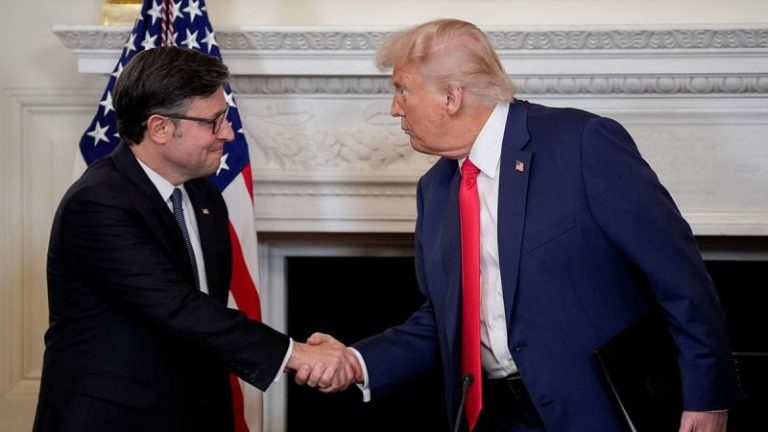
It’s a victory for House Speaker Mike Johnson, R-La., but a mostly symbolic one – the spending cuts bill was largely seen by Trump allies as a test run of a fiscal claw-back process not used in more than two decades.

‘This bill tonight is part of continuing that trend of getting spending under control. Does it answer all the problems? No. $9 billion, I would say is a good start,’ House Majority Leader Steve Scalise, R-La., said during debate on the bill.

When signed by Trump, it will block $8 billion in funding to the U.S. Agency for International Development (USAID) and $1 billion to the Corporation for Public Broadcasting for the remainder of the fiscal year. The dollars had been allocated by Congress for the duration of fiscal year 2025.

Republicans celebrated it as a victory for cutting off the flow of U.S. taxpayer dollars to what they called ‘woke’ initiatives abroad, while Democrats accused the right of gutting critical foreign aid.

Rescissions packages are a way for the president to have input in Congress’ yearly appropriations process. The White House sends a proposal to block some congressionally obligated funds, which lawmakers have 45 days to get through the House and Senate.

Republicans have also been able to sideline Democrats so far, with the rescissions process lowering the Senate’s threshold for passage from 60 votes to 51.

The last time a rescissions package was signed into law was 1999.

Consideration of the bill began with a House Rules Committee hearing at 6 p.m. on Thursday evening.

Democrats attempted multiple times throughout the process to weaponize the ongoing inter-GOP fallout over the Jeffrey Epstein case, both in the House Rules Committee and on the chamber floor during debate on the bill. 

Multiple calls were made for votes to force the release of the so-called Epstein ‘files.’

‘If every Republican votes to block our attempt to release the records, they are telling Epstein’s victims, you don’t matter as much as our political convenience. And that should disgust every single one of us,’ said Rep. Jim McGovern, D-Mass.

Far-right GOP figures are demanding accountability, while Trump has called on his base to move on after the Department of Justice (DOJ) signaled the case was closed.

Initial plans to begin advancing the bill earlier in the day were quickly scuttled, with Republicans on the committee being concerned about being put into a difficult position with potential Epstein votes.

In the end, a compromise led to the House Rules Committee advancing a separate nonbinding measure dealing with Epstein transparency, on a parallel track to the rescissions bill.

‘All the credible evidence should come out. I’ve been very clear with members of the House Rules Committee. Republicans have been taking the incoming criticism because they voted to stop the Democrats’ politicization of this, and they’re trying to stick to their job and move their procedural rules to the floor so we can do our work and get the rescissions done for the American people,’ Johnson told reporters during negotiations earlier in the day.

Democrats nevertheless pressed on, mentioning Epstein multiple times on the House floor. McGovern even briefly led a chant of ‘release the files’ when closing debate on the bill.

Republicans, in turn, accused Democrats of hypocrisy.

‘Interesting how they talk about Jeffrey Epstein, because for four years, Mr. Speaker, President Joe Biden had those files, and not a single Democrat that you’re hearing tonight tried to get those files released,’ House Majority Leader Steve Scalise, R-La., said at one point during the House floor debate.

The House initially voted to advance a $9.4 billion rescissions package, but it was trimmed somewhat in the Senate after some senators had concerns about cutting funding for HIV/AIDS prevention research in Africa.

Trump is expected to sign the bill on Friday.

This post appeared first on FOX NEWS

What can you get for $9.4 billion?

3G Capital recently purchased footwear giant Skechers for $9.4 billion. 

$9.4 billion could cover your rent for a pretty nice apartment in New York City for more than 40,000 years. 

Yes, it will just be you and the cockroaches by then. 

Or, you could pay the cost of every major disaster in the past four decades – ranging from Chernobyl to Fukushima to Hurricane Sandy. 

But $9.4 billion isn’t a lot when cast against nearly $7 trillion in annual spending by the federal government. 

And it’s really not much money when you consider that the U.S. is about slip into the red to the tune of $37 trillion. 

Which brings us to the Congressional plan to cancel spending. That is, a measure from Republicans and the Trump Administration to rescind spending lawmakers already appropriated in March. The House and Senate are now clawing back money lawmakers shoved out the door for the Corporation for Public Broadcasting and foreign aid programs under USAID. The original proposal cut $9.4 billion. But that figure dwindled to $9 billion – after the Senate restored money for ‘PEPFAR,’ a President George W. Bush era program to combat AIDS worldwide. 

In other words, you may have a couple thousand years lopped off from your rent-controlled apartment in New York City. Of course that hinges on what Democratic mayoral nominee Zorhan Mamdani decides to do, should he win election this fall. 

Anyway, back to Congressional spending. Or ‘un-spending.’ 

The House passed the original version of the bill in June, 216-214. Flip one vote and the bill would have failed on a 215-215 tie. Then it was on to the Senate. Republicans had to summon Vice President Vance to Capitol Hill to break a logjam on two procedural votes to send the spending cancellation bill to the floor and actually launch debate. Republicans have a 53-47 advantage in the Senate. But former Senate Majority Leader Mitch McConnell, R-Ky., along with Sens. Lisa Murkowski, R-Alaska and Susan Collins, R-Maine, voted nay – producing a 50-50 tie.

Fox is told some Senate Republicans are tiring of McConnell opposing the GOP – and President Trump – on various issues. That includes the nay votes to start debate on the spending cancellation bill as well as his vote against the confirmation of Defense Secretary Pete Hegseth in January.

‘He used to be the Leader. He was always telling us we need to stick together,’ said one GOP senator who requested anonymity. ‘Now he’s off voting however he wants? How time flies.’

Note that McConnell led Senate Republicans as recently as early January.

But McConnell ultimately voted for the legislation when the Senate approved it 51-48 at 2:28 am ET Thursday morning. 

Murkowski and Collins were the only noes. The services of Vice President Vance weren’t needed due to McConnell’s aye vote and the absence of Sen. Tina Smith, D-Minn. She fell ill and was admitted to George Washington Hospital for exhaustion. 

As for the senior senator from Alaska, one GOP senator characterized it as ‘Murkowski fatigue.’

‘She always asking. She’s always wanting more,’ groused a Senate Republican.

Murkowski secured an agreement on rural hospitals in exchange for her vote in favor of the Big, Beautiful Bill earlier this month. However, Murkowski did not secure more specificity on the DOGE cuts or help with rural, public radio stations in Alaska on the spending cut plan.

‘My vote is guided by the imperative of coming from Alaskans. I have a vote that I am free to cast, with or without the support of the President. My obligation is to my constituents and to the Constitution,’ said Murkowski. ‘I don’t disagree that NPR over the years has tilted more partisan. That can be addressed. But you don’t need to gut the entire Corporation for Public Broadcasting.’ 

In a statement, Collins blasted the Trump administration for a lack of specificity about the precision of the rescissions request. Collins, who chairs the Senate Appropriations Committee in charge of the federal purse strings, also criticized the administration a few months ago for a paucity of detail in the President’s budget. 

‘The rescissions package has a big problem – nobody really knows what program reductions are in it.  That isn’t because we haven’t had time to review the bill,’ said Collins in a statement. ‘Instead, the problem is that OMB (the Office of Management and Budget) has never provided the details that would normally be part of this process.’

Collins wasn’t the only Republican senator who worried about how the administration presented the spending cut package to Congress. Senate Armed Services Committee Chairman Roger Wicker, R-Miss.,  fretted about Congress ceding the power of the purse to the administration. But unlike Collins, Wicker supported the package.

‘If we do this again, please give us specific information about where the cuts will come. Let’s not make a habit of this,’ said Wicker. ‘If you come back to us again from the executive branch, give us the specific amounts in the specific programs that will be cut.’

DOGE recommended the cuts. In fact, most of the spending reductions targeted by DOGE don’t go into effect unless Congress acts. But even the $9.4 billion proved challenging to cut. 

‘We should be able to do that in our sleep. But there is looking like there’s enough opposition,’ said Sen. Rand Paul, R-Ky., on Fox Business.

So to court votes, GOP leaders salvaged $400 million for PEPFAR.

‘There was a lot of interest among our members in doing something on the PEPFAR issue,’ said Senate Majority Leader John Thune, R-S.D. ‘You’re still talking about a $9 billion rescissions package – even with that small modification.’

The aim to silence public broadcasting buoyed some Republicans.

‘North Dakota Public Radio – about 26% of their budget is federal funding. To me, that’s more of an indictment than it is a need,’ said Sen. Kevin Cramer, R-N.D. 

But back to the $9 billion. It’s a fraction of one-tenth of one percent of all federal funding. And DOGE recommended more than a trillion dollars in cuts.

‘What does this say for the party if it can’t even pass this bill, this piddling amount of money?’ yours truly asked Sen. John Kennedy, R-La.

‘I think we’re going to lose a lot of credibility. And we should,’ replied Kennedy.

But the House needed to sync up with the Senate since it changed the bill – stripping the cut for AIDS funding. House conservatives weren’t pleased that the Senate was jamming them again – just two weeks after major renovations to the House version of the Big, Beautiful Bill. But they accepted their fate.

‘It’s disappointing that we’re $37 trillion in debt. This to me was low-hanging fruit,’ said Rep. Eric Burlison, R-Mo. ‘At the end of the day, I’ll take a base hit, right? It’s better than nothing.’

White House Budget Director Russ Vought is expected to send other spending cancellation requests to Congress in the coming months. The aim is to target deeper spending reductions recommended by DOGE. 

But it doesn’t auger well for future rescissions bills if it’s this much of a battle to trim $9 trillion.

What can you get for that much money? For Republicans, it’s not much. 

Republicans were swinging for the fences with spending cuts.

But in the political box score, this is recorded as just a base hit.

This post appeared first on FOX NEWS

This week, Joe analyzes all 30 Dow Jones Industrial Average stocks in a rapid-fire format, offering key technical takeaways and highlighting potential setups in the process. Using his multi-timeframe momentum and trend approach, Joe shows how institutional investors assess relative strength, chart structure, ADX signals, and support zones. From Boeing’s triple bottom to Nvidia’s powerful trend, not to mention Microsoft’s key pullback level, this session is packed with insights for traders looking to stay in sync with the market’s leaders and laggards.

Joe has been working with institutional portfolio managers for the past 35 years, and this video shows the type of reads he gives to them during their phone calls.

The video premiered on July 16, 2025. Click this link to watch on Joe’s dedicated page. 

Archived videos from Joe are available at this link. Send symbol requests to stocktalk@stockcharts.com; you can also submit a request in the comments section below the video on YouTube. Symbol Requests can be sent in throughout the week prior to the next show.

From the S&P 500’s pause within a bullish trend, to critical support levels in semiconductors, plus bullish breakouts in Ethereum and Bitcoin, Frank highlights how the market’s recent consolidation may lead to major upside. In this video, Frank explores how to use StockCharts to layer chart annotations, trend indicators, and pattern analysis for stronger evidence-based decisions. He also compares current chart structures to 2020-2021 in order to better understand what could be next.

This video originally premiered on July 16, 2025.

You can view previously recorded videos from Frank and other industry experts at this link.