Author

admin

Browsing

Russian President Vladimir Putin used his New Year’s address to deliver a blunt message to the West and to his own troops: Russia is not backing down in Ukraine.

As 2026 arrived in Russia’s far eastern regions, Putin vowed victory in the nearly four-year war, praising Russian soldiers and framing the conflict as a fight for the nation’s survival — even as the United States ramps up diplomatic efforts aimed at ending the bloodshed.

‘We believe in you and our victory,’ Putin said in remarks broadcast nationwide and released by the Kremlin on Wednesday. Addressing troops directly, he congratulated ‘all our soldiers and commanders’ and pledged continued support for what Moscow calls its ‘special military operation.’

Putin cast the war as a struggle for Russia’s homeland, ‘truth and justice,’ signaling determination to press ahead despite mounting losses and international pressure.

In a separate message, ex-President Dmitry Medvedev — Putin’s security council deputy — said of victory in Ukraine: ‘I sincerely believe that it is near.’ Echoing Putin, he spoke of ‘our great and invincible Russia.’

The defiant tone comes as the war approaches grim milestones. On Jan. 12, Russia’s invasion of Ukraine will surpass the 1,418 days the Soviet Union fought Nazi Germany in Europe during World War II. On Feb. 24, the conflict will enter its fourth year. Western estimates place the number of killed and wounded at more than 1 million — a figure the Kremlin disputes.

Putin’s rhetoric stood in sharp contrast to renewed diplomatic activity led by Washington.

Ukrainian President Volodymyr Zelenskyy met with U.S. President Donald Trump at Trump’s Mar-a-Lago resort in Florida on Sunday, as the White House explores possible paths to end Europe’s largest land war since World War II.

After the meeting, Trump said Ukraine and Russia were ‘closer than ever’ to peace, while acknowledging that major obstacles — particularly territorial disputes — remain unresolved. Reuters separately reported that Trump and Zelenskyy discussed potential U.S. troop involvement as part of broader security guarantees, though no decisions were announced.

Reuters contributed to this report.

This post appeared first on FOX NEWS

Momentum on a 20-point peace plan to end the war between Russia and Ukraine is faltering after President Vladimir Putin accused Kyiv of targeting a residence linked to him, a claim Moscow says leaves little room for compromise at the negotiating table.

The accusation comes as Ukrainian President Volodymyr Zelenskyy has been pressing a 20-point peace proposal as a counteroffer to a 28-point framework floated by the Trump administration before Thanksgiving. Zelenskyy was expected to present the plan directly to President Donald Trump during a meeting at Mar-a-Lago, part of what he described as ‘some of the most active diplomatic days of the year.’

Russia claims Ukraine launched a large-scale drone attack early Monday against a presidential residence in the Novgorod region, involving 91 long-range drones that were intercepted by Russian air defenses.

Russia’s defense ministry released footage of a masked soldier standing next to drone wreckage it said was recovered from the attack, claiming the drone carried a high-explosive warhead ‘filled with a large number of striking elements’ intended to hit civilian targets.

The Kremlin has described the site as a presidential residence in the Novgorod region, one of several state-owned properties associated with Putin, though it has not said he was present at the time.

Kremlin officials quickly branded the incident ‘terrorist’ activity, warning it would force Russia to harden its negotiating position. 

‘This terrorist action is aimed at collapsing the negotiation process,’ Kremlin spokesperson Dmitry Peskov told reporters Tuesday. ‘The diplomatic consequence will be to toughen the negotiating position of the Russian Federation.’

Zelenskyy’s proposal calls for Western-backed security guarantees resembling NATO’s Article 5, a halt in fighting along current battle lines in contested regions, and the creation of demilitarized zones overseen by international forces — provisions Moscow has long opposed. The Ukrainian plan also rejects formal recognition of Russian control over occupied territory, a key point of divergence from the U.S. framework.

Ukraine has flatly denied responsibility for the alleged attack. Foreign Minister Andrii Sybiha said Russia has offered no evidence ‘because there’s none,’ accusing Moscow of leaning on a familiar strategy. 

‘Russia has a long record of false claims — it’s their signature tactic,’ Sybiha said in a post to the social platform X.

Zelenskyy told reporters that Ukraine had discussed the allegation with U.S. officials. ‘They’ve talked through the details. And we understand that it’s fake. And thanks to their technical opportunities, they can verify that it’s fake,’ he said.

Ukrainian officials argue the allegation fits a broader Kremlin playbook: using unproven claims to justify escalation or deflect blame as diplomacy intensifies. Kyiv has warned Moscow may be using the episode to lay the groundwork for new strikes, including against government buildings in the Ukrainian capital, while portraying Russia as the aggrieved party in peace talks.

The dispute has also drawn in Trump, who met with Zelenskyy in Florida Friday and later spoke by phone with Putin. Putin raised the alleged incident during their call.

‘I was very angry about it,’ Trump told reporters, adding that the U.S. was still working to determine what actually happened. ‘We’ll find out,’ he said.

Matthew Whitaker, the U.S. ambassador to NATO, said on Fox Business that Washington is investigating Russia’s claim

‘It’s unclear whether it actually happened,’ Whitaker said. ‘We’re going to get to the bottom of the intelligence.’

This post appeared first on FOX NEWS

The Department of Justice (DOJ) on Wednesday outlined a list of its accomplishments during President Donald Trump’s first year back in office, arguing that the agency has ended the political weaponization it says existed under the Biden administration.

The DOJ claimed in a statement posted on X that it has ‘turned around’ the agency, restoring fairness and law enforcement priorities.

‘Instead of keeping Americans safe, the Biden DOJ weaponized its power against political opponents: conservatives, parents, pro-lifers, Christians, and most of all, President Trump,’ the DOJ stated.

The DOJ said that after President Trump inherited a justice system it described as ‘in chaos,’ he charged the department with restoring ‘integrity, accountability and equal justice under the law.’

‘In 2025, the DOJ returned to its core mission: upholding the rule of law, vigorously prosecuting criminals, and keeping the American people safe,’ the department wrote.

The announcement comes as the Trump administration continues to face legal challenges and the Justice Department faces potential legal action after missing a statutory deadlinedeadline to release documents related to Jeffrey Epstein under the Epstein Files Transparency Act.

The DOJ outlined 10 ‘wins’ since President Trump took office on Jan. 20, including efforts to pursue major fraud cases, particularly in Minnesota, which it described as ‘rife with fraud.’

According to the DOJ, 98 people have been charged — including 85 individuals identified as being of Somali descent — in Medicaid fraud and related case programs, leading to 64 convictions to date.

The statement outlines actions taken to roll back policies it said were targeting conservatives and parents, reduce crime nationwide, increase law enforcement activity in major cities, seize record amounts of illegal drugs and secure favorable rulings at the Supreme Court.

On Wednesday, FBI Director Kash Patel wrote on X that the bureau is working to restore trust in federal law enforcement.

‘Dismantling public corruption is a top priority of our leadership team here — we’ve worked day and night on that mission and will continue to do so until justice is done,’ he wrote.

The Justice Department said more enforcement actions are planned in 2026, signaling an escalation of arrests, court victories and action ‘against those who threaten the safety and well-being of the American people.’

This post appeared first on FOX NEWS

The U.S. Department of the Treasury on Wednesday sanctioned four companies operating in Venezuela’s oil sector and identified four oil tankers as blocked property, saying the move targets oil traders involved in alleged sanctions-evasion that helps finance Nicolás Maduro’s regime.

Treasury said the vessels, some described as part of a ‘shadow fleet’ serving Venezuela, ‘continue to provide financial resources that fuel Maduro’s illegitimate narco-terrorist regime’ in Tuesday’s press release.

‘President Trump has been clear: We will not allow the illegitimate Maduro regime to profit from exporting oil while it floods the United States with deadly drugs,’ Treasury Secretary Scott Bessent said. ‘The Treasury Department will continue to implement President Trump’s campaign of pressure on Maduro’s regime,’ he added.

Treasury said the sanctions block property and interests in property of the designated entities within U.S. jurisdiction and generally prohibits Americans from transactions involving them.

The action follows U.S. measures against Venezuela’s state-run oil company Petroleos de Venezuela, S.A. (PDVSA).

OFAC designated PDVSA in January 2019 under Executive Order 13850, and President Trump later took additional steps to block PDVSA in August 2019 under Executive Order 13884, Treasury said.

Treasury said Wednesday’s move also complements actions announced Dec. 11 and Dec. 19 targeting PDVSA-linked officials, associates and vessels.

OFAC designated Corniola Limited and Krape Myrtle Co LTD and identified the tanker NORD STAR as blocked property. OFAC also designated Winky International Limited and identified ROSALIND, also known as LUNAR TIDE, as blocked property. OFAC designated Aries Global Investment LTD and identified the tankers DELLA and VALIANT as blocked property, Treasury said.

Treasury said blocked property within U.S. jurisdiction must be reported to OFAC, and warned that violations of U.S. sanctions may result in civil or criminal penalties.

Treasury said the goal of sanctions is to bring about a positive change in behavior, noting there is a formal process for seeking removal from an OFAC list consistent with U.S. law.

This post appeared first on FOX NEWS

U.S. and partner forces killed or captured nearly 25 Islamic State operatives in Syria in the days following a large-scale U.S.-led strike on Dec. 19, according to a new statement from U.S. Central Command, underscoring Washington’s assessment that ISIS remains an active and persistent threat inside the country.

CENTCOM said those forces conducted 11 follow-on missions between Dec. 20 and Dec. 29, killing at least seven ISIS members, capturing the remainder and eliminating four ISIS weapons caches. The operations followed Operation Hawkeye Strike, when U.S. and Jordanian forces hit more than 70 ISIS targets across central Syria using over 100 precision munitions, destroying infrastructure and weapons sites linked to the group. 

‘We will not relent,’ CENTCOM Commander Adm. Brad Cooper said, adding that U.S. forces remain ‘steadfast’ in working with regional partners to dismantle ISIS networks that pose a threat to U.S. and regional security.

The scope of the follow-on raids highlights a reality U.S. commanders and analysts have been warning about for months: ISIS no longer controls large swaths of territory, but it retains the ability to organize, strike and regenerate inside Syria’s fragmented security landscape.

Syria remains divided among competing forces, militias and foreign-backed armed groups, with no single authority exercising full control over large parts of the country. Analysts say that vacuum continues to provide space for ISIS cells to operate quietly, recruit and exploit overstretched local forces.

Analysts note that Syria’s security environment remains shaped by former jihadist networks that were never fully demobilized after the war. The country’s transitional leadership, including President Ahmed al-Sharaa, emerged from armed Islamist factions that relied heavily on foreign fighters and militias, according to regional security assessments. While those groups are not synonymous with ISIS, experts say the incomplete dismantling of extremist networks has left gaps that ISIS cells continue to exploit.

‘ISIS today doesn’t need a caliphate to be dangerous,’ Bill Roggio told Fox News Digital. ‘We’ve always been quick to declare terrorist organizations defeated and insignificant, and that couldn’t be further from the truth.’

Roggio said the group has adapted rather than disappeared, shifting away from holding territory toward smaller, more covert cells capable of carrying out lethal attacks. He pointed to ongoing ISIS activity not only in Syria and Iraq, but also in Afghanistan and other regions, citing United Nations reporting that estimates roughly 2,000 ISIS fighters remain active in Afghanistan alone.

‘That’s not what a defeated group looks like,’ Roggio said, noting that ISIS continues to recruit, indoctrinate and inspire attacks even without the visibility it once had.

One of the most sensitive vulnerabilities remains the network of detention facilities in northeastern Syria holding thousands of ISIS terrorists and supporters. Those prisons are guarded primarily by Kurdish-led forces backed by a small U.S. military presence, estimated at roughly 1,000 troops, according to Reuters.

U.S. and coalition officials have repeatedly warned that any major disruption to prison security could allow hardened ISIS operatives to escape and reconstitute networks across Syria and beyond. Kurdish officials have also raised concerns about funding shortages, manpower strain and pressure from rival militias operating nearby.

While U.S. officials have not publicly linked the recent strikes to prison-related threats, analysts say the broader environment of fragmented control increases the risk of coordinated attacks, insider assistance or prison unrest.

The danger is not theoretical. ISIS has previously staged mass prison break operations in Syria and Iraq, including a 2022 assault on the al-Sinaa prison in Hasakah that required days of fighting to contain.

The U.S. strikes also come amid continued instability inside Syria, where multiple armed actors operate with overlapping authority. Analysts note that clashes among militias, sectarian violence and unresolved command structures have weakened overall security and diverted attention from counterterrorism efforts.

Bombings in neighborhoods of Damascus, including Mezzeh, and unrest in minority areas have further illustrated the gaps ISIS and other extremist groups can exploit, according to regional security assessments and open-source reporting.

‘Syria’s chaos is the accelerant,’ Roggio said. ‘ISIS thrives where no one is fully in charge.’

U.S. officials and analysts stress that ISIS activity in Syria is part of a wider pattern rather than an isolated flare-up.

Sources in the Israeli Mossad told Fox News Digital of continued ISIS-linked activity across multiple theaters, including recruitment networks and small-scale attacks designed to test security responses and maintain operational relevance.

In Turkey, security forces recently clashed with Islamic State militants during counterterrorism operations, wounding several officers, according to Reuters on Monday. Turkish authorities said the raids targeted ISIS cells suspected of planning attacks inside the country.

‘These are signals, not spikes,’ Roggio said. ‘ISIS operates across regions, adapting to pressure and exploiting weak governance wherever it finds it.’

The renewed U.S. military action raises difficult questions for policymakers about how long the current containment strategy can hold.

While U.S. officials say the Dec. 19 strikes delivered a significant blow to ISIS infrastructure, they have also acknowledged that counterterrorism operations alone cannot eliminate the underlying conditions that allow the group to persist.

‘Just because we want to declare the war against terror over doesn’t mean it’s over,’ Roggio said. ‘The enemy gets a vote.’

This post appeared first on FOX NEWS

Two West African nations have issued a simultaneous ban on American citizens in a diplomatic tit-for-tat move, amidst heightened tensions with both the United States and Europe, and as Russia seeks to increase its economic and geopolitical influence in the region.

Mali and Burkina Faso made the move in response to the Trump administration’s Dec. 16 expansion of travel restrictions to more than 20 countries. The policy particularly affected the African continent, with Chad, Equatorial Guinea, Eritrea, Libya, Niger, Republic of the Congo, Sierra Leone, Somalia, South Sudan and Sudan also being subject to travel restrictions.

The Trump administration cited the persistence of armed attacks in both nations as part of the rationale for its decision:

‘According to the Department of State, terrorist organizations continue to plan and conduct terrorist activities throughout Burkina Faso. According to the Fiscal Year 2024, Department of Homeland Security (DHS) Entry/Exit Overstay Report (‘Overstay Report’), Burkina Faso had a B-1/B-2 visa overstay rate of 9.16 percent and a student (F), vocational (M), and exchange visitor (J) visa overstay rate of 22.95 percent. Additionally, Burkina Faso has historically refused to accept back its removable nationals.’

Regarding its decision to include Mali on the list, it stated:

‘According to the Department of State, armed conflict between the Malian government and armed groups is common throughout the country.  Terrorist organizations operate freely in certain areas of Mali.’

Burkina Faso and Mali are both currently ruled by military juntas that came to power amidst rising violence and instability, as both nations came under attack from Islamist terrorist groups.

Both nations have also seen a rise in anti-French sentiment, in conjunction with deepening relationships with Russia, which has pledged to offer assistance in fighting back the Islamist rebels battling the central governments for territorial control.

‘In accordance with the principle of reciprocity, the Ministry of Foreign Affairs and International Cooperation informs the national and international community that, with immediate effect, the Government of the Republic of Mali will apply the same conditions and requirements to US nationals as those imposed on Malian citizens,’ the Malian Ministry of Foreign Affairs stated.

Burkina Faso’s government cited a similar rationale for issuing its ban on American travelers.

Both nations, as well as neighboring Niger and Nigeria, have seen skyrocketing violence in recent years, as chronically underfunded governments struggle to retain control of rural, sparsely-populated desert regions.

The Associated Press contributed to this report.

This post appeared first on FOX NEWS

This year brought us Trump the Sequel and that meant the left had extra motivation to be annoying. Their hatred of President Donald Trump, conservatives and even the late Charlie Kirk defined 2025.

Still, there were some who outdid everyone else in their quest to be, drumroll, please, the Most Annoying Person of 2025. I ignored people who made news saying just one idiotic comment or who are just obscure media personalities. (Like Matthew Dowd who lost his bogus MSNBC job for his comments bashing Turning Point USA founder Charlie Kirk for ‘hate speech’ after Kirk had been murdered.)

1. He was funny 20 years ago

No one deserves the top spot on this list more than ‘Jimmy Kimmel Live!’ host Jimmy Kimmel. Most late-night programs have faded from view as their hosts have turned them into orgies of Trump-bashing. But Kimmel excels at hating conservatives so much that he almost qualifies to be a male cast member of ‘The View.’ (Yep, they’re here, too.)

Kimmel gained more attention for saying vile things and fighting Trump than for anything funny.

Former ‘Late Show’ host David Letterman termed Kimmel, ‘the leader of the resistance,’ and Kimmel later cried millionaire tears because he had a ‘hard year.’ He earned a temporary suspension with one of the worst comments about the Kirk assassination, saying, ‘We hit some new lows over the weekend, with the MAGA gang desperately trying to characterize this kid who murdered Charlie Kirk as anything other than one of them and everything they can to score political points from it.’ He was wrong, of course, but we are used to that. Trump later said, ‘Jimmy Kimmel was horrible,’ and who am I to disagree with my president?

2. You knew they’d make the list

If the annoying people of Earth have a home base, it’s not some secluded island fortress, it’s ABC’s ‘The View.’ The gaggle of hosts — from leftist moderator Whoopi Goldberg to crackpot Joy Behar to pretend conservative Alyssa Farah Griffin — is a reminder that quantity is not quality. 

This year, they pretended radical Islamic Iran wasn’t worse than the U.S. (Goldberg); claimed using the National Guard to stop crime was ‘a pretext to stop the next election!’ (Behar); and compared the election of Trump to … Hitler. (Behar: ‘The Germans voted also. Just saying.’)

The show has become such an embarrassment that the TV show ‘Landman’ mocked it for being a, ‘bunch of pissed off millionaires bitching about how much they hate millionaires, Trump, and men, and you, and me, and everybody else they got a bee up their ass about.’ ‘The View’ has gone from mindless propaganda to a punchline.

3. The first of the pod people

If you’re lucky, you’ve never heard of podcaster Jennifer Welch. Just imagine a ghoul-like figure from your deepest nightmares, then give her blonde hair and a microphone.

She’s one of the two co-hosts for the ‘I’ve Had It’ podcast, and it’s well-named. She and her co-host first appeared in the Bravo series ‘Sweet Home Oklahoma,’ which no one ever heard of. But now, the press loves her because she says hateful things about conservatives. 

CNN’s profile of Welch quotes her calling Trump a, ‘fat, fascist f— who’s ruining everything for everybody.’ The New York Times notes, ‘‘Patriots, gaytriots, theytriots, Blacktriots and browntriots,’ is how Ms. Welch greets the listeners of their primary podcast.’ She left out morontriots who must make up the bulk of her audience.

Welch made news calling Kirk’s widow Erika a ‘grifter’ and TPUSA said that comment was, ‘beneath contempt.’ 

I’m sure Welch will say worse in 2026 because the media reward her bile with support. CNN said she and her co-host are, ‘two women who love their country and aren’t afraid to name and shame people.’ 

See what I mean?

4. More pod-ish people 

Podcaster antisemite Nick Fuentes and Twitch antisemite Hasan Piker showed the world that the worst users of social media have one thing in common — hatred. Both of them have dominated the social world and been everywhere in the media as civilized society reacts in horror. 

Fuentes calls himself an admirer of communist Soviet dictator Joseph Stalin and says Nazi dictator Adolph Hitler was ‘really f—ing cool.’ Pretty much on brand.

Piker, when he’s not being accused of giving his dog electric shocks, spends his time saying offensive things, like, ‘America deserved 9/11.’ He later walked it back because of the backlash, but he still has millions of followers on multiple platforms. 

Fox News did an analysis of what he says, and it’s so vile, I don’t want to repeat it. He’s all across major media. The Times called him, ‘A Progressive Mind in a Body Made for the ‘Manosphere.’’ 

The press is desperate to recreate their own Joe Rogan and this is the best they’ve got.

5. Spacey

Singer Katy Perry had not one, but two spacey experiences in 2025. First, she sort-of went into space on a Jeff Bezos rocket. The owner of Amazon and the Washington Post sent his then-fiancée Lauren Sanchez, and five other famous women, into near-space. 

Perry is in the cool kids’ club, so she got to go. The singer actually vowed to ‘put the ‘a–’ in astronaut’ and made a fool of herself when she landed, kneeling and kissing the ground because of an 11-minute rocket trip. She was quoted declaring, ‘I feel super connected to love.’ 

That must have been true. She is now dating her own space cadet, former lefty Canadian Prime Minister Justin Trudeau.

6. Friday the 13th

Cynthia Erivo is 2025’s it gal. She’s everywhere and impossible not to see. As NBC put it, she’s ‘Proudly Bald and Has No Eyebrows.’ Throw in nails like Freddy Krueger and the bisexual star is everything the media want in a celebrity — weird and alternative. 

She’s the star of the two ‘Wicked’ movies and even played Jesus in the Hollywood Bowl (naturally) version of the musical ‘Jesus Christ Superstar.’ 

Erivo revels in her unusual look, even shaving her own eyebrows, ‘Whenever I’m talking to my makeup artist, I tell her that I just want to look like a pretty thumb.’ 

Yeah, I can’t top that.

7. It ain’t over till it’s over

The 2024 Democratic election debate wasn’t enough for Vice President Kamala Harris. Harris recently declared, ‘I am not done. I have lived my entire career a life of service, and it’s in my bones.’ Harris released her book, ‘107 Days’ and managed to annoy Democrats and Republicans about equally with her alleged recollection of events. 

At least former President Richard Nixon was nice enough to tell us, ‘You won’t have Nixon to kick around anymore.’ 

Harris will make us endure more garbled responses before she goes gently into that good night of her career.

This post appeared first on FOX NEWS

Lawmakers fought over Obamacare subsidies tooth and nail for the latter part of the year, and ultimately, neither side won.

Senate Democrats thrust the government into the longest shutdown in history in an effort to refocus the narrative in Congress on healthcare, and Republicans agreed to talk about it in the open. And both Republicans and Democrats got a shot to advance their own, partisan plans. Both failed.

Now, the subsidies are set to expire on Wednesday, sending price hikes across the desks of tens of millions of Americans that relied on the credits. 

When lawmakers return on the first week of January, healthcare will be front of mind for many in the Senate. But any push to either revive, or completely replace, the subsidies may, for a time, take a backseat to the government funding fight brewing ahead of the Jan. 30 deadline.

When asked if he was disappointed that lawmakers were unable to, at least in the short term, solve the subsidies issue, Sen. Josh Hawley, R-Mo., was more concerned about people that would experience higher costs. 

‘I think who it’s most disappointing for are the people whose premiums are going to go up by two, three times,’ Hawley said. ‘So, it’s not good.’

Price hikes on premium costs will be variable for the roughly 20 million Americans that rely on them, depending on age, income and other factors. Broadly, a person’s out-of-pocket cost is expected to double with the credit’s lapse, according to the Kaiser Family Foundation.

The nonpartisan healthcare think tank painted a broader picture of the disparate impact on premium cost increases in a report released late last month that, based on myriad factors, including where a person lives, their age range and where they sit above the poverty line, some could see price hikes as high as 361%.

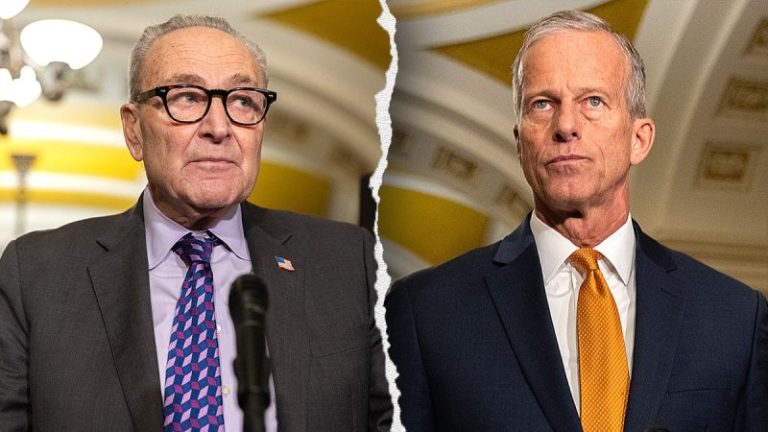
While Senate Republicans’ and Democrats’ separate plans failed to advance — despite four Republicans crossing the aisle to support Senate Minority Leader Chuck Schumer’s, D-N.Y., plan — lawmakers are working together for a solution.

There are two plans with traction in the House. The GOP’s plan advanced on the floor earlier this month but doesn’t address the issue of the expiring tax credits. Then there is a bipartisan plan that calls for a three-year extension of the subsidies, similar to Senate Democrats’ plan, that is teed up for a vote.

The latter option, and its bipartisan momentum, has some Democrats hopeful that a three-year extension could get a shot in the upper chamber.

‘I’ll also say that the glimmer of hope is if we’re searching for a bipartisan deal that can pass the Congress, we don’t need to search any further than the three-year extension of the subsidies that’s going to pass the House of Representatives,’ Sen. Brian Schatz, D-Hawaii, told Fox News Digital. ‘We don’t need a negotiation any further. That bill can pass, if it can provide relief to the taxpayers, and it can pass, then that’s our vehicle.’

Senate Majority Leader John Thune, R-S.D., however, has maintained a deeply-rooted position against just a simple extension of the credits.

He argued that a straight-up extension for three years would be ‘a waste of $83 billion,’ and lacks any of the reforms that Republicans desire, like reinstalling an income cap, adding anti-fraud measures, and reaffirming language that would prevent taxpayer dollars from funding abortions.

‘I mean, I think if nothing else, depending on if the House sends something over here, there would be a new vehicle available,’ Thune said. ‘And if there is some bipartisan agreement on a plan, then you know, it’s possible that we could — obviously it’d have to be something that we think the House could pass, and the president would sign.’

‘But I’m not ruling anything out, I guess is what I’m saying,’ he continued. ‘But you know, a three-year extension of a failed program that’s rife with fraud, waste and abuse is not happening.’

Senate Democrats are open to negotiating on a bipartisan plan, something that is already ongoing after Sens. Susan Collins, R-Maine, and Bernie Moreno, R-Ohio, held a meeting with lawmakers before leaving Washington, D.C., earlier this month.

But Democrats are also making clear that they don’t want to budge on some of the Republicans’ demands.

‘Let’s put it this way, Republicans are asking to meet with me, and I’m telling them, I’ll listen, you know, I made it clear what I think is the only practical approach, and I’m certainly not going to go along with selling junk insurance,’ Sen. Ron Wyden, D-Ore., said.

This post appeared first on FOX NEWS

Sociedad Quimica y Minera (SQM) (NYSE:SQM) and Codelco have finalized their long-awaited partnership, forming a new joint venture that will oversee lithium production in Chile’s Salar de Atacama through 2060.

SQM announced on Saturday (December 27) that it has completed its strategic partnership with state-owned miner Codelco through the merger by absorption of Codelco subsidiary Minera Tarar into SQM Salar.

Following the transaction, SQM Salar has been renamed Nova Andino Litio, the new vehicle that will consolidate lithium exploration, production, commercialization and related community and environmental initiatives in the Atacama.

The merger was carried out under the terms of a partnership agreement that was signed in May 2024.

While the transaction has been completed, it remains subject to a resolutory condition tied to a pending Supreme Court decision on an appeal filed by Inversiones TLC. The appeal challenges regulatory approvals granted earlier this year, and Inversiones TLC is a subsidiary of China’s Tianqi Lithium (SZSE:002466,HKEX:9696,OTC Pink:TQLCF).

The appeal comes after a November ruling by the Santiago Court of Appeals that rejected a claim of illegality against an exemption resolution issued by Chile’s Financial Market Commission.

Despite the unresolved litigation, the economic framework of the partnership has already taken effect. SQM confirmed that the preferences and economic rights attached to the Series A shares held by Codelco and the Series B shares held by SQM became effective on January 1, 2025, including the dividend distribution methodology set out in the agreement.

SQM and Nova Andino Litio are currently determining dividend allocations and other accounting effects, which will be reflected in their respective 2025 financial statements.

The new company preserves contractual continuity with Chilean development agency Corfo, both under existing agreements and those that will govern operations from 2031 onward.

SQM Chief Executive Ricardo Ramos also said the joint venture provides long-term stability for lithium operations in Atacama, while raising operational and sustainability standards.

“This joint venture allows us to project the development of the Atacama Salt Flat and continue advancing with standards of operational excellence, sustainability and shared value creation, combining complementary capabilities for the benefit of Chile and global markets,” Ramos said in a press release issued by Codelco.

As part of the agreement, SQM has also transferred all of its mining concessions in the Maricunga salt flat to Codelco.

Nova Andino Litio’s board will be evenly split between the partners, with three representatives from each company. Its first board meeting is scheduled for Monday (December 29).

Securities Disclosure: I, Giann Liguid, hold no direct investment interest in any company mentioned in this article.

This post appeared first on investingnews.com

Silver’s 2025 breakout marked one of the metal’s most decisive shifts in more than a decade.

As the price pushed through longstanding resistance, investors, miners and policymakers reassessed its role in global markets, allowing silver to reassert itself as not only an industrial metal, but also a staple financial asset.

Looking back at silver’s record-breaking year, these are our most popular news stories of 2025.

1. Retail Investors Look to Trigger Silver Squeeze 2.0

Publish date: March 31, 2025

Silver received mainstream attention in March, with renewed calls for what supporters dubbed “Silver Squeeze 2.0,” reviving a theme that first gained prominence during the meme stock era of 2021.

Online chatter intensified ahead of March 31, with advocates urging coordinated purchases of physical silver to challenge what they saw as entrenched institutional control over the metal’s pricing.

Efforts traced back to a March 22 post on X by user @TheSqueakyMouse, which gained broader attention after being amplified by sector analyst Jesse Colombo. Colombo, who posts under the handle @TheBubbleBubble, has argued that the silver price is artificially suppressed by large financial institutions:

“Bullion banks like JPMorgan Chase (NYSE:JPM) and UBS Group (NYSE:UBS) suppress silver prices through aggressive naked shorting—but a coordinated surge of physical buying could catch them off guard and break their hold on the market.’

Colombo pointed to data showing that major banks hold net short positions equivalent to roughly 223 million ounces of silver, meaning a US$1 price increase could theoretically translate into US$223 million in losses for those positions.

2. Missouri Set to Recognize Gold and Silver as Legal Tender, Critics Raise Implementation Concerns

Publish date: May 12, 2025

Attention on precious metals took a more concrete form in Missouri. In May, the state’s General Assembly passed a Republican-backed amendment to a broader finance bill that recognizes gold and silver as legal tender.

The measure would require state entities to accept electronic forms of gold and silver for public debts, including taxes. Private businesses would not be required to accept precious metals, but could do so voluntarily.

Supporters argued that recognizing gold and silver offers a hedge against inflation and what they view as irresponsible federal monetary policy. Critics, however, questioned how the system would work in practice.

3. Silver Miners Deliver Record Q2 Earnings as Price Breaks Out

Publish date: August 19, 2025

Silver’s mid-year rally above US$35 per ounce translated into record or near-record earnings for many miners in Q2.

Pan American Silver (TSX:PAAS) reported record net earnings of US$189.6 million in the period, while First Majestic Silver (TSX:AG,NYSE:AG) posted its strongest quarter to date, nearly doubling revenue year-on-year.

Even mining companies facing production challenges, such as Fresnillo (LSE:FRES,OTC Pink:FNLPF), saw revenue growth driven by gold output and pricing strength.

4. Missing Silver Bars Bring Mining Community Together

Publish date: March 7, 2025

Amid those financial milestones, the mining community was united in March by a widely shared incident.

Following the Prospectors & Developers Association of Canada convention, two 10 ounce silver bars purchased by Kin Communications founder Arlen Hansen went missing after being checked in his luggage on an Air Canada flight.

The bars, worth about US$647, were intended for a silent auction benefiting Canadian children living with diabetes.

“I don’t need a refund, a free upgrade, or more points, this was stolen from the children who need it, not me,” Hansen wrote on X. The response from the mining community was swift. First Majestic Silver and its mint division volunteered to replace the lost silver, while others donated to Diabetes Canada and expressed support.

The incident also revived scrutiny of airline cargo security, particularly given Air Canada’s association with earlier high-profile precious metals thefts, including the 2023 gold heist at Toronto Pearson International Airport.

5. Pan American Silver Gets Green Light for US$2.1 Billion MAG Silver Deal

Publish date: August 25, 2025

One of this year’s most consequential silver M&A developments came when Pan American received final clearance from Mexico’s Federal Economic Competition Commission for its US$2.1 billion acquisition of MAG Silver.

The approval paved the way for the deal to close in early September, combining Pan American with one of the world’s highest-grade primary silver assets, Juanicipio.

Under the terms, MAG shareholders were to receive either cash or Pan American shares, leaving them with about 14 percent of the combined company on a fully diluted basis.

“This strategic acquisition further solidifies Pan American as a leading Americas-focused silver producer,” Pan American CEO Michael Steinmann said when the deal was announced.

He added that Juanicipio “will meaningfully increase Pan American’s exposure to high margin silver ounces,” while also providing longer-term growth through MAG’s exploration properties in Utah and Ontario.

Securities Disclosure: I, Giann Liguid, hold no direct investment interest in any company mentioned in this article.

This post appeared first on investingnews.com