Author

admin

Browsing

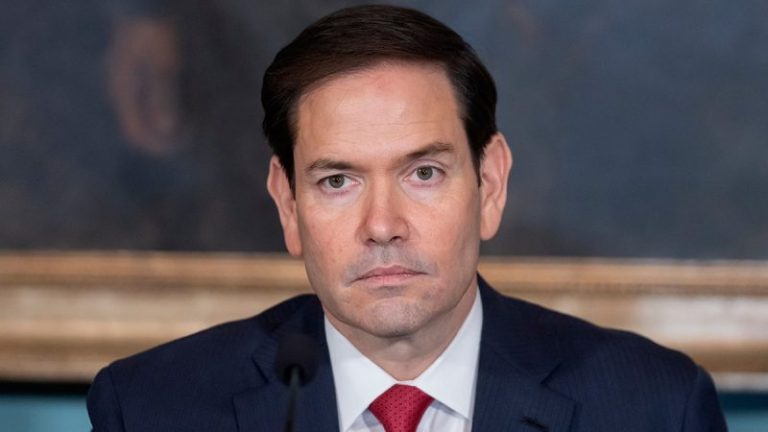
The State Department is investigating an impostor who reportedly pretended to be Secretary of State Marco Rubio with the help of AI. 

The mystery individual posing as one of President Donald Trump’s Cabinet members reached out to foreign ministers, a U.S. governor and a member of Congress with AI-assisted voice and text messages that mimicked Rubio’s voice and writing style, the Washington Post reported, citing a senior U.S. official and State Department cable. 

‘The State Department, of course, is aware of this incident and is currently monitoring and addressing the matter. The department takes seriously its responsibility to safeguard its information and continuously take steps to improve the department’s cybersecurity posture to prevent future incidents. For security reasons, we do not have any further details to provide at this time,’ State Department spokesperson Tammy Bruce said Tuesday. 

When asked by Fox News about Rubio’s reaction to being impersonated, she said, ‘We’re not at a point here where I will discuss or portray what actions are being taken or his reaction.’ 

‘The secretary… is very transparent, quite transparent, and he’s direct with everyone. I think that any description of his reaction, of course, belongs to him. And I would suspect that at some point we’ll have that for you,’ Bruce added. 

She also said that ‘We live in a technological age that we are well enmeshed in.’ 

It’s unclear who is using AI to impersonate Rubio, but it’s suspected they are doing so in an attempt to manipulate government officials ‘with the goal of gaining access to information or accounts,’ the State Department cable said, according to the Washington Post. 

The cable reportedly said the impersonation act started in mid-June when someone created a Signal account with the display name Marco.Rubio@state.gov — which isn’t Rubio’s actual email address. 

The July 3 cable reportedly added that the fake Rubio ‘contacted at least five non-Department individuals, including three foreign ministers, a U.S. governor, and a U.S. member of Congress.’ 

‘The actor left voicemails on Signal for at least two targeted individuals and in one instance, sent a text message inviting the individual to communicate on Signal,’ the Washington Post also cited the cable as saying. 

The impersonation attempt ultimately was unsuccessful and ‘not very sophisticated,’ a senior U.S. official told The Associated Press.

Fox News’ Nick Kalman contributed to this report.  

This post appeared first on FOX NEWS

In a blockbuster report, the CIA has belatedly exposed the rank corruption among top intelligence officials who connived to frame President Donald Trump and drive him from office during his first term.  

Their pernicious lie was that Trump colluded with Russia to rig the 2016 presidential election in his favor. The principal piece of so-called evidence was a document known infamously as the dossier.  

It was secretly financed by Hillary Clinton’s presidential campaign and Democrats, conceived by a foreign agent with a checkered past in espionage, and then brokered to solicitous collaborators at the FBI, CIA, the Department of Justice and the Trump-hating media.  

The dossier was garbage, of course. The FBI largely debunked it before Trump was even sworn in and fired its author, Christopher Steele, for lying as a confidential human source. But the bureau concealed those inconvenient facts under then-Director James Comey and deftly exploited the document as a cudgel to bludgeon the newly elected president.  

Comey was aided and abetted by others in the intelligence community, including CIA Director John Brennan and Director of National Intelligence James Clapper. This malignant force of unelected officials plotted to smear Trump with what is surely the dirtiest trick in political history.  

Recently, current CIA Director John Ratcliffe declassified and released an internal agency review of the machinations that helped fuel the Russia hoax. In a statement posted on social media, Ratcliffe stated, ‘All the world can now see the truth: Brennan, Clapper and Comey manipulated intelligence and silenced career professionals — all to get Trump.’ 

Citing previously hidden records, the review concluded that Brennan, in particular, pushed for the phony dossier to be included in the Intelligence Community Assessment (ICA) to catalyze a false narrative against Trump. Senior CIA experts on Russia objected but were sidelined and silenced.  

The CIA’s deputy director for analysis warned Brennan in writing that including the discredited dossier in any capacity jeopardized ‘the credibility of the entire paper.’ Brennan didn’t care. The fiction penned by the ex-British spy conformed to the director’s preconceived fable that Trump colluded with Russia.  

The ICA, which was ordered by President Barack Obama, was rushed to completion just days before Trump’s inauguration. Brennan directed its composition and handpicked the analysts who compiled the ersatz information. To stifle dissent, 13 other key intelligence agencies were deliberately excluded. To put it bluntly, Trump was set up.  

According to the new CIA review, Comey and Clapper were all in on the scheme. In an interview with the New York Post, Ratcliffe said, ‘This was Obama, Comey, Clapper and Brennan deciding ‘We’re going to screw Trump.’’ 

They knew the dossier was junk, which motivated them to prop it up as a reliable indictment of Trump. By incorporating it in the ICA they could leak and propagate both documents as mutual corroboration. It was a clever ruse. An illusion.  

Those of us who have long covered the bogus collusion story knew it long ago. In my 2019 book, ‘Witch Hunt,’ I recounted how Brennan ‘insisted that the dossier be included in the classified intelligence report,’ but then told Congress under oath that the dossier was ‘not in any way used as the basis for the intelligence community’s assessment.’ Clapper’s testimony was nearly identical.  

Here is what I wrote in chapter 2: 

‘Brennan and Clapper were spinning a deception. A prominent colleague contradicted them and produced documents as proof that they were not telling the truth. In a classified letter to Congress, National Security Agency director Michael Rogers disclosed that the uncorroborated document (the dossier) ‘did factor into the ICA’ report. Having been caught in a falsehood, Clapper then repudiated his earlier statement. Brennan continued to deny all of it, the contrary evidence notwithstanding.’  

Neither Brennan nor Clapper was ever prosecuted for perjury.  

None of that bothered news organizations. MSNBC promptly hired Brennan, while Clapper went to work for CNN. I described what they did from their media perches:  

‘The two super spooks launched an all-out attack on Trump, exploiting their new television platforms to advance the toxic fiction that the president was a secret Russian asset who had ‘colluded’ with Putin. It didn’t matter to CNN that a House Intelligence Committee report determined that it had been Clapper who had leaked news of the phony dossier to the network before Trump had ever taken office.’  

The collusion narrative was a conspiracy itself. The collaborators knew it was a lie, but they manipulated the dossier and the ICA to peddle their fairy tale. With Hillary and her confederates, they engineered the hoax. Brennan even accused Trump of treason.  

Comey also knew the dossier was spurious, as I wrote in chapter 4:  

‘He knew exactly where the dossier came from and who paid for it. He used it as the primary basis for the warrants, used it as part of the nonpublic version of the intelligence community assessment, and used it to debrief President-elect Trump so that it could be leaked to the media in January 2017.’ 

They knew the dossier was junk, which motivated them to prop it up as a reliable indictment of Trump. By incorporating it in the ICA they could leak and propagate both documents as mutual corroboration. It was a clever ruse. An illusion.  

Comey’s decision to purloin and leak additional FBI documents triggered — just as he planned — the appointment of Special Counsel Robert Mueller and his dilating investigation of Trump that hobbled his presidency for two years.  

On the day that Mueller issued his report concluding that there was no evidence of a Trump-Russia collusion conspiracy, the sheepish Brennan conceded, ‘I don’t know if I received bad information, but I think I suspected there was more than there actually was.’  

That’s quite the Jekyll-Hyde metamorphosis for a guy who enthusiastically endorsed the dossier and who kept claiming that ‘it was in line’ with his own CIA sources, in which he ‘had great confidence.’ That, too, was a fabrication, according to the newly released CIA review.  

What did Comey have to say?  In public, the master prevaricator dissembled and pleaded ignorance.  But before Congress, he was forced to admit that some of his actions would have been different had he known then what he knows now.  Not likely.  He was wedded to the artifice of collusion because he despised Trump. 

Director of National Intelligence Tulsi Gabbard has vowed a reckoning. She told Fox News, ‘We are digging deep to find everything that has been related to this, and I guarantee you there are some U.S. attorneys who are eager to see what we are finding — in some cases are already working their own cases to bring about that necessary accountability.’  

Unless those who unscrupulously weaponized their immense power for political purposes are held to account, it will happen again. And again. The only remedy for lawlessness is justice.  

The reckoning awaits. 

This post appeared first on FOX NEWS

The Cato Institute is warning that the federal government is testing the outer limits of executive power with President Donald Trump’s use of emergency tariffs, and it wants the courts to put a stop to it.

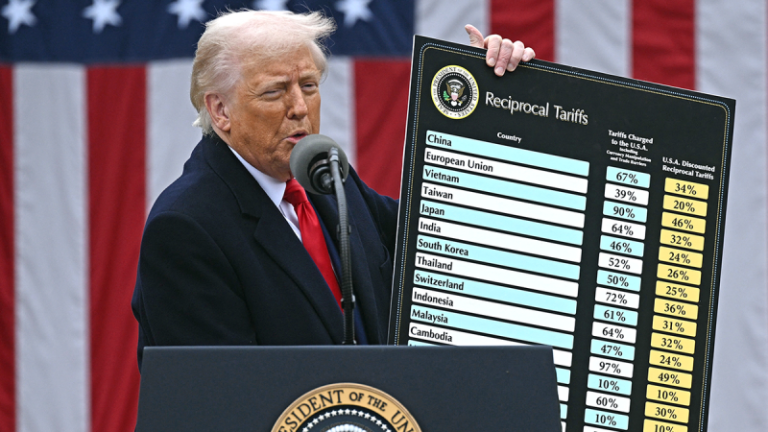
In a new amicus brief filed in V.O.S. Selections, Inc. v. Trump, Cato argues that the president overstepped his legal authority under the International Emergency Economic Powers Act (IEEPA) by imposing steep tariffs on imports from countries including China, Mexico and Canada.

The libertarian thinktank argues the move undermines the Constitution’s separation of powers and expands executive authority over trade in ways Congress never intended.

‘This is an important case about whether the president can impose tariffs essentially whenever he wants,’ Cato Institute legal fellow Brent Skorup said in an exclusive interview with Fox News Digital. ‘There has to be a limit — and this administration hasn’t offered one.’

‘Tariff rates went up to 145% on some products from China,’ he said. ‘And the president’s lawyers couldn’t offer a limiting principle. That tells you the administration believes there’s no real cap, and that’s a problem.’

Cato’s brief urges the appeals court to uphold a lower court ruling that found the tariffs exceeded the president’s statutory authority. The U.S. Court of International Trade ruled earlier this year that the president’s use of IEEPA in this case was not legally authorized. The court said the law does not permit the use of tariffs as a general tool to fight drug trafficking or trade imbalances.

Skorup said in court the administration was unable to define a clear limit on its authority under IEEPA. 

‘They couldn’t articulate a cap,’ he said. ‘There’s nothing in the law that mentions duties or tariffs. That’s a job for Congress.’

The administration has defended its actions, arguing that IEEPA provides the necessary tools for the president to act swiftly in times of national emergency. Trump officials maintain that both the fentanyl crisis and America’s trade vulnerabilities qualify.

‘There are real emergencies, no one disputes that,’ Skorup said. ‘But declaring an emergency to justify global tariffs or solve domestic trade issues goes far beyond what most Americans would recognize as a legitimate use of emergency powers.’

Skorup acknowledged that the real issue may be how much discretion Congress gave the president in the first place. 

‘It’s a bipartisan problem. Presidents from both parties have taken vague laws and stretched them. Congress bears some of the blame for writing them that way,’ he said, adding that’s why courts should ‘step in and draw the line.’

For small businesses like V.O.S. Selections, the costs go beyond legal fees. Skorup said businesses who rely on imports, like V.O.S., have struggled to plan ahead as tariffs have been paused and reinstated repeatedly.

Skorup said there are several small businesses that rely on global imports and it becomes a ‘matter of survival’ when tariff rates change unexpectedly.

‘V.O.S. Selections imports wine and spirits and when the tariff rates go up unexpectedly, they can’t get products to their distributors as planned,’ he said. ‘And that’s true for others too, like pipe importers and specialized manufacturers. These companies don’t have the flexibility to absorb those costs or adjust overnight.’

If the appeals court sides with the administration, it could mark a major expansion of presidential power over trade policy. Skorup warned that such a ruling would allow future presidents to take similar actions with little oversight.

‘It would bless Congress’ ability to hand over immense economic power to the president,’ he said. ‘That would blur the separation of powers that the Constitution is supposed to protect.’

A decision from the appeals court is expected later this year.

The White House did not immediately respond to Fox News Digital’s request for comment.

This post appeared first on FOX NEWS

Boeing delivered 60 airplanes last month, the most since December 2023, as the plane maker seeks to raise production of its bestselling 737 Max jets after a series of manufacturing and safety problems.

The tally was the highest since before a door plug from one of its new 737 Max 9 planes blew out midair in January 2024, sparking a new crisis for the company and slowing production and deliveries of aircraft. Of the monthly total, 42 were 737 Maxes, going to customers including Southwest Airlines, Alaska Airlines and United Airlines.

CEO Kelly Ortberg, who took the top job at Boeing last August, has said the company has made progress in improving production rates and quality on its factory lines.

For the three months ended June 30, Boeing handed over 150 airplanes, its best second quarter since 2018, before two crashes of Max planes five months apart grounded the jets and sparked a multiyear crisis at the top U.S. exporter. That was also the last year Boeing posted an annual profit. Its problems also gave rival Airbus a bigger lead over Boeing.

Boeing this spring had been producing about 38 Max aircraft a month and will need Federal Aviation Administration approval to go above that limit, which the agency set after the door plug accident. Ortberg said at a Bernstein investor conference in late May that he’s confident that the company could increase production to 42 of the jets a month.

The company booked 116 gross orders in June, or 70 net orders when including cancellations and accounting adjustments. Boeing often removes or adds orders to its backlog for a variety of reasons including customers’ financial health.

Boeing’s backlog stood at 5,953 as of June 30.

The manufacturer is set to report second-quarter financial results on July 29, when investors will be focused on Ortberg’s plan to increase production and aircraft deliveries.

This post appeared first on NBC NEWS

Waymo announced Tuesday that it is offering accounts for teens ages 14 to 17, starting in Phoenix.

The Alphabet-owned company said that, beginning Tuesday, parents in Phoenix can use their Waymo accounts “to invite their teen into the program, pairing them together.” Once their account is activated, teens can hail fully autonomous rides.

Previously, users were required to be at least 18 years old to sign up for a Waymo account, but the age range expansion comes as the company seeks to increase ridership amid a broader expansion of its ride-hailing service across U.S. cities. Alphabet has also been under pressure to monetize AI products amid increased competition and economic headwinds.

Waymo said it will offer “specially-trained Rider Support agents” during rides hailed by teens and loop in parents if needed. Teens can also share their trip status with their parents for real-time updates on their progress, and parents receive all ride receipts.

Teen accounts are initially only being offered to riders in the metro Phoenix area. Teen accounts will expand to more markets outside California where the Waymo app is available in the future, a spokesperson said.

Waymo’s expansion to teens follows a similar move by Uber, which launched teen accounts in 2023. Waymo, which has partnerships with Uber in multiple markets, said it “may consider enabling access for teens through our network partners in the future.”

Already, Waymo provides more than 250,000 paid trips each week across Phoenix, the San Francisco Bay Area, Los Angeles, Atlanta, and Austin, Texas, and the company is preparing to bring autonomous rides to Miami and Washington, D.C., in 2026.

In June, Waymo announced that it plans to manually drive vehicles in New York, marking the first step toward potentially cracking the largest U.S. city. Waymo said it applied for a permit with the New York City Department of Transportation to operate autonomously with a trained specialist behind the wheel in Manhattan.

This post appeared first on NBC NEWS

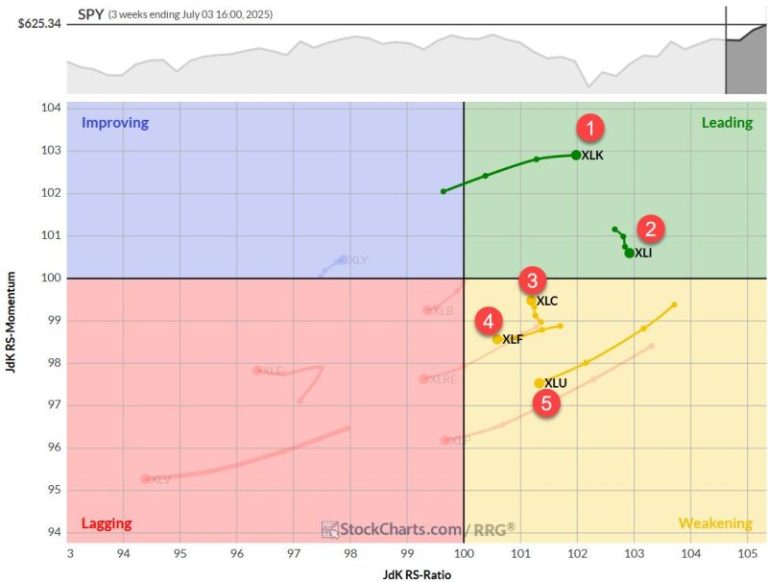
The past week has been relatively stable in terms of sector rankings, with no new entrants or exits from the top five. However, we’re seeing some interesting shifts within the rankings that warrant closer examination. Let’s dive into the details and see what the Relative Rotation Graphs (RRGs) are telling us about the current market dynamics.

Sector Rankings Shuffle

The top three sectors, technology, industrials, and communication services, remain firmly entrenched in their positions. But the real action is happening just below them. Financials climbed to the number four spot, consequently pushing utilities down to fifth place. This shift is significant, as it indicates a move towards more cyclical sectors in the top rankings.

These changes suggest a potential shift towards more economically sensitive and offensive sectors, which supports a bullish scenario or at least a move away from defensive positioning.

  1. (1) Technology – (XLK)
  2. (2) Industrials – (XLI)
  3. (3) Communication Services – (XLC)
  4. (5) Financials – (XLF)*
  5. (4) Utilities – (XLU)*
  6. (8) Materials – (XLB)*
  7. (7) Consumer Staples – (XLP)
  8. (6) Real-Estate – (XLRE)*
  9. (10) Consumer Discretionary – (XLY)*
  10. (9) Energy – (XLE)*
  11. (11) Healthcare – (XLV)

Weekly RRG

The weekly Relative Rotation Graph continues to show strength in the technology sector within the leading quadrant. Industrials is also maintaining its position in the leading quadrant, with a very short tail, indicating a consistent relative uptrend.

Communication services, financials, and utilities are currently in the weakening quadrant. However, communication services have rebounded and appear to be making their way back towards the leading quadrant again.

Financials and utilities, on the other hand, are showing negative headings, with utilities displaying the weakest momentum (longest tail).

Daily RRG

Switching to the daily RRG, we get a more granular view of recent sector movements:

  • Technology remains the strongest sector, with a high RS ratio and a short tail
  • Communication services are rotating at a slightly negative heading but still within the leading quadrant
  • Financials and industrials are showing promise in the improving quadrant
  • Utilities continues to rotate within the lagging quadrant, confirming its weakness

The positioning of these sectors, particularly the strength of technology and improvements in financials and industrials, suggests a shift towards more cyclical and less defensive sectors in the market.

Technology

Tech continues its rally after breaking above the $240 resistance area. The raw RS line is also climbing, having broken out of its falling channel. This sector remains the market leader and shows no signs of slowing down.

Industrials

The industrial sector has cleared its overhead resistance and is pushing higher. Its RS line is putting in new highs, reflecting strong relative performance. The RRG lines remain in the leading quadrant and may be turning up again, a bullish sign.

Communication Services

Comms have broken above their resistance around 105. While still at the lower boundary of its rising RS channel, it’s starting to pick up steam. Both RRG lines are climbing, with RS momentum approaching the 100 level. A cross above that level would put it back in the leading quadrant.

Financials

Financials broke through overhead resistance last week, which is a significant positive development. It’s now above both horizontal resistance and its former support line. The relative strength line needs some work, but with the current price breakout, improvement seems likely in the near future.

Utilities

The weak link in the top five, utilities, remains range-bound. It’s still above support, but not by much. With the broader market rising, utilities’ sideways movement is causing its RS line to drop. The RRG lines are rolling over, and we may soon see this sector rotate into the lagging quadrant on the weekly RRG.

Portfolio Performance Update

I must admit, our portfolio is still underperforming. The current drawdown is a little over 8%, which isn’t ideal. However, this is the nature of trend-following strategies. We’re sticking with our approach through this period of underperformance, confident that historical results support our patience.

If market trends continue as they are, we should see more offensive sectors rotate into the top five. This shift, in turn, should help us overcome the current drawdown and eventually bring us ahead of the S&P again.

Remember, investing is a marathon, not a sprint. Periods of underperformance are normal and to be expected. The key is to stay disciplined and trust in your strategy.

#StayAlert and have a great week. –Julius


 Kobo Resources Inc. (TSX.V: KRI):


This press release features multimedia. View the full release here: https://www.businesswire.com/news/home/20250708360290/en/  


  KOBO CUP SUPPORTER JERSEY  


Building on the success of the inaugural Kobo Cup in 2024, Kobo Resources has proudly expanded this initiative in 2025 into a full multi-village tournament. This year also featured a dynamic art workshop where young artists from Kossou, Bocabo, and Angossé designed the official jerseys their teams will wear.


We are excited to take this celebration of local talent and meaningful community partnerships even further with the launch of the exclusive ‘2025 Kobo Cup Supporter Jersey’ . This limited-edition jersey symbolizes more than just a game; it represents Kobo’s ongoing commitment to social responsibility and direct support for the villages where they operate.


A JERSEY WITH PURPOSE


Designed with deep cultural significance, the ‘Supporter Jersey’ proudly showcases six traditional Adinkra symbols, iconic motifs from West African heritage known for their powerful meanings and values. These symbols are thoughtfully repeated across the fabric, each representing qualities that inspire and reflect the spirit of the villages Kobo Resources supports.


Together, these symbols represent leadership, perseverance, adaptability, strength, wisdom, and community abundance. They embody the core values and spirit of the villages Kobo Resources supports, weaving a narrative of resilience, unity, and hope that investors can proudly wear as a symbol of their commitment to sustainable community development.


  DIRECT IMPACT FOR VILLAGE NEEDS  


All profits from the sale of the ‘2025 Kobo Cup Supporter Jersey’ will be channeled directly into addressing urgent needs within the villages, including providing school supplies, everyday goods, and essential resources that help improve daily life. This initiative marks a direct, transparent way for investors to contribute to sustainable community development beyond traditional infrastructure projects.


  KOBO’S COMMITMENT TO COMMUNITY  


The Kobo Cup has evolved from a single football match into an annual multi-village tournament celebrating local talent, culture, and youth empowerment. With in-country partners like African Boyz Club and Coast to Coast Entertainment, Kobo Resources continues to foster inclusion and cultural pride while ensuring fair play and equal opportunity on the field.


‘As we deepen our community engagement through the Kobo Cup and beyond, the Supporter Jersey is a unique opportunity for investors to wear their commitment to social responsibility and to help fuel meaningful change for the villages we serve,’ said Edward Gosselin, CEO of Kobo Resources.


  How to Get Your Jersey  


The limited-edition ‘2025 Kobo Cup Supporter Jersey’ is available exclusively on the Kobo Resources website.


About Kobo Resources Inc. 


 Kobo Resources is a growth-focused gold exploration company with a compelling new gold discovery in Côte d’Ivoire, one of West Africa’s most prolific and developing gold districts, hosting several multi-million-ounce gold mines. The Company’s 100%-owned Kossou Gold Project is located approximately 20 km northwest of the capital city of Yamoussoukro and is directly adjacent to one of the region’s largest gold mines with established processing facilities.


  View source version on businesswire.com:    https://www.businesswire.com/news/home/20250708360290/en/   


For further information, please contact:
Edward Gosselin
Chief Executive Officer and Director
1-418-609-3587
ir@kobores.com  
X: @KoboResources | LinkedIn: Kobo Resources Inc. 


News Provided by Business Wire via QuoteMedia

This post appeared first on investingnews.com


Stallion Uranium Corp. (the ‘ Company ‘ or ‘ Stallion ‘ ) ( TSX-V: STUD ; OTCQB: STLNF ; FSE: FE0 ) is pleased to announce that, it has entered into a technology data acquisition agreement (the ‘ Agreement ‘) dated April 24 th 2025, amongst the Company and Matthew J. Mason (the ‘ Lessor ‘) to enhance exploration efforts across its expansive uranium land package in the Athabasca Basin, Saskatchewan. The Lessor holds the exclusive license to certain proprietary technology and know how that can be used to assist in area prioritization selection for the purposes of exploration for minerals (the ‘ Technology ‘ or ‘ Haystack ‘).


  Highlights About the Technology:  


  • Haystack holds the exclusive rights to an intelligent Geological Target Identification platform called Matchstick TI which offers an innovative leap in mineral exploration technology.
  •  

  • Haystack’s predictive technology is revolutionizing the mineral exploration industry with its AI-powered deposit discovery software and proprietary drilling technology. Specializing in predictive exploration and drilling for energy metals, the company accelerates the exploration process while reducing costs. Headquartered in Vancouver, BC, Canada, the company is at the forefront of innovation in sustainable resource discovery.
  •  

  • At the heart of Haystack sits a proprietary algorithm that models geological features in space and time, delivering a remarkable 77% accuracy rate in predicting target locations.
  •  

  • This cutting-edge technology reduces financial risk and accelerates discovery in Greenfield and Frontier Exploration using readily available public data.
  •  

  • Developed over a decade in Cambridge, UK, Haystack fuses Theoretical Physics, Data Science, and Pattern Recognition to accurately pinpoint mineral targets, transforming the way exploration is conducted.
  •  

  • Stallion intends to utilize this technology to confirm current targets, and outline any additional targets on the current land position of 1,700 sq/km.
  •   

  ‘The application of machine learning in mineral exploration is transforming the industry, and we are excited to integrate this powerful tool into our exploration strategy,’ said Matthew Schwab, CEO of Stallion Uranium. ‘By deploying advanced analytics, we aim to enhance our ability to identify high-priority targets, reduce exploration risk, and maximize the potential of our uranium assets.’  


   Figure 1    : Haystack Study Area


  Agreement Terms:
Pursuant to the terms of the Agreement, the Lessor will grant the Company a non-exclusive, non-transferable right to access the Technology for a 12-month term (the ‘ Technology Lease ‘). The Company’s use of the Technology pursuant to the Technology Lease shall be limited to such mineral tenures owned or legally occupied by the Company covering an area of approximately 1,400 square kilometers in the Athabasca Basin, Saskatchewan and Alberta (the ‘ Subject Property ‘).


Pursuant to the terms of the Agreement and in consideration for the grant of the Technology Lease, on the fifth business day following the TSX Venture Exchange’s conditional acceptance of the Agreement (the ‘ Closing Date ‘), the Company will issue an aggregate of 5,000,000 common shares in the capital of the Company (each a ‘ Payment Share ‘) to the Licensor and the Lessee, as follows: (i) 3,750,000 Payment Shares to the Lessor; and (ii)1,250,000 Payment Shares to the Licensor. The Payment Shares shall be subject to a hold period ending on the date that is four months plus one day following the date of issuance under applicable Canadian securities laws.


Pursuant to the terms of the Agreement, the Licensor shall provide certain services in connection with the application of the Technology to the Subject Property for a minimum of any three consecutive months during the term of the Agreement (the ‘ Services ‘). In consideration for such Services, the Company has agreed to pay the Licensor a fee of £70,000 per month for each month in which the Services are performed.


The Lessor is an insider to the Company by virtue of holding 10% or more Company’s issued and outstanding common shares on a partially diluted basis. The issuance of any securities to an insider will be considered a ‘related party transaction’ within the meaning of Multilateral Instrument 61-101 – Protection of Minority Security Holders in Special Transactions (‘ MI 61-101 ‘). The Company is relying on exemptions from the formal valuation requirements of MI 61-101 pursuant to section 5.5(a) and the minority shareholder approval requirements of MI 61-101 pursuant to section 5.7(1)(a) in respect of such insider participation as the fair market value of the transaction, insofar as it involves interested parties, does not exceed 25% of the Company’s market capitalization.


  About Stallion Uranium Corp.:
 Stallion Uranium is working to ‘Fuel the Future with Uranium’ through the exploration of roughly 1,700 sq/km in the Athabasca Basin, home to the largest high-grade uranium deposits in the world. The company, with JV partner Atha Energy holds the largest contiguous project in the Western Athabasca Basin adjacent to multiple high-grade discovery zones.


Our leadership and advisory teams are comprised of uranium and precious metals exploration experts with the capital markets experience and the technical talent for acquiring and exploring early-stage properties. For more information visit stallionuranium.com .


  On Behalf of the Board of Stallion Uranium Corp.:  


Matthew Schwab
CEO and Director


  Corporate Office:  
700 – 838 West Hastings Street,
Vancouver, British Columbia,
V6C 0A6


T: 604-551-2360
info@stallionuranium.com  


  Neither the TSX Venture Exchange nor its Regulation Services Provider (as that term is defined in the policies of the TSX Venture Exchange) accepts responsibility for the adequacy or accuracy of this release.  


  This news release contains forward-looking statements and forward-looking information within the meaning of Canadian securities legislation (collectively, ‘forward-looking statements’) that relate to the Company’s current expectations and views of future events. Any statements that express, or involve discussions as to, expectations, beliefs, plans, objectives, assumptions or future events or performance (often, but not always, through the use of words or phrases such as ‘will likely result’, ‘are expected to’, ‘expects’, ‘will continue’, ‘is anticipated’, ‘anticipates’, ‘believes’, ‘estimated’, ‘intends’, ‘plans’, ‘forecast’, ‘projection’, ‘strategy’, ‘objective’ and ‘outlook’) are not historical facts and may be forward-looking statements and may involve estimates, assumptions and uncertainties which could cause actual results or outcomes to differ materially from those expressed in such forward-looking statements. No assurance can be given that these expectations will prove to be correct and such forward-looking statements included in this material change report should not be unduly relied upon. These statements speak only as of the date they are made.  


  Forward-looking statements are based on a number of assumptions and are subject to a number of risks and uncertainties, many of which are beyond the Company’s control, which could cause actual results and events to differ materially from those that are disclosed in or implied by such forward-looking statements. The Company undertakes no obligation to update or revise any forward-looking statements, whether as a result of new information, future events or otherwise, except as may be required by law. New factors emerge from time to time, and it is not possible for the Company to predict all of them or assess the impact of each such factor or the extent to which any factor, or combination of factors, may cause results to differ materially from those contained in any forward-looking statement. Any forward-looking statements contained in this presentation are expressly qualified in their entirety by this cautionary statement .


A photo accompanying this announcement is available at https://www.globenewswire.com/NewsRoom/AttachmentNg/028d9b66-ef57-4c79-b33c-72bd316d6d05  


News Provided by GlobeNewswire via QuoteMedia

This post appeared first on investingnews.com

The gold price continued to surge to new record highs in the second quarter of the year, reaching an all-time high of C$4,663.85 per ounce, or US$3,433.47, on June 13.

The gains were primarily fueled by safe-haven investment as Israel and the United States launched attacks on Iranian nuclear sites and Iran retaliated against targets in Israel and a US base in Qatar. Although a ceasefire was announced, tensions in the region remain high.

Additional tailwinds come from the continuing uncertainty in global financial markets, stemming from shifting US trade policy and Donald Trump’s ongoing, on-again-off-again tariff plans.

There is also additional uncertainty going into the second half of the year as the US government passed its “Big Beautiful Bill” on July 3. The bill has been criticized from both sides, including the former head of the Department of Government Efficiency, Elon Musk, for increasing deficit spending and exacerbating an already ballooning debt, which some investors believe is driving the US toward a debt crisis.

What does this mean for junior gold companies? While there was delay in translating high gold prices into share price gains for gold explorers, many are now up significantly this year. Below, we profile the five TSXV gold companies that are the best performers of 2025 by year-to-date share price gains.

Data for this article was retrieved on July 3, 2025, using TradingView’s stock screener, and only companies with market capitalizations greater than C$10 million are included.

1. Onyx Gold (TSXV:ONYX)

Year-to-date gain: 846.34 percent
Market cap: C$122.48 million
Share price: C$1.94

Onyx Gold is an exploration company advancing its Munro-Croesus project, located near Timmins in Ontario, Canada. The company has increased the size of the land package by 200 percent between 2020 and 2025, and the project now covers an area of 109 square kilometers.

Munro-Croesus hosts the historic Croesus mine, which produced 14,859 ounces of gold between 1915 and 1936 with an average grade of 95.3 grams per metric ton (g/t). Onyx is the first company to explore the property since the mine closed.

Shares in Onyx have had significant gains in the second quarter of 2025. The momentum came as the company announced option agreements to enlarge its land package at Munro-Croesus.

The first announcement came on April 10, when it stated that it had agreed with private vendors to acquire a 21 hectare patented claim near the Argus North zone. Under the terms of the agreement, Onyx has the option to acquire a 100 percent interest in the property, which has never been drilled, in exchange for cash consideration of C$1.5 million and 3.3 million Onyx shares over a three-year period.

The second acquisition was announced on June 24, when Onyx reported that it signed a mineral property purchase and sale agreement to acquire a 100 percent interest in the Munro and Hewitt properties, both located near the existing Munro-Croesus project. The acquisition will expand the company’s land package from 95 to 109 square kilometers.

Alongside its land consolidations, Onyx has also spent the second quarter advancing exploration at the property.

Most recently, on June 26, the company reported the first drill results from its 10,000 meter spring drill program at the Argus North zone at Munro-Croesus. One highlighted assay contained 1.8 grams per metric ton (g/t) gold over 91 meters, including 4 g/t over 32 meters and 5.3 g/t over 17 meters.

The company said the results demonstrate the continuity of broad zones of high-grade gold mineralization.

Shares in Onyx reached a year-to-date high of C$2.09 on June 27.

2. Goldgroup Mining (TSXV:GGA)

Year-to-date gain: 500 percent
Market cap: C$217.34 million
Share price: C$0.99

Goldgroup Mining is a gold production, development and exploration company working to advance its Cerro Prieto heap-leach gold mine. The 4,335 hectare property, located in Sonora, Mexico, produces an annual average of 11,500 ounces of gold and has produced more than 120,000 ounces since its beginning in March 2013.

Goldgroup is currently working to double the capacity of the mine to more than 25,000 ounces per year. The last update on progress came in October 2024, when it announced that it had installed the primary crusher with a 2,200 metric ton per day throughput. It also said it had expanded pumping and irrigation capacity.

The most recent update on Cerro Prieto came on March 26, when Goldgroup announced high-impact exploration near the mine. The program will include 6,000 meters of diamond drilling focused on the Nuevo Esperanza and Reyna zones, which are next to the main Esperanza production zone.

The company also announced plans for an induced polarization geophysical survey and surface trenching 1 kilometer south of the mine to further investigate newly discovered mineralized zones.

In addition to activities at Cerro Prieto, the company announced on March 7 that it had entered an agreement to acquire Minera Apolo and its Pinos gold project from Candeleria Mining in exchange for settling a US$2.7 million loan facility. Goldgroup previously secured rights to the facility with Candeleria from a creditor group in a maneuver to acquire the project.

Pinos is a fully permitted gold project situated in the Zacatecas mining belt of Northern Mexico and comprises 29 concessions over 3,816 hectares. A 2018 PEA revealed an after-tax net present value of US$12 million, with a 25 percent internal rate of return at a gold price of US$1,250 per ounce.

Shares in Goldgroup reached a year-to-date high of C$1.08 on May 9.

3. Trident Resources (TSXV:ROCK)

Year-to-date gain: 400 percent
Market cap: C$19.62 million
Share price: C$0.75

Trident Resources, formerly Eros Resources, is a gold and copper exploration company focused on projects in Saskatchewan, Canada.

A three-way merger in early 2025 between Eros Resources, MAS Gold and Rockridge Resources, allowed the companies to consolidate a portfolio of assets in Saskatchewan, including the Contact Lake and Greywacke gold projects in the La Ronge gold belt as well as the Knife Lake copper project.

Before this year, Eros was focused on the Bell Mountain gold-silver project in Nevada, US, but on January 6, the company announced it had sold the property to Lincoln Gold Mining (TSXV:LMG) in exchange for up to 4.5 million common shares and a net profits interest of 7.5 percent of net returns from gold and silver produced at the project to a maximum of US$2 million.

The company announced its rebranding from Eros to Trident on April 23, with its new name chosen in part to represent the three companies joining together. In the release, the company stated that the rebrand marked the beginning of a new chapter for the company, underscoring its focus on the gold and copper markets.

On May 6, Trident announced it received drill permits for the Contact Lake project, marking the first project news following the rebrand.

Trident stated the drill program would be conducted over the summer and consist of approximately 5,000 meters, with 3,800 meters to be carried out at the Contact Lake deposit and 1,200 meters at the Preview SW deposit.

Shares in Trident reached a year-to-date high of C$0.75 on July 3.

4. Solstice Gold (TSXV:SGC)

Year-to-date gain: 333 percent
Market cap: C$15.28 million
Share price: C$0.065

Solstice Gold is an exploration company focused on advancing its flagship Strathy gold project in Ontario, which it acquired in June 2024.

The project consists of 45 claims covering an area of 45 square kilometers in the Temagami Greenstone belt. Historical documents report six gold showings in the central portion of the project areas, with documented mineralization at the Leckie prospect.

On January 15, Solstice announced results from an induced polarization survey of the property. It identified 50 new targets, with the highest priority targets being along strike on the Leckie Fault. The company stated that the results support the existence of an extensive, largely unexplored system, with potential for multiple discoveries.

Solstice said it had also been selected to receive a grant under the Ontario Junior Exploration Program from the provincial government. The grant will provide 50 percent of the exploration funding, up to a maximum of C$194,000.

Shares in Solstice gained early in the year following its January 20 announcement that Michael Gentile had increased his stake in Solstice to 16.76 percent, making him the single largest shareholder.

In its latest project update on July 2, Solstice announced it had wrapped up its spring drill program, which focused on four target areas. In total, the company completed 3,125 meters of drilling across 14 holes, and results are expected in July.

The company reported that it had entered into an agreement to acquire 17 additional claims, which would increase the project area by 50 percent. It added that targets identified from its IP program may extend along strike into these claims.

Shares in Solstice reached a year-to-date high of C$0.065 on June 27.

5. Lahontan Gold (TSXV:LG)

Year-to-date gain: 300 percent
Market cap: C$28.49 million
Share price: C$0.10

Lahontan Gold is a development and exploration company dedicated to advancing a portfolio of properties in Nevada, United States.

Its primary focus is on its flagship Santa Fe gold-silver project in Walker Lane. The property consists of 291 unpatented lode mining claims, 67 unpatented mill site claims, and 24 patented lode mining claims, covering a land package of 26.4 square kilometers.

On January 24, the company released a PEA for the project that demonstrated an after-tax net present value of US$56.5 million with an internal rate of return of 17.4 percent over a payback period of 4.24 years based on a gold price of US$2,025 per ounce.

The included MRE for the site reports an indicated resource of 1.44 million ounces of gold and 11.2 million ounces of silver from 48.39 million metric tons of ore at an average grade of 0.92 g/t gold and 7.18 g/t silver. It also hosts an inferred resource of 401,000 ounces of gold and 1.75 million ounces of silver from 16.76 million metric tons at a grade of 0.74 g/t gold and 3.25 g/t silver.

The most recent news from Lahontan was on March 18, when it provided an update on its Exploration Plan of Operation submitted to the Bureau of Land Management in November 2024. In the release, the company stated it expects the Bureau to approve the plan, allowing permitting to proceed to the National Environmental Policy Act phase. According to Lahontan, final approval is on track for late 2025.

In the meantime, Lahontan stated that it would be able to continue exploration drilling at its patented mining claims under a Notice of Intent (NOI). On May 6, the company filed a new NOI for additional drilling at the site that would target extensions in the Slab and York areas of the project, and the BLM approved it on June 9.

Additionally, the company announced on June 24 that it had started metallurgical test work at Santa Fe with the goal of substantially improving CN leach gold recoveries for transition materials compared to the 49 percent recovery in the PEA.

Shares in Lahontan reached a year-to-date high of C$0.105 on June 25.

Securities Disclosure: I, Dean Belder, hold no direct investment interest in any company mentioned in this article.

This post appeared first on investingnews.com

US President Donald Trump’s massive One Big Beautiful Bill is poised to reshape America’s entire industrial and energy future, dramatically reorienting policies and incentives for various industries.

Passed by the Senate by a 51 to 50 margin, with Vice President JD Vance breaking the tie, the legislation now heads to conference negotiations that will finalize its far-reaching impacts on energy investment, critical minerals and the digital economy.

Framed by the White House as a blueprint for restoring American industrial strength, the bill combines major fossil fuel incentives, nuclear supports, and deep tax cuts with steep rollbacks of renewable energy subsidies and critical minerals credits.

Here are some of the bill’s most significant provisions.

Mining incentives on the chopping block

Perhaps the most consequential piece of the “One Big Beautiful Bill” for the mining industry is its planned phaseout of the Section 45X advanced manufacturing production credit.

This 10 percent tax incentive was created under the 2022 Inflation Reduction Act to encourage domestic extraction, processing and recycling of critical minerals — such as lithium, nickel, cobalt and rare earth elements — that power batteries and other industrial technologies.

Under the new bill, the 45X credit would begin to wind down in 2031 and be eliminated entirely by 2034.

That reversal has drawn fierce criticism from mining advocates, who warn that scaling back the credit undermines efforts to build a resilient domestic supply chain.

Meanwhile, the National Mining Association, which has long called for expanded mining incentives, expressed their support for the bill’s passage and praised other funding provisions in the bill that support the industry.

“We urge the House to quickly pass this bill,” said Rich Nolan, National Mining Association president and CEO, in a statement after the Senate vote. “It increases the competitiveness of the American mining industry and provides vital incentives, including funding to counter China’s mineral dominance.”

The overall direction of the bill, though, makes clear that domestic producers will face a more challenging environment after a brief window of continued support up until 2034.

The bill’s tougher guardrails on critical mineral sourcing add to this challenge. Alongside the phaseout of 45X, lawmakers included new restrictions to curb reliance on “prohibited foreign entities” — primarily adversarial nations like China and Russia — in the supply chain.

Under the legislation, companies seeking the advanced manufacturing credit will have to pass a ‘material assistance cost ratio test’ to prove they are not overly dependent on inputs or components from these foreign entities.

Fossil fuels win big

The legislation delivers a sweeping victory to oil, gas and coal interests.

First, it mandates an ambitious leasing program for fossil fuel production, opening 30 lease sales in the Gulf of Mexico over 15 years and more than 30 lease sales annually on federal lands across nine states. It also cuts the royalties oil and gas producers pay to the government, aiming to encourage higher output.

“This bill will be the most transformational legislation that we’ve seen in decades in terms of access to both federal lands and federal waters,” Mike Sommers, president of the American Petroleum Institute, told CNBC.

“It includes almost all of our priorities.”

Coal producers, too, receive a major boost. The bill designates at least 4 million additional acres of federal land for coal mining and slashes the royalties paid by coal companies.

In a further sweetener for metallurgical coal producers, the bill permits them to use advanced manufacturing tax credits to support coal used in steelmaking.

In a controversial move, the bill also extends a carbon capture tax credit designed to trap carbon emissions from industrial facilities. However, under the new language, oil companies can claim a higher tax benefit for using captured CO2 to push more oil out of aging wells.

Hydrogen fuel investments get a partial reprieve: the hydrogen production tax credit will now end in 2028 instead of immediately, giving oil majors more time to roll out projects.

Renewables face deep cuts

In stark contrast to fossil fuels, renewable energy incentives are headed for a steep rollback. The legislation phases out the investment and production tax credits that have supported wind and solar since the 1990s.

Under the new plan, renewable power projects placed into service after 2027 will no longer qualify for these credits, although a one year grace period will apply to projects that begin construction within 12 months of the bill becoming law.

A related tax credit encouraging the use of US-made components in renewable installations will also expire for projects entering service after 2027. Projects that start construction in the year after the bill becomes law can still qualify, but anything beyond that window loses access to the incentive.

The bill also adopts Senate language providing a more gradual phaseout for these credits, rather than the abrupt cutoff proposed by the House.

Still, the overall impact is clear: after decades of public policy designed to grow wind and solar, their incentives are being dismantled.

President Trump’s views on renewables are no secret. In a June 29 Fox News interview, he criticized solar farms and wind turbines as “ugly as hell” and vowed to restore fossil fuels to the heart of US energy policy.

Crypto gets an indirect boost

Cryptocurrency investors have found reason for optimism in the bill, even though no direct amendments on crypto taxes made it into the final text.

As the bill moves forward, it extends the 2017 Trump-era tax cuts, adds new tax-free treatment for up to US$25,000 in tips and US$12,500 in overtime pay, and expands estate tax exemptions.

These changes are projected to raise the US national debt by between US$3.3 trillion and US$5 trillion over the next decade. That debt expansion, paired with more disposable income from tax cuts, has created a bullish narrative for Bitcoin and other cryptocurrencies as a hedge against inflation.

“More debt can lead to more money printing. That’s good for BTC in the long run,” crypto analyst Ranjay Singh said in an X post.

Crypto market observers had hoped the bill would fix rules around staking, airdrops and Bitcoin-mining taxation, but those amendments fell short in the Senate. Senator Cynthia Lummis, for instance, tried to remove what she called a “double tax” on Bitcoin miners, but the proposal was left out of the final package.

Even so, crypto advocates believe the combination of looser monetary policy, expanded government spending and higher debt will create an environment that supports digital assets.

Artificial intelligence remains a state issue

One of the most hard-fought technology debates in the bill revolved around artificial intelligence (AI) regulation.

The House version of the bill had sought to impose a 10 year nationwide moratorium preventing states from enacting their own AI laws. Senate Republicans, led by Senators Marsha Blackburn and Ted Cruz, negotiated that down to five years before ultimately scrapping the idea altogether.

The final bill does not block states from regulating AI — a major development for privacy, civil rights and consumer groups.

“The Senate did the right thing today for kids, for families and for our future by voting to strip out the dangerous 10-year ban on state AI laws,” Jim Steyer, CEO of Common Sense Media, said in a statement.

The removal of the moratorium means the US will remain a patchwork of state-level rules, from deepfake bans in California to mental health chatbot restrictions in Utah.

Industry leaders have previously complained that this environment creates compliance headaches and could hamper innovation.

“There’s growing recognition that the current patchwork approach to regulating AI isn’t working,” said Chris Lehane, chief global affairs officer at OpenAI. “But until there is a national framework, this is what we’ll have.”

Securities Disclosure: I, Giann Liguid, hold no direct investment interest in any company mentioned in this article.

This post appeared first on investingnews.com