
Author

admin

Browsing

As coordinated U.S. and Israeli strikes on Iran continue, current and former defense officials say that while a limited strike lasting several days is feasible, sustaining a broader confrontation — one involving potentially hundreds of incoming missiles — is far more complicated.

The U.S. and Israel undertook a mission known as Operation Epic Fury, targeting Iranian leadership and military sites Saturday. Its duration is still unclear, but the campaign may go on for days, according to U.S. officials. 

Sustaining operations beyond the initial window presents a more complex challenge — one shaped by a ‘zero-sum’ competition for missile defense inventories between the Middle East and Europe.

Officials and analysts warn that certain U.S. missile and air-defense interceptor inventories have been severely drawn down by the relentless pace of recent operations. The strategic dilemma for the Pentagon is that the systems required to shield U.S. bases from Iranian retaliation are the same ones being depleted by the defense of Ukraine and the ongoing protection of Israel.

Iran already has fired counterattacks near U.S. positions in Bahrain, Qatar, the United Arab Emirates, Kuwait and Jordan, with several host governments saying their air defense systems intercepted incoming projectiles. No U.S. service member fatalities or injuries have been reported as of Saturday, a U.S. official told Fox News Digital. 

U.S. authorities have not publicly released casualty figures or formal damage assessments.

During the intense June 2025 Iran–Israel conflict, U.S. forces fired more than 150 Terminal High Altitude Area Defense Interceptors — roughly a quarter of the total global inventory — and a large number of ship-based standard missiles to protect allies, according to published defense assessments.

This shortfall largely is attributed to the dual pressure of supplying Ukraine against Russian cruise missiles and the surge of batteries to the Middle East. Replenishing these high-end systems can take more than a year, analysts say, because production lines are optimized for peacetime and cannot be surged overnight.

Independent groups have noted the U.S. currently produces roughly 600–650 Patriot PAC-3 MSE missiles annually, reflecting recent contracts to boost production capacity. Analysts say that in a high-intensity war with a near-peer adversary like Iran — where multiple interceptors are often used to defeat a single incoming missile — even a year’s worth of production could be consumed in a matter of weeks, especially after recent drawdowns in Ukraine and the Middle East.

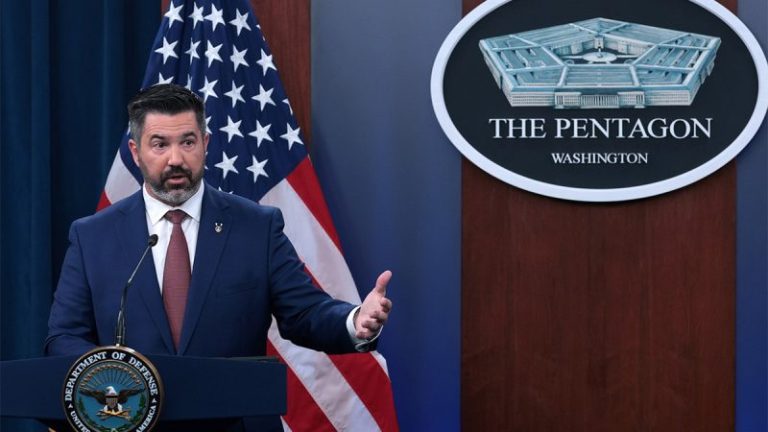
‘The Department of War has everything it needs to execute any mission at the time and place of the President’s choosing and on any timeline,’ Chief Pentagon spokesman Sean Parnell said in response to readiness questions.

Retired Air Force Gen. Charles Wald, former deputy commander of U.S. European Command, said the United States retains the ability to surge conventional strike munitions into the region and draw from prepositioned stocks if a campaign is ordered. 

‘From a conventional munition standpoint, we can always fly in more weapons from around the world,’ Wald told Fox News Digital. ‘There are a lot of weapons stored there with this type of mission in mind.’

The greater concern, he acknowledged, lies on the defensive side. 

‘The issue will be defensive weapons — Patriot, SM-3, and the Arrow system in Israel,’ Wald said. ‘You can never have enough defense.’

Regional analysts caution that in a sustained missile exchange, interceptor inventories — not offensive strike weapons — could become the binding constraint. 

‘There is a limit to how many THAAD missiles can be used,’ Israeli defense analyst Ehud Eilam said. ‘These are not systems you can reproduce overnight.’

Iran is believed to possess between 1,500 ballistic missiles and 2,000 ballistic missiles, as well as drones and shorter-range rockets capable of striking U.S. bases and Gulf energy infrastructure.

Several experts also pointed to the psychological impact of recent U.S. operations. 

The swift Operation Absolute Resolve in Venezuela in January 2026 and summer 2025’s 12-day exchange with Iran have reinforced confidence in American military capability. However, one former defense official cautioned that success in these tightly scoped missions can create a false sense of momentum toward action in far more complex scenarios.

‘Iran is a very different problem,’ the official said — a large, heavily armed state with extensive missile forces and regional proxy networks that would not resemble a short, surgical operation.

Wald acknowledged that risk. 

‘You don’t want to get people so confident that you don’t consider the risks. It’s not going to be as clean or pure as, say, Venezuela was, or the 12-day war.’

Even as the strikes continue, officials warn that retaliation from Iran and its network of allied militias could broaden the conflict. Iran’s ballistic missiles and drones — coupled with allied groups in Iraq, Lebanon and Yemen — already have prompted missile salvos against U.S. bases and Gulf partners, according to defense reporting.

Experts say the 2025 conflict underscored how quickly escalation can test both defensive systems and political will. 

‘Once these things break, you own what follows,’ one former official said, underscoring the risk that missiles and proxy actions could quickly widen a limited U.S. strike.

Wald warned that even a successful military phase would not eliminate the political uncertainty. 

‘Bombing Iran is not going to do regime change,’ he said, emphasizing that air power can degrade capability but cannot guarantee a stable political outcome.

Beyond the immediate exchange, officials say the economic consequences could prove just as consequential. Roughly one-fifth of the world’s oil supply transits the Strait of Hormuz, and even limited disruption could send global energy markets sharply higher.

For Washington, the strategic calculus extends beyond the Middle East. China remains the primary long-term competitor, with the war in Ukraine already consuming significant resources. 

A sustained regional conflict would draw on naval assets and air-defense systems that planners must also consider for potential future contingencies in Taiwan or North Korea.

Officials familiar with internal deliberations say President Donald Trump has sought a high degree of confidence in how an Iran contingency would unfold — a standard that becomes harder to meet in scenarios involving escalation and political fallout.

Fox News Digital has reached out to the White House for comment.
Related Article

Trump issues stern Iran warning as Tehran angrily reacts to speech amid muted world reaction
This post appeared first on FOX NEWS

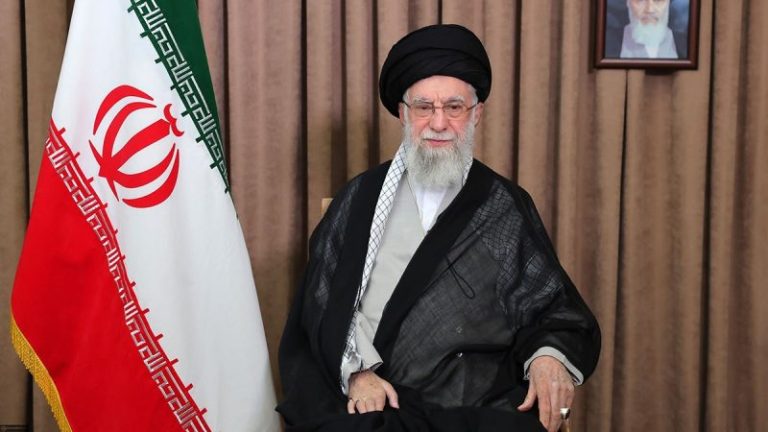
Iran entered a new chapter Saturday after Supreme Leader Ayatollah Ali Khamenei was killed, abruptly ending more than three decades of authoritarian rule and setting in motion a leadership transition the regime has long prepared.

A senior Arab diplomat told The Times of Israel that while Khamenei’s demise is a ‘massive blow’ to the Islamic Republic, Tehran anticipated the possibility and took steps to withstand such a scenario.

‘Mere survival, at this point, would be considered a victory,’ the diplomat said of the regime, according to the outlet, following U.S. and Israeli strikes across the country.

A recent report from the Council on Foreign Relations (CFR) outlined three broad trajectories for a post-Khamenei Iran: managed regime continuity, an overt or creeping military takeover, or systemic collapse.

CFR cautioned that even a leadership change at the top would not necessarily translate into meaningful political reform in the near term, given the regime’s deeply institutionalized power structure and its record of using force to maintain control.

The report notes that the real balance of power rests within a tight circle of clerical elites and the Islamic Revolutionary Guard Corps (IRGC).

It describes a likely ‘continuity’ scenario as producing ‘Khamenei-ism without Khamenei,’ in which a successor from within the regime preserves the ideological framework of the Islamic Republic while relying on established security institutions to preserve stability.

‘The Islamic Republic’s constitution includes a succession process. The Assembly of Experts, a clerical body, is constitutionally charged with selecting the next supreme leader,’ Jason Brodsky, policy director of United Against Nuclear Iran (UANI), told Fox News Digital. 

‘In the interim, should there be a leadership vacancy, an interim leadership council is formed comprised of the president, chief justice, and a member of the Guardian Council selected by the Expediency Council,’ he added. ‘The IRGC is a key stakeholder in this process, and will heavily influence its outcome.’

Over the past three decades, the Bayt-e Rahbari, or the Office of the Supreme Leader, expanded into what a February report by UANI described as a ‘sprawling parallel state’ operating alongside Iran’s formal institutions.

The analysis characterizes the Office as the regime’s ‘hidden nerve center,’ extending control across the military, security establishment and major economic foundations in ways that make the system’s authority institutional rather than dependent on Khamenei’s physical presence.

‘The supreme leader today is no longer just one man; he is represented through an all-encompassing institution that consolidates power, manages succession, and guarantees continuity,’ the non-partisan policy organization said. ‘The Islamic Republic’s most enduring strength lies in this hidden architecture of control, which will continue to shape the country’s future long after Khamenei himself departs from the scene.’

Related Article

World leaders split over military action as US-Israel strike Iran in coordinated operation
This post appeared first on FOX NEWS

Here’s a quick recap of the crypto landscape for Friday (February 25) as of 1:30 p.m. UTC.

Get the latest insights on Bitcoin, Ether and altcoins, along with a round-up of key cryptocurrency market news.

Bitcoin (BTC) was priced at US$65,260.11, down by 3,6 percent over the last 24 hours.

Bitcoin price performance, February 27, 2026.

Chart via TradingView.

A US$8.9 billion crypto options expiry drove “extreme fear” in the market today, with price manipulation and re-hedging resulting in volatility. Bitcoin fell below the US$66,000 support level after a corrective rebound earlier in the week lost momentum, reflecting the fragility of the balance between risk appetite and available liquidity in global markets.

According to XS.com senior market analyst, Rania Gule, Bitcoin’s swift pullback suggests the recent uptick was merely a technical bounce within a more complex macro environment, rather than the beginning of a sustainable bullish wave.

“In the near term, I expect Bitcoin to remain within a broad range between US$64,000 and US$70,000, with a slight bearish bias if geopolitical pressures persist and equity market momentum weakens,’ she said.

Ether (ETH) was priced at US$1,917.34, down by 5.5 percent over the last 24 hours.

Altcoin price update

  • XRP (XRP) was priced at US$1.35, down by 3.7 percent over 24 hours.
  • Solana (SOL) was trading at US$81.42, down by 5.5 percent over 24 hours.

Today’s crypto news to know

Vitalik Buterin sells US$43 million in ETH

Ethereum co-founder Vitalik Buterin sold approximately 17,000 ETH worth approximately US$43 million at the time of sale, to fund privacy and security initiatives.

Marathon partners with Starwood on AI data center

Shares of Bitcoin miner Marathon Digital Holdings (NASDAQ:MARA) surged after the company announced a partnership with Starwood Capital Group, a leading global private investment firm focused on real estate, to build data centers for the artificial intelligence (AI) sector).

In a Wednesday (February 25) blog post, Zach Pandl, Grayscale’s head of research, called the relationship between AI and blockchain “complementary from a fundamental standpoint.”

Securities Disclosure: I, Meagen Seatter, hold no direct investment interest in any company mentioned in this article.

Securities Disclosure: I, Giann Liguid, hold no direct investment interest in any company mentioned in this article.

This post appeared first on investingnews.com

Technical analysts Kevin Wadsworth and Patrick Karim of NorthstarBadcharts.com share an update on the capital rotation process that they see unfolding, and explain what it means for precious metals, as well as the US stock market and Bitcoin.

They also talk about the opportunity they see in oil and how to get exposure to the market.

Securities Disclosure: I, Charlotte McLeod, hold no direct investment interest in any company mentioned in this article.

This post appeared first on investingnews.com

TORONTO, ON / ACCESS Newswire / February 27, 2026 / 55 North Mining Inc. (CSE:FFF,OTC:FFFNF)(FSE:6YF) (‘55 North‘ or the ‘Company‘) is pleased to announce that it has closed its previously announced non-brokered flow-through private placement (the ‘Private Placement’).

Pursuant to the Private Placement, the Company issued 1,702,800 flow-through common shares (‘FT Shares’) at a price of $0.745 per FT Share for aggregate gross proceeds of $1,268,586.02.

The FT Shares entitle the holder to receive the tax benefits applicable to flow-through shares in accordance with the provisions of the Income Tax Act (Canada). No warrants were issued in connection with the Private Placement. All securities issued pursuant to the Private Placement are subject to a four-month hold period in accordance with applicable securities laws.

The gross proceeds raised from the Private Placement will be used to incur eligible Canadian exploration expenses that qualify as ‘flow-through mining expenditures’ for purposes of the Income Tax Act (Canada), related to the exploration of the Company’s Last Hope Gold Project.

The Company further confirms that exploration drilling activities are underway, with one drill rig currently operating on the Last Hope Gold Project. A more detailed operational update will be provided in a subsequent news release.

About 55 North Mining Inc.

55 North Mining Inc. is a Canadian exploration and development company advancing its high-grade Last Hope Gold Project located in Manitoba, Canada.

FOR FURTHER INFORMATION, PLEASE CONTACT:

Mr. Bruce Reid
Chief Executive Officer
55 North Mining Inc.
Phone: 647-500-4495
bruce@mine2capital.ca

Mr. Vance Loeber
Corporate Development
Phone: 778-999-3530
cvl@tydewell.com

CAUTION REGARDING FORWARD-LOOKING INFORMATION

This news release of 55 North contains statements that constitute ‘forward-looking statements.’ Such forward-looking statements involve known and unknown risks, uncertainties and other factors that may cause the Company’s actual results, performance or achievements, or developments in the industry to differ materially from the anticipated results, performance or achievements expressed or implied by such forward-looking statements.

SOURCE: 55 North Mining Inc

View the original press release on ACCESS Newswire

News Provided by ACCESS Newswire via QuoteMedia

This post appeared first on investingnews.com

We also break down next week’s catalysts to watch to help you prepare for the week ahead.

In this article:

    This week’s tech sector performance

    Tariff concerns sent global stocks drifting on Monday (February 23), with US futures pointing lower at the start of the week even though the Nasdaq Composite (INDEXNASDAQ:.IXIC) ended a three week losing streak the previous week.

    Additionally, a Citrini Research report published on Sunday (February 22) projects that the dominance of artificial intelligence (AI) could lead to the collapse of the “human-centric consumer economy” and cause widespread unemployment, adding to the growing anxiety around AI-induced displacement.

    Markets had a subdued reaction to Anthropic’s announcement ⁠of 10 new AI tools on Tuesday (February 24), including plugins that could help with investment banking tasks, private equity engineering and design.

    Mohit Kumar, chief Europe economist at Jefferies Financial Group (NYSE:JEF), noted that, although AI disruption will remain a market theme for the foreseeable future, the company’s emphasis on “partnership rather than displacement” may have spurred a software sector rally in Tuesday afternoon trading.

    Also aiding the software recovery was a handful of experts pushing back against the Citrini report, including a response published by Citadel Securities’ Frank Flight, who said the thesis is far-fetched at best.

    On Wednesday (February 25), ahead of NVIDIA’s (NASDAQ:NVDA) much-anticipated earnings report, tech stocks boosted indexes in North America, Europe and Asia, with the S&P/TSX Composite Index (INDEXTSI:OSPTX) seeing advances in AI-related software and diversified tech amid positive quarterly reports from Canada’s main financial institutions; meanwhile, semiconductor companies led gains on Wall Street.

    While positive sentiment lifted Canada’s main index to a new record on Thursday (February 26), the US had a weaker session after investors were unimpressed with NVIDIA’S results.

    Although NVIDIA beat expectations, guidance shows deceleration. A 3.2 percent drop in the PHLX Semiconductor Sector (INDEXNASDAQ:SOX) index dragged the Nasdaq down to close 1.2 percent lower.

    Indexes in Canada and the US slipped on Friday (February 27) as renewed positive sentiment from earlier in the week ultimately gave way to concerns over AI-led disruptions.

    3 tech stocks moving markets this week

    1. NVIDIA (NASDAQ:NVDA)

    NVIDIA, which makes up almost 8 percent of the S&P 500 (INDEXSP:.INX), was up on Wednesday ahead of its Q4 earnings report, which showed US$68.1 billion in revenue, an increase of 73 percent. Net income was up 94 percent to US$42.9 billion, and the company generated US$96.6 billion in free cashflow for the year.

    The results exceeded analysts’ estimates, but shares were flat in after-hours trading, despite CEO Jensen Huang’s claim of “skyrocketing” AI agent adoption and sales growth of 78 percent for the current quarter.

    2. Salesforce (NYSE:CRM)

    Salesforce rose modestly intraday ahead of its Q4 earnings release on Wednesday, which showed revenue growth of 12 percent year-on-year, beating analysts’ estimates at US$11.2 billion. Full-year revenue was at US$41.5 billion, up 10 percent, with the company reporting remaining performance obligations of US$72.4 billion, a 14 percent increase.

    Annual recurring revenue from the company’s AI agent platform, Agentforce, led quarterly gains, reaching US$800 million, up 169 percent. Despite CEO Marc Benioff’s revenue projection of US$63 billion by the 2030 fiscal year, 2027 fiscal year guidance of US$45.8 billion to US$46.2 billion was below the consensus estimate of US$46.06 billion, which sent shares down around 5 percent in after-hours trading. The company also said it anticipates a slowdown in core business expansion, projecting organic growth of only 7 to 8 percent for the upcoming fiscal year.

    2. Dell Technologies (NYSE:DELL)

    Dell Technologies was trading higher ahead of its Q4 earnings. The firm delivered revenue of US$33.4 billion, beating estimates, and full-year revenue of a record US$113.5 billion.

    Sales of AI servers hit US$9.8 billion, up 100 percent year-on-year, with a US$64 billion AI pipeline and US$43 billion backlog. Earnings per share topped estimates of US$2.36, coming in at US$2.86.

    Momentum continued after hours following CEO Mike Dell’s comments on “skyrocketing” hyperscaler demand for AI infrastructure despite some margin pressure, with Dell’s share price soaring about 11 percent.

    Top tech news of the week

                Tech ETF performance

                Tech exchange-traded funds (ETFs) track baskets of major tech stocks, meaning their performance helps investors gauge the overall performance of the niches they cover.

                This week, the iShares Semiconductor ETF (NASDAQ:SOXX) advanced by 1.83 percent, while the Invesco PHLX Semiconductor ETF (NASDAQ:SOXQ) advanced by 1.77 percent.

                The VanEck Semiconductor ETF (NASDAQ:SMH) also increased by 1.76 percent.

                Tech news to watch next week

                Next week there will be light earnings, with results expected from MongoDB (NASDAQ:MDB), Alibaba (NYSE:BABA) and Broadcom (NASDAQ:AVGO); however, macro data alongside speeches from US Federal Reserve presidents will dominate alongside tariff developments and AI CAPEX and inflation concerns.

                Securities Disclosure: I, Meagen Seatter, hold no direct investment interest in any company mentioned in this article.

                This post appeared first on investingnews.com

                Statistics Canada released its December data for gross domestic product (GDP) by industry on Friday (February 27).

                While overall GDP increased 0.2 percent, the figures showed a broad 0.9 percent decline in the mining, quarrying, and oil and gas extraction sector, reversing a 0.1 percent increase in November. In real dollars, the sector contributed C$119.62 billion in the month, just shy of C$120.76 billion in November.

                The decrease was due to a 1.1 percent contraction in the oil and gas subsector and a 1.4 percent decline in the mining and quarrying subsector. However, the fall off was slightly offset by a 1.6 percent increase in sector support activities.

                The Canadian reporting agency also released its annual mineral production survey on Wednesday (February 25).

                The data showed that 2025’s production and shipment numbers increased nearly across the board for copper, silver and gold.

                In terms of production, copper output climbed to 499,896 metric tons, beating the 444,587 metric tons in 2024. The quantity of silver produced also rose significantly to 356,052 kilograms in 2025 from 331,965 kilograms. Gold also increased, though narrowly, to 186,923 kilograms from 185,555 kilograms the previous year.

                As for shipments, copper climbed to 480,100 metric tons from 437,861 metric tons in 2024, while silver shipments increased to 344,133 kilograms from 325,705 kilograms. Of the three metals, only gold saw a decline, with shipments falling slightly to 184,456 kilograms from 185,376 kilograms a year earlier.

                Several other resources, including cobalt and nickel, also saw sizeable jumps last year.

                For more on what’s moving markets this week, check out our top market news round-up.

                Markets and commodities react

                Canadian equity markets were positive this week.

                The S&P/TSX Composite Index (INDEXTSI:OSPTX) gained 2.3 percent over the week to close Friday (February 27) at 34,339.99, while the S&P/TSX Venture Composite Index (INDEXTSI:JX) rose 8.4 percent to 1,107.60.

                The CSE Composite Index (CSE:CSECOMP) gained 4.02 percent to 174.55.

                The gold price gained 1.36 percent to close at US$5,261.19 per ounce on Friday at 4:00 p.m. EST. The silver price fared better, closing the week up 6.55 percent at US$93.66 on Friday.

                In base metals, the Comex copper price recorded a 3.24 percent increase this week to US$6.05.

                The S&P Goldman Sachs Commodities Index (INDEXSP:SPGSCI) was up 2 percent to end Friday at 610.89.

                Top Canadian mining stocks this week

                How did mining stocks perform against this backdrop?Take a look at this week’s five best-performing Canadian mining stocks below.

                Stocks data for this article was retrieved at 4:00 p.m. EST on Friday using TradingView’s stock screener. Only companies trading on the TSX, TSXV and CSE with market caps greater than C$10 million are included. Mineral companies within the non-energy minerals, energy minerals, process industry and producer manufacturing sectors were considered.

                1. Adex Mining (TSXV:ADE)

                Weekly gain: 171.43 percent
                Market cap: C$27.09 million
                Share price: C$0.095

                Adex Mining is an exploration company that holds a 100 percent stake in the Mount Pleasant project in Southwest New Brunswick, Canada. The property contains two main deposits: the Fire Tower zone, which hosts tungsten and molybdenum mineralization, and the North zone, which hosts tin, zinc and indium.

                The asset consists of 102 mineral claims covering 1,600 hectares, as well as equipment and facilities from historic mining operations conducted by BHP (ASX:BHP,NYSE:BHP,LSE:BHP) between 1983 and 1985.

                According to its most recent investor presentation released on June 11, the property hosts the world’s largest indium reserve and North America’s largest tin deposit. Indicated resources for the North zone demonstrate contained metal values of 47 million kilograms of tin, and 789,000 kilograms of indium from 12.4 million metric tons with average grades of 0.38 percent tin and 64 parts per million indium.

                Adex Mining has not released news since it published its interim management discussion and analysis on November 18.

                The increase in Adex’s share price this week comes ahead of the Prospectors and Developers Association of Canada convention, which is taking place in Toronto, Ontario, from March 1 to 4.

                In a mid-February interview, New Brunswick Natural Resources Minister John Herron revealed that a deal “is due imminently with a well-known company in the Canadian mining community” for Adex’s Mount Pleasant project.

                Additionally, he said the provincial government plans to introduce its new minerals strategy at PDAC on March 2. According to Herron, New Brunswick will adopt a one project, one process framework to quickly advance critical minerals projects.

                2. US Copper (TSXV:USCU)

                Weekly gain: 100 percent
                Market cap: C$37.17 million
                Share price: C$0.28

                US Copper is an exploration company working to advance its Moonlight-Superior project in Northeast California, United States.

                The project covers approximately 13 square miles of patented and unpatented federal mining claims in the Lights Creek Copper District, near the Nevada border.

                A preliminary economic assessment released on January 6, 2025, demonstrated a post-tax net present value of US$1.08 billion with an internal rate of return of 23 percent and a payback period of 5.3 years, assuming a copper price of US$4.15 per pound.

                The included mineral resource estimate shows a total indicated resource of 2.5 billion pounds of copper, 21.7 million ounces of silver and 140,042 ounces of gold from 402.83 million metric tons of ore with a grade of 0.31 percent copper, 1.85 parts per million (ppm) silver and 0.012 ppm gold. The majority is hosted at its Moonlight and Superior deposits.

                The company has not released any news since December 15, when it announced that it had staked 54 additional claims, totalling 1,104 acres near Moonlight-Superior, that US Copper intends to use for the project’s infrastructure development.

                The company also stated that it had begun metallurgical testing, which it expected to be completed in April 2026, with the release of partial results starting in February 2026.

                3. Doubleview Gold (TSXV:DBG)

                Weekly gain: 95.62 percent
                Market cap: C$27.09 million
                Share price: C$2.68

                Doubleview Gold is an exploration company working to advance its Hat copper-gold project in Northwestern British Columbia, Canada.

                The project is located within BC’s Golden Triangle, an area that hosts numerous active mines and development projects. The property consists of 19 mineral tenures covering an area of 18,000 hectares.

                On February 25, Doubleview released an updated mineral resource estimate for its Hat project, reporting copper equivalent resources of 5.82 billion pounds in the measured and indicated categories and 4.57 billion pounds in the inferred category.

                The measured and indicated resource includes 2.42 billion pounds of copper, 3.22 million ounces of gold, 80.1 million pounds of cobalt and 5.05 million ounces of silver from 609 million metric tons of ore with average grades of 0.21 percent copper, 0.18 grams per metric ton (g/t) gold, 0.008 percent cobalt and 0.38 g/t silver.

                Additionally, the MRE reported a recoverable measured and indicated scandium oxide resource of 2,415 metric tons, grading 28.77 g/t.

                Doubleview’s president and CEO stated that exploration of the property has increased the deposit’s size over the years, with it now covering an area of about 1.6 kilometers by 1.6 kilometers. He also noted that the company discovered additional elements within the deposit that it plans to unveil soon.

                4. BP Silver (TSXV:BPAG)

                Weekly gain: 62.16 percent
                Market cap: C$35.9 million
                Share price: C$1.20

                BP Silver is an exploration company focused on its flagship Cosuño project in Bolivia.

                The property covers approximately 3,375 hectares and hosts a 10.5 square kilometer alteration zone within an underexplored jurisdiction. To date, the company has identified four primary targets in the southern project area.

                On February 27, the company announced assay results from the final eight holes of the 11 hole drill program at Cosuño.

                Exploration encountered several zones of silver mineralization at the Pocañita Chica target. One hole delivered high grades of 600.4 g/t silver over 5 meters, which included an intersection of 1,655 g/t over 1 meter.

                The company said it achieved its main goal of “confirming mineralization within the lithocap beneath surface geochemical anomalies,” which it said de-risks the project.

                Additionally, BP Silver stated the drill program confirmed a silver and polymetallic mineralized system along a 2.7 kilometer long corridor that remains open in all directions.

                5. Tsodilo Resources (TSXV:TSD)

                Weekly gain: 61.29 percent
                Market cap: C$21.75 million
                Share price: C$0.25

                Tsodilo Resources is a metals exploration company advancing its Gcwihaba polymetallic project in Northwest Botswana, which hosts the C26 and C27 rare earth skarn anomalies. It also owns the Xaudum iron formation project in the country.

                At Gcwihaba, Tsodilo has identified a conceptual exploration target of skarn ore in the 81 million to 97 million metric ton range with grades of 0.05 and 1.49 percent total rare earth oxides (TREO).

                The company originally identified the C26 and C27 targets through ground magnetic and gravity surveys, with drilling confirming mineralization at depths of 20 to 50 meters below surface.

                Tsodilo plans to perform 15,000 meters of drilling in 2026, with a focus on defining high-grade REE zones, while also evaluating the system’s overall polymetallic potential.

                The most recent news from the company came on February 2, when it reported that it had closed a C$742,095 private placement by issuing 4.95 million shares. Proceeds from the financing will be used to advance its projects in Botswana.

                FAQs for Canadian mining stocks

                What is the difference between the TSX and TSXV?

                The TSX, or Toronto Stock Exchange, is used by senior companies with larger market caps, and the TSXV, or TSX Venture Exchange, is used by smaller-cap companies. Companies listed on the TSXV can graduate to the senior exchange.

                How many mining companies are listed on the TSX and TSXV?

                As of December 2025, 898 mining companies and 71 oil and gas companies are listed on the TSXV, combining for more than 60 percent of the 1,531 total companies listed on the exchange.

                As for the TSX, it is home to 175 mining companies and 51 oil and gas companies. The exchange has 2,089 companies listed on it in total.

                Together, the TSX and TSXV host around 40 percent of the world’s public mining companies.

                How much does it cost to list on the TSXV?

                There are a variety of different fees that companies must pay to list on the TSXV, and according to the exchange, they can vary based on the transaction’s nature and complexity. The listing fee alone will most likely cost between C$10,000 to C$70,000. Accounting and auditing fees could rack up between C$25,000 and C$100,000, while legal fees are expected to be over C$75,000 and an underwriters’ commission may hit up to 12 percent.

                The exchange lists a handful of other fees and expenses companies can expect, including but not limited to security commission and transfer agency fees, investor relations costs and director and officer liability insurance.

                These are all just for the initial listing, of course. There are ongoing expenses once companies are trading, such as sustaining fees and additional listing fees, plus the costs associated with filing regular reports.

                How do you trade on the TSXV?

                Investors can trade on the TSXV the way they would trade stocks on any exchange. This means they can use a stock broker or an individual investment account to buy and sell shares of TSXV-listed companies during the exchange’s trading hours.

                Article by Dean Belder; FAQs by Lauren Kelly.

                Securities Disclosure: I, Dean Belder, hold no direct investment interest in any company mentioned in this article.

                Securities Disclosure: I, Lauren Kelly, hold no direct investment interest in any company mentioned in this article.

                This post appeared first on investingnews.com

                The United Nations Human Rights Council (UNHRC) abruptly cut off a video statement after the speaker began criticizing several United Nations officials, including one who has been sanctioned by the Trump administration. The video message was being played during a U.N. session in Geneva, Switzerland, Friday morning.

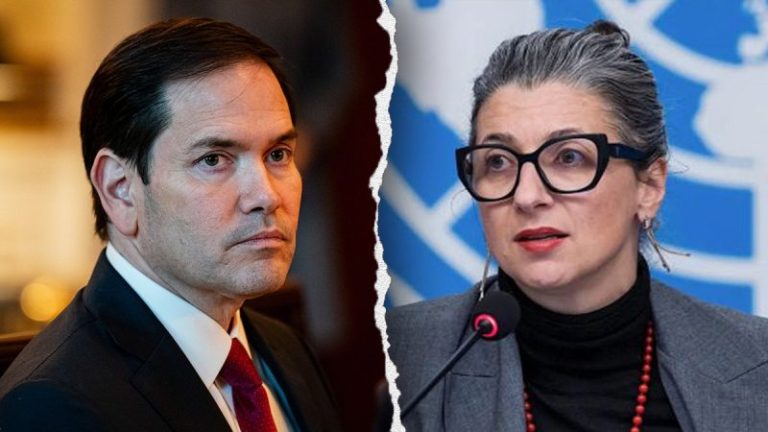
                Anne Bayefsky, director of the Touro Institute on Human Rights and the and president of Human Rights, called out several U.N. officials in her message, including U.N. High Commissioner for Human Rights Volker Türk and special rapporteur Francesca Albanese, who is the subject of U.S. sanctions.

                Secretary of State Marco Rubio announced sanctions against Albanese July 9, 2025, saying that she ‘has spewed unabashed antisemitism, expressed support for terrorism and open contempt for the United States, Israel and the West.’

                ‘That bias has been apparent across the span of her career, including recommending that the ICC, without a legitimate basis, issue arrest warrants targeting Israeli Prime Minister Benjamin Netanyahu and former Defense Minister Yoav Gallant,’ Rubio added.

                ‘I was the only American U.N.-accredited NGO with a speaking slot, and I wasn’t allowed even to conclude my 90 seconds of allotted time. Free speech is non-existent at the U.N. so-called ‘Human Rights Council,” Bayefsky told Fox News Digital.

                Bayefsky noted the irony of the council cutting off her video in a proceeding that was said to be an ‘interactive dialogue,’ an event during which experts are allowed to speak to the council about human rights issues.

                ‘I was cut off after naming Francesca Albanese, Navi Pillay and Chris Sidoti for covering up Palestinian use of rape as a weapon of war and trafficking in blatant antisemitism. I named the prosecutor of the International Criminal Court, Karim Khan, who is facing disturbing sexual assault allegations but still unaccountable almost two years later. Those are the people and the facts that the United Nations wants to protect and hide,’ Bayefsky told Fox News Digital.

                ‘It is an outrage that I am silenced and singled out for criticism on the basis of naming names.’

                Bayefsky’s statement was cut off as she accused Albanese and Navi Pillay, the former chair of the U.N. Independent International Commission of Inquiry on the Occupied Palestinian Territory; and Chris Sidoti, a commissioner of the U.N. Independent International Commission of Inquiry on the Occupied Palestinian Territory. She also slammed Khan, who has faced rape allegations. Khan has denied the sexual misconduct allegations against him.

                Had her video message been played in full, Bayefsky would have gone on to criticize Türk’s recent report for not demanding accountability for the atrocities committed by Hamas Oct. 7, 2023.

                When the video was cut short, Human Rights Council President Ambassador Sidharto Reza Suryodipuro characterized Bayefsky’s remarks as ‘derogatory, insulting and inflammatory’ and said that they were ‘not acceptable.’

                ‘The language used by the speaker cannot be allowed as it has exceeded the limits of tolerance and respect within the framework of the council which we all in this room hold to,’ Suryodipuro said.

                In response to Fox News Digital’s request for comment, Human Rights Council Media Officer Pascal Sim said the council has had long-established rules on what it considers to be acceptable language.

                ‘Rulings regarding the form and language of interventions in the Human Rights Council are established practices that have been in place throughout the existence of the council and used by all council presidents when it comes to ensuring respect, tolerance and dignity inherent to the discussion of human rights issues,’ Sim told Fox News Digital.

                When asked if the video had been reviewed ahead of time, Sim said it was assessed for length and audio quality to allow for interpretation, but that the speakers are ultimately ‘responsible for the content of their statement.’

                ‘The video statement by the NGO ‘Touro Law Center, The Institute on Human Rights and The Holocaust’ was interrupted when it was deemed that the language exceeded the limits of tolerance and respect within the framework of the council and could not be tolerated,’ Sim said.

                ‘As the presiding officer explained at the time, all speakers are to remain within the appropriate framework and terminology used in the council’s work, which is well known by speakers who routinely participate in council proceedings. Following that ruling, none of the member states of the council have objected to it.’

                While Bayefsky’s statement was cut off, other statements accusing Israel of genocide and ethnic cleansing were allowed to be played and read in full.

                This is not the first time that Bayefsky was interrupted. Exactly one year ago, on Feb. 27, 2025, her video was cut off when she mentioned the fate of Ariel and Kfir Bibas. Jürg Lauber, president of the U.N. Human Rights Council at the time, stopped the video and declared that Bayefsky had used inappropriate language.

                Bayefsky began the speech by saying, ‘The world now knows Palestinian savages murdered 9-month-old baby Kfir,’ and she ws almost immediately cut off by Lauber.

                ‘Sorry, I have to interrupt,’ Lauber abruptly said as the video of Bayefsky was paused. Lauber briefly objected to the ‘language’ used in the video, but then allowed it to continue. After a few more seconds, the video was shut off entirely. 

                Lauber reiterated that ‘the language that’s used by the speaker cannot be tolerated,’ adding that it ‘exceeds clearly the limits of tolerance and respect.’

                Last year, when the previous incident occurred, Bayefsky said she believed the whole thing was ‘stage-managed,’ as the council had advanced access to her video and a transcript and knew what she would say.

                Related Article

                UN chief blasted as ‘abjectly tone-deaf’ over message to Iran marking revolution anniversary
                This post appeared first on FOX NEWS

                President Donald Trump on Friday said he was ordering every federal government agency to stop using Athropic AI immediately.

                ‘THE UNITED STATES OF AMERICA WILL NEVER ALLOW A RADICAL LEFT, WOKE COMPANY TO DICTATE HOW OUR GREAT MILITARY FIGHTS AND WINS WARS! That decision belongs to YOUR COMMANDER-IN-CHIEF, and the tremendous leaders I appoint to run our Military,’ Trump began in a lengthy Truth Social post Friday afternoon.

                He added, ‘The Leftwing nut jobs at Anthropic have made a DISASTROUS MISTAKE trying to STRONG-ARM the Department of War, and force them to obey their Terms of Service instead of our Constitution. Their selfishness is putting AMERICAN LIVES at risk, our Troops in danger, and our National Security in JEOPARDY.’

                The president said he would immediately direct every federal agency to stop using Anthropic technology.

                ‘We don’t need it, we don’t want it, and will not do business with them again!’ he continued.

                There will be a six-month phase out period for agencies such as the Department of War, he added.

                ‘Anthropic better get their act together, and be helpful during this phase out period, or I will use the Full Power of the Presidency to make them comply, with major civil and criminal consequences to follow,’ he wrote.

                He continued, ‘WE will decide the fate of our Country — NOT some out-of-control, Radical Left AI company run by people who have no idea what the real World is all about.’

                Earlier this week, Anthropic CEO Dario Amodei refused demands from the Department of War to use its artificial intelligence for ‘all lawful purposes,’ but Amodei said no, concerned over the possibility it could be used for ‘mass domestic surveillance’ or ‘fully autonomous weapons.’

                ‘The Department of War has stated they will only contract with AI companies who accede to ‘any lawful use’ and remove safeguards in the cases mentioned above. They have threatened to remove us from their systems if we maintain these safeguards; they have also threatened to designate us a ‘supply chain risk’ — a label reserved for US adversaries, never before applied to an American company — and to invoke the Defense Production Act to force the safeguards’ removal,’ Amodei said in a Thursday statement.

                He declared that the ‘threats do not change our position: we cannot in good conscience accede to their request.’

                Assistant to the Secretary of War for Public Affairs Sean Parnell declared in a post on X that the department does not want to engage in either of those activities but is asking to use Anthropic’s AI for all legal purposes.

                ‘The Department of War has no interest in using AI to conduct mass surveillance of Americans (which is illegal) nor do we want to use AI to develop autonomous weapons that operate without human involvement,’ Parnell said in the post. ‘Here’s what we’re asking: Allow the Pentagon to use Anthropic’s model for all lawful purposes.’

                ‘This is a simple, common-sense request that will prevent Anthropic from jeopardizing critical military operations and potentially putting our warfighters at risk. We will not let ANY company dictate the terms regarding how we make operational decisions. They have until 5:01 PM ET on Friday to decide. Otherwise, we will terminate our partnership with Anthropic and deem them a supply chain risk for DOW,’ he noted.

                Under Secretary of War for Research and Engineering Emil Michael accused Anthropic and Amodei of lying.

                In a post on X, Michael called Amodei ‘a liar’ who ‘has a God-complex.’ 

                ‘He wants nothing more than to try to personally control the US Military and is ok putting our nation’s safety at risk. The @DeptofWar will ALWAYS adhere to the law but not bend to whims of any one for-profit tech company,’ he asserted.

                In another post he asserted, ‘Anthropic is lying. The @DeptofWar doesn’t do mass surveillance as that is already illegal. What we are talking about is allowing our warfighters to use AI without having to call @DarioAmodei for permission to shoot down an enemy drone swarms that would kill Americans.’

                ‘It is the Department’s prerogative to select contractors most aligned with their vision. But given the substantial value that Anthropic’s technology provides to our armed forces, we hope they reconsider,’ Amodei said in a statement sent on Thursday to Fox News Digital. ‘Our strong preference is to continue to serve the Department and our warfighters — with our two requested safeguards in place. Should the Department choose to offboard Anthropic, we will work to enable a smooth transition to another provider, avoiding any disruption to ongoing military planning, operations, or other critical missions. Our models will be available on the expansive terms we have proposed for as long as required.’

                ‘We remain ready to continue our work to support the national security of the United States,’ he added.

                On Friday, after Trump’s announcement, Hegseth claimed Anthropic ‘delivered a master class in arrogance and betrayal as well as a textbook case of how not to do business with the United States Government or the Pentagon.’

                He added in a lengthy X post: ‘Our position has never wavered and will never waver: the Department of War must have full, unrestricted access to Anthropic’s models for every LAWFUL purpose in defense of the Republic.’

                ‘In conjunction with the President’s directive for the Federal Government to cease all use of Anthropic’s technology, I am directing the Department of War to designate Anthropic a Supply-Chain Risk to National Security,’ he added. ‘Effective immediately, no contractor, supplier, or partner that does business with the United States military may conduct any commercial activity with Anthropic. Anthropic will continue to provide the Department of War its services for a period of no more than six months to allow for a seamless transition to a better and more patriotic service.’

                The General Services Administration also announced on Friday it was removing Anthropic from USAi.gov and their Multiple Award Schedule (MAS). 

                ‘GSA stands with the President in rejecting attempts to politicize work dedicated to America’s national security,’ GSA Administrator Edward C. Forst said in a statement. ‘Building resilient, secure, and scalable AI solutions demands alignment, trust, and a willingness to make hard calls. We’re committed to delivering results for Americans, and working with our AI industry partners who fit the bill.’

                Anthropic did not immediately respond to Fox News Digital’s request for comment. 

                Fox News Digital’s Alex Nitzberg contributed to this report.

                Related Article

                Tech company refuses Pentagon demands on unrestricted use of its AI
                This post appeared first on FOX NEWS

                At least two more allies of President Donald Trump have said the Biden-era FBI secretly sought their records, in addition to the records of FBI Director Kash Patel and White House Chief of Staff Susie Wiles.

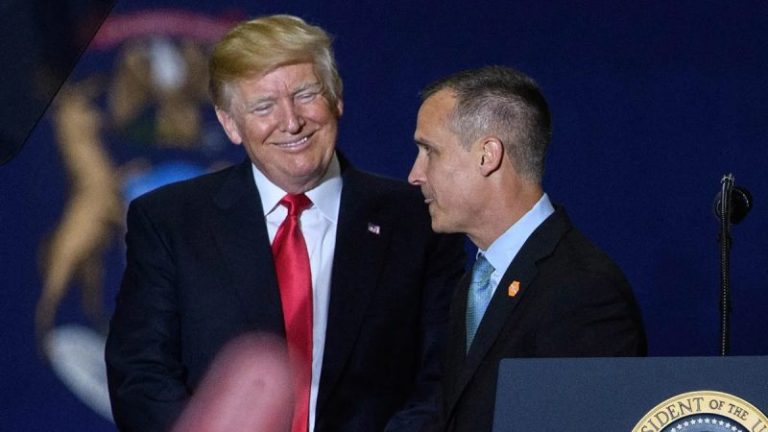
                Republican operative Corey Lewandowski, who currently serves as a Department of Homeland Security aide, said Thursday he received the same type of notice that White House Deputy Chief of Staff Dan Scavino disclosed last year regarding records seizures. Both men said they were notified in 2024 that Google had complied with FBI legal demands for information tied to their accounts, underscoring how broadly the bureau’s investigation into Trump extended and fueling Republicans’ claims that President Joe Biden ‘weaponized’ law enforcement to target his political opponents.

                ‘Funny – I received the same notice,’ Lewandowski wrote on X. ‘Where is the media outcry. Right, they don’t care when it happens to Trump people.’

                Lewandowski and Scavino both said the notices they received indicated that Google had been under a court-authorized gag order and could not notify them sooner about the demands for their records. Prosecutors commonly obtain such gag orders as part of their investigations.

                Patel, meanwhile, confirmed the existence of the subpoenas for his and Wiles’ phone records in a statement to Fox News this week and said the subpoenas were difficult to access because the files for them had added layers of protection.

                ‘It is outrageous and deeply alarming that the previous FBI leadership secretly subpoenaed my own phone records — along with those of now White House Chief of Staff Susie Wiles — using flimsy pretexts and burying the entire process in prohibited case files designed to evade all oversight,’ Patel said.

                Fox News was told that the subpoenas sought Patel’s and Wiles’ toll records, which include dates and times and phone numbers related to messages and calls but do not include the contents of them. The subpoenas themselves have not been made public, so the details about what they sought remain unconfirmed.

                Two FBI officials told Fox News that in 2023, agents also recorded a phone call between Wiles and her lawyer. The officials said the lawyer was aware the call was being recorded and consented, but Wiles was not.

                The claim about the lawyer has however been disputed. An unnamed lawyer representing Wiles at the time of the phone call in question denied to Axios that he knew of the FBI recording a phone call between him and his client.

                ‘If I ever pulled a stunt like that I wouldn’t — and shouldn’t — have a license to practice law. I’m as shocked as Susie,’ the lawyer told the outlet.

                While it is unclear exactly what the FBI was investigating, the timing and targets signal the subpoenas could be related to the bureau’s probe into President Donald Trump’s handling of classified documents. Patel and Wiles, both private citizens during the Biden administration, were known witnesses in the classified documents case, in which special counsel Jack Smith alleged Trump violated the Espionage Act by hoarding national security-related documents at his Mar-a-Lago residence.

                It has previously been widely reported that Patel was summoned to give grand jury testimony in exchange for immunity in 2022 as part of the same probe.

                The FBI investigated Trump over both his alleged retention of classified documents and his alleged attempts to subvert the 2020 election. Documents released by Congress show that the FBI — and later Smith, after he became special counsel — issued hundreds of subpoenas targeting Republican entities and figures, including the phone records of several GOP lawmakers. Republican targets have characterized Smith’s actions as an egregious abuse of power and hyper-politicized, while Smith has repeatedly defended his work as by-the-book and apolitical.

                In line with his claims of a weaponized FBI, Patel fired at least 10 bureau employees around the same time he revealed the subpoenas. The move drew condemnation from the FBI Agents Association, which represents thousands of employees and has maintained that agents’ actions are typically the result of following orders within the chain of command.

                ‘The FBIAA condemns today’s unlawful termination of FBI Special Agents, which—like other firings by Director Patel—violates the due process rights of those who risk their lives to protect our country,’ the FBIAA said. ‘These actions weaken the Bureau by stripping away critical expertise and destabilizing the workforce, undermining trust in leadership and jeopardizing the Bureau’s ability to meet its recruitment goals—ultimately putting the nation at greater risk.’

                Former U.S. Attorney John Fishwick of Virginia told Fox News the firings could keep Patel ‘in good stead with President Trump,’ saying Patel did not ‘look like a prototypical G-man’ during his viral and widely reported on celebration at the Olympics in the Team USA men’s ice hockey team’s locker room.

                The White House referred Fox News to the FBI when asked for comment. The FBI gave no additional comment. A representative for Smith had no comment.

                Fox News’ David Spunt contributed to this report.

                Related Article

                JONATHAN TURLEY: Jack Smith’s secret surveillance of Patel and Wiles should alarm us all
                This post appeared first on FOX NEWS