Author

admin

Browsing

Has silver’s moment finally arrived?

Precious metals analyst Ted Butler believes the answer is ‘yes.’

‘I think this is the moment, because we broke through technically what was a really important level — that US$35, US$36 (per ounce) level,’ he said. He sees a clear path for silver to outperform gold.

Securities Disclosure: I, Charlotte McLeod, hold no direct investment interest in any company mentioned in this article.

This post appeared first on investingnews.com

Mani Alkhafaji, vice president of corporate of development and investor relations at First Majestic Silver (TSX:AG,NYSE:AG) discusses silver’s recent price rise.

He notes that the gold-silver mining ratio is at seven to one, while the price ratio is at 90 to one.

‘That tells us silver needs to play catch up to collapse that ratio,’ he said.

Securities Disclosure: I, Charlotte McLeod, hold no direct investment interest in any company mentioned in this article.

This post appeared first on investingnews.com

Former National Security Advisor Mike Waltz is poised to face members of the Senate on Tuesday to get the ball rolling on his nomination to represent the U.S. at the United Nations.

Waltz’s appearance before the Senate Foreign Relations Committee comes months after he exited his job at the White House amid controversy surrounding his role in a Signal group chat with other top administration officials. 

Democrats vowed to grill Waltz during his confirmation process in the aftermath of The Atlantic magazine’s reporting about a Signal group chat that his team had set up to discuss strikes against the Houthis in March.

Even so, the tough questioning from Democrats on the so-called ‘Signalgate’ issue isn’t expected to derail Waltz’s confirmation to the post, given that Republicans hold a 53–47 majority in the Senate. 

‘It’s all theater — you know he’s going to get confirmed,’ a GOP foreign relations source told Fox News Digital. ‘If Signalgate’s a big thing against him, it wasn’t enough to get anyone else fired or impeached or anything like that.’ 

Waltz, a former congressman who represented Florida’s 6th congressional district, is a retired Army National Guard colonel and former Green Beret. During his time in uniform, he served four deployments to Afghanistan and earned four Bronze Stars — the fourth-highest military combat award, issued for heroic service against an armed enemy.

Waltz and Secretary of Defense Pete Hegseth were both entangled in the Signal chat that Waltz’s team created where members of the Trump administration discussed strike plans against the Houthis. 

Waltz in March said he took ‘full responsibility’ for the Signal group chat, and the Trump administration has maintained that no war plans were shared in the chat. The Atlantic published the full exchange of messages, which included certain attack details such as specific aircraft and times of the strikes from Hegseth. 

On May 1, President Donald Trump announced Waltz’s departure from his role as national security advisor and hours later unveiled the former Florida congressman’s nomination to represent the U.S. at the U.N. 

Democrats called for Hegseth’s resignation as a result of the chat and warned that Waltz would face the heat during the confirmation process for U.N. ambassador. 

Democratic Sen. Tammy Duckworth of Illinois said in a May interview with CBS News that Waltz could count on a ‘brutal, brutal hearing’ from senators, and described his nomination as ‘failing up.’ 

‘He’s not qualified for the job, just by nature of the fact that he participated in this Signal chain,’ Duckworth, a member of the Senate Foreign Relations Committee, told CBS News. 

Duckworth, who served in the Illinois Army National Guard as a Blackhawk helicopter pilot and lost both of her legs during a 2004 deployment to Iraq, told Fox News Digital Monday that Waltz’s involvement in the group chat should disqualify him from serving as U.N. ambassador. She also said that every official included in the chat should be fired. 

‘As a retired Soldier, Waltz should have shut the unclassified chain down as soon as he saw Hegseth share such classified information that could’ve gotten our pilots killed,’ Duckworth said in a statement. ‘It’s clear Waltz cannot be trusted to make critical and sensitive national security decisions, and I look forward to pressing him on his conduct and holding him accountable.’


Duckworth has pinned most of the blame on Hegseth for Signalgate. Prior to Trump’s announcement on Waltz’s U.N. ambassador nomination, Duckworth said in a May post on X that of ‘all the idiots in that chat, Hegseth is the biggest security risk of all — he leaked the info that put our troops in greater danger.’ 

In addition to Waltz and Hegseth, administration officials including Vice President JD Vance, Secretary of State Marco Rubio and CIA Director John Ratcliffe were part of the group chat. 

Additionally, ranking member of the Senate Foreign Relations Committee Sen. Chris Coons, D-Conn., said that Waltz could brace for a meticulous confirmation hearing before the committee’s members. 

‘I look forward to a thorough confirmation hearing,’ Coons said in a post on X in May. 

A spokesperson for Coons did not respond to a request for comment from Fox News Digital. 

The GOP foreign relations source described the fallout from Signalgate a ‘huge nothing burger,’ and pointed out that Democrats’ previous efforts to use Signalgate against Waltz and Hegseth have proven unsuccessful. 

‘If this was their deathly bullet, it would have killed Hegseth, and it would have killed Waltz, but they’re both left standing,’ the source told Fox News Digital. 

A Senate aide told Fox News Digital that while Waltz took the brunt of the blame for Signalgate because his team created the chat, Democrats’ expected questioning of the group chat during the hearing is actually about finding a new avenue to go after Trump. 

‘I don’t think he’s the target. He’s just the mechanism to go after the target,’ the Senate aide said. ‘At the end of the day, Democrats want to criticize and go after the president, so these guys are just a mechanism to get there.’ 

Meanwhile, Republican lawmakers have voiced support for Waltz, with Senate Foreign Relations Committee Chairman Sen. Jim Risch, R-Idaho, calling him a ‘great choice’ for the position in a post on X in May. Additionally, Sen. Lindsey Graham, R-S.C., said at the time that the Senate would ‘for sure’ confirm Waltz. 

‘Some things I know for sure: the sun rises in the East, sets in the West and Mike Waltz will be confirmed as the next UN Ambassador,’ Graham said in an X post in May. ‘He is highly qualified, well-positioned, and will be a strong voice for our nation at the UN.’

Since Waltz’s departure as serving as national security advisor, Rubio has stepped in to fill that role. 

Trump previously nominated Rep. Elise Stefanik, R-N.Y., to represent the U.S. at the U.N. However, her nomination was pulled in March, and Trump claimed at the time that the House could not give up another Republican seat with its slim 220–212 Republican majority. 

If confirmed as U.N. ambassador, Waltz would be responsible for representing U.S. interests at the U.N.’s New York headquarters, weighing in on resolutions, treaties and other global matters.  

Waltz could not be reached for comment by Fox News Digital. 

The 80th session of the U.N. General Assembly is scheduled for Sept. 9, providing a window of time for Waltz’s nomination to make it through the entire confirmation process beforehand. 

‘The hope is to have him in place before the U.N. General Assembly is in session,’ the GOP foreign relations source told Fox News Digital. 

This post appeared first on FOX NEWS

Members of the ‘Squad’ are undermining coexistence between Arabs and Jews in the Middle East, Israeli-Arab activist Yoseph Haddad told Fox News Digital.

‘Representatives of the Squad are trying to harm the coexistence and partnership that exist in the region between Arabs and Jews,’ Haddad said. ‘I think it was [Alexandria] Ocasio-Cortez herself who said she had no idea about the geopolitics of this region—she’s right. Ilhan Omar and Rashida Tlaib know exactly what’s going on here, but they decide to lie and twist the facts.’

Haddad, the CEO of Together Vouch for Each Other — an organization founded in 2018 by young Israeli Arabs to bridge cultural and religious divides — has emerged as a prominent voice in Israel’s public diplomacy efforts following Hamas’ Oct. 7, 2023 massacre. 

Since the attack, Jewish communities across the United States and Europe have faced a sharp rise in antisemitic incidents, with pro-Hamas demonstrations appearing on college campuses as early as October 8.

‘The first group is what I call the useful idiots — people who have no idea what’s going on but joined because it felt like the cool thing to do,’ Haddad said. ‘Then there are the paid protesters. You see the same faces at different rallies holding different signs — sometimes it’s about LGBTQ issues, sometimes it’s pro-Palestinian, sometimes it’s about internal American problems.’

‘It’s always the same person, just a different outfit and a different sign,’ he continued. ‘And the third group — the most dangerous—are the extremists who’ve come from the Middle East. Those are the ones we should be most concerned about.’

Haddad traced the rise of extremist voices in the West to waves of immigration and population displacement from conflict zones in the Middle East. While the majority of Muslim immigrants fled persecution in search of a better life, he said, a vocal minority brought with them the ideology of the Muslim Brotherhood, effectively holding their communities hostage.

‘When you have so many immigrants all around the world, it’s enough for 10 or 20 percent of them to be extremists — and suddenly, you’re dealing with millions of extremists,’ he said.

‘Ostriches, when there is a danger and there is a problem, what they do is they stick their head in the sand thinking the problem will just pass because nobody will notice them,’ he added. ‘And this is what the weak governments are doing right now, becoming like an ostrich. The only problem is that no one will skip them over, it will make it easier to chop their heads off.’

Addressing accusations that Israel enforces an apartheid system between Jews and Arabs, Haddad rejected the comparison outright.

‘In real apartheid, like in South Africa, everything was segregated — transportation, hospitals, courts, sports, even walking on the sidewalks,’ Haddad said. ‘But if you actually come to Israel and see life here, it’s the complete opposite — 180 degrees different.’

‘Stop speaking from a place of emotion — that’s exactly what The Squad is doing,’ he continued. ‘Start talking about facts. Then you’ll realize that anyone who concludes Israel is an apartheid state is an imbecile.’

He also mentioned a run-in he had with a protester, who he refers to as ‘the useful idiots.’

They have no clue … One time, I read the charter of Hamas to some pro-Palestinian useful idiot, I read it to them, and I said you agree to this, and they said no, no, no I didn’t know that. And I said yes, but this is what you are supporting, and he had the headband of Hamas on his head. You understand that this is what you are supporting.

‘He literally took the band off after that. Such useful idiots like this you have a lot, not just in the United States, you can see it in Europe as well.’

When asked what he believes the Palestinians ultimately want, Haddad pointed to slogans often heard at anti-Israel and antisemitic protests, such as ‘From the river to the sea, Palestine will be free’ and ‘There is only one solution: Intifada revolution.’

‘The majority of Palestinians do not want to live side by side with Israel,’ Haddad said. ‘So when people talk about a two-state solution and question Israel’s commitment, I say: Don’t ask the Israelis — ask the Palestinians. You’ll be shocked to find that many of them aren’t willing to accept it.’

Haddad pointed out that history can be approached in multiple ways — through religious texts like the Torah for Jews, the Bible for Christians and the Quran for Muslims. Even those who are atheists can look to history books for evidence of the deep-rooted connection of the Jewish people to the land of Israel.

Haddad argued that the Torah explicitly mentions the presence of Jews in Israel, tracing their presence back thousands of years. He also highlighted the Biblical reference to the birthplace of Jesus in Jewish Bethlehem, challenging the notion that Palestinian Muslims have a historical claim to the land before the Jews.

Haddad noted that while Jerusalem is never mentioned in the Quran, the term ‘sons of Israel’ appears more than 43 times. He also emphasized that the name ‘Palestine’ was imposed by the Romans as a punishment for the Bar Kokhba revolt.

Haddad highlighted that in 1947, Arabs had the opportunity to establish a Palestinian state through the U.N. Partition Plan, which the Jews accepted despite receiving less land and fewer resources. However, the Arabs rejected the plan and opted to wage war. When the Jews emerged victorious, 156,000 Arabs remained within what became Israel. Sharing his personal connection to this history, Haddad explained that his grandfather was one of those Arabs who stayed and eventually became part of the Arab Israeli identity.

‘It’s either you accept the fact that Israel exists and is here to stay, or you continue with this cycle of bloodshed and death that we are trying to escape,’ said Haddad. ‘But the ones who will suffer the most are you, the Palestinians, whether in the West Bank or Gaza.’

Several requests for comment sent to Reps. Ocasio-Cortez, Tlaib and Omar were not returned.

This post appeared first on FOX NEWS

America has triumphed in each industrial revolution – whether steel, energy or manufacturing – and has the power to lead the AI revolution, too. This week in Pittsburgh, President Donald Trump is bringing together leaders to address a defining challenge of our time: how to fuel the AI revolution with American energy. 

Progress on this front will be consequential for our economy, our national security, and America’s global leadership. 

President Trump’s announced $500 billion private sector AI investment is a critical enabler for our country. But artificial intelligence won’t power itself. It needs vast amounts of electricity, delivered affordably and reliably. 

And as demand for AI computing surges, the real question isn’t just about who writes the best code – it’s also about who can build out data center infrastructure behind it. The U.S. has the unique capability to do that – including the energy dominance to fuel it – and we now have the political will to lead. 

U.S. policy has often prioritized climate idealism over energy pragmatism. Wind, solar and battery technologies will play a key role in our energy future, but they are not available at the scale or reliability needed to fuel expected AI data center demand. And these combined sources are more expensive than U.S. natural gas. 

Without a balanced and clear-eyed approach, we risk pushing AI innovation – and the economic and national security advantages that come with it – overseas.

Other countries are already trying to lure investment away from the United States by subsidizing AI computing power. In China, dozens of data centers are being built – 39 approved in the last quarter of 2024 alone. In Malaysia, authorities are fast-tracking electricity infrastructure for data centers, cutting lead times to just 12 months, compared to five years in the U.S. Some American companies are already helping to finance data center growth in the Middle East.

The path to powering America’s AI dominance is rooted in abundant American natural gas. The United States is already by far the world leader, accounting for a quarter of global natural gas production. And we are also one of the lowest-cost producers. 

Equally important is to ensure AI power demand doesn’t drive up electricity costs for consumers. We can develop natural gas-based power generation independent of the current electric grid and co-locate it with data centers across the country. Providing this dedicated electricity prevents a competition for grid-connected power, which would drive up costs and burden our already strained electricity grid. 

New solutions like this require creative partnerships and continued innovation – which is why Chevron is working with Engine No. 1 and GE Vernova to establish facilities designed to provide reliable, affordable, long-term power-generating solutions to underpin American AI leadership.

President Donald Trump, Secretary of Energy Chris Wright and Sen. David McCormick, R-Pa., recognize the opportunity for the United States to achieve AI dominance. By leveraging abundant American natural gas as a foundation to meet surging AI power demand, we can strengthen our national security, grow our economy and protect our technology leadership.

We have the power to lead the race to develop and deploy AI. It’s time to use it. 

This post appeared first on FOX NEWS

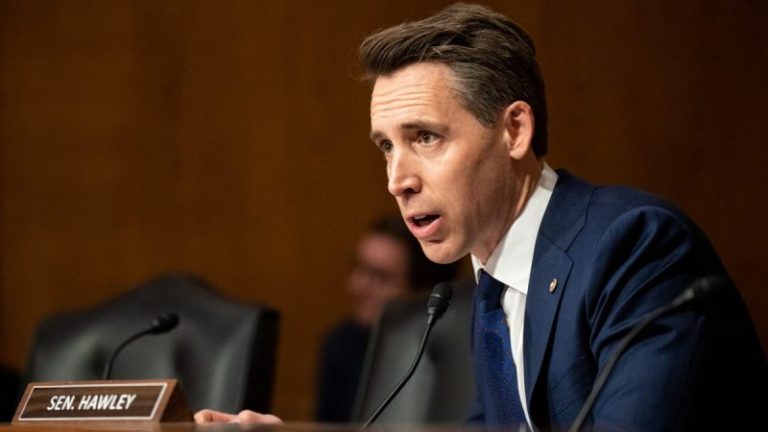
Sen. Josh Hawley, R-Mo., is urging Department of Homeland Security (DHS) Secretary Kristi Noem to declassify all documents related to the assassination attempt on then-presidential candidate Donald Trump in Butler, Pennsylvania, on July 13, 2024.

Hawley’s request comes a year after 20-year-old Thomas Matthew Crooks fired off several shots at Trump from a rooftop near the presidential rally grounds. The gunman had a clear shot and grazed the president’s ear.

Even after a year, though, questions still remain about how Crooks was able to get a clear shot.

In his letter to Noem, Hawley mentions the one-year anniversary of the first assassination attempt on Trump.

‘This occasion marks a deeply troubling chapter in our nation’s history and serves as a reminder of the importance of transparency in preserving public trust during moments of national crisis,’ he wrote. ‘To that end, I urge you to take the necessary steps to declassify all documents within the Department of Homeland Security (DHS) related to the events of July 13, 2024.

‘As you know, assassination attempts against current and former presidents are rare but profoundly consequential events in American life,’ Hawley continued. ‘And the American people rightly expect full transparency from their government.’

The senator pointed to investigation stonewalling tactics from the Biden administration’s Secret Service and DHS, which he said ultimately denied basic facts to the American people.

‘The public learned far more from whistleblowers than they did from public officials, and I released a report documenting these disclosures, many of which have been corroborated to date,’ Hawley wrote. ‘In October of last year, in a unanimous vote, the Homeland Security Committee passed my legislation requiring the Secret Service release to the public all pertinent documents.

‘Now, I am requesting that you immediately declassify and release all documents relating to the first assassination attempt on President Trump within the full extent of your authority, subject only to the narrowest possible redactions necessary to protect ongoing operations or individual safety,’ he said. ‘The public deserves a full and accurate account of this event, the circumstances that allowed it to happen, and the steps the government has taken since to strengthen protective measures.’

Hawley requested a complete inventory of all classified or non-public materials related to the first assassination attempt on Trump, including reports, internal communications, threat assessments, after-action reviews and coordinated records with other agencies.

He also requested a formal explanation for the continued classification of materials Noem believes must remain restricted, as well as a proposed plan and timeline for the immediate declassification and public release of all remaining documents, all by July 30, 2025.

Fox News Digital has reached out to DHS for comment on the matter.

Hawley released a report in September, detailing the failures of the Secret Service in connection with the attempted assassination of Trump in July, which included whistleblower allegations that are ‘highly damaging to the credibility’ of the agency.

The report uncovered a ‘compounding pattern of negligence, sloppiness, and gross incompetence that goes back years, all of which culminated in an assassination attempt that came inches from succeeding.’

Hawley accused the Secret Service, FBI and DHS of all trying ‘to evade real accountability.’

‘These agencies and their leaders have slow-walked congressional investigations, misled the American people, and shirked responsibility,’ the report states. 

After the first of two assassination attempts against Trump in just over two months, Hawley visited the Butler rally site to interview whistleblowers and opened up a whistleblower tip line, encouraging those with relevant information to share with officials. 

Documents subpoenaed by the Senate Committee on Homeland Security and Government Affairs also show major failures among the six U.S. Secret Service (USSS) agents who were suspended without pay in response to the assassination attempt.

The documents were based on interviews with the agents and their colleagues and revealed that several agents admitted the existence of major security concerns at the Butler rally, but none of them elevated the concerns or helped produce a plan to properly cover the roof that provided Crooks a clear shot of Trump.

The documents show that some agents in charge never even conducted walk-throughs of the site. For example, the lead advance agent, documents show, never did a final security walk-through of the rally site because she was in the hospital for heat exhaustion, the special agent in charge said when questioned.

Some of the agents were suspended without pay for various terms, though none of the agents were fired.

This post appeared first on FOX NEWS
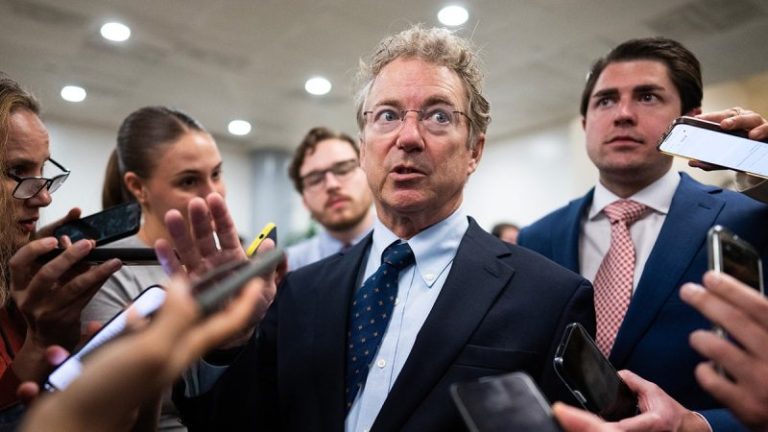
Sen. Rand Paul, R-Ky., on Monday announced that he would revive his criminal referral against Dr. Anthony Fauci, adding yet another wrinkle to the ongoing Biden White House autopen saga.

‘Today I will reissue my criminal referral of Anthony Fauci to Trump DOJ,’ Paul said on X.

It’s not the first time that Paul has issued a criminal referral against Fauci, who is the former director of the National Institute of Allergy and Infectious Diseases (NIAID) and medical adviser to former President Joe Biden.

The first came in 2021, when Paul accused Fauci of lying to Congress about funding gain-of-function research for the COVID-19 virus at the Wuhan Institute of Virology. The next came in 2023, again as part of Paul’s efforts to investigate the origins of the virus.

‘Perjury is a crime,’ Paul said. ‘And Fauci must be held accountable.’

Fox News Digital reached out to Paul’s office for comment.

This time, Paul’s reupping of his criminal referral comes after a new report added another chapter to the ongoing autopen saga, in which President Donald Trump and congressional Republicans have accused Biden of shrugging off his authority to aides and top officials in the White House to authorize his signature on a slew of pardons and documents.

The New York Times reported that emails showed that Biden’s Chief of Staff Jeff Zients gave final approval for the use of the autopen for preemptive pardons for Fauci and former Joint Chiefs of Staff Gen. Mark Milley, two of Trump’s top critics.  

Biden signed the bulk of his over 4,000 clemency documents in the waning months of his presidency, a point that Trump and congressional Republicans have pounced to hammer in the claims that the former president’s cognitive ability was declining and his staff were running the White House.

Trump has gone so far as to request Attorney General Pam Bondi open an investigation into Biden’s usage of the autopen, while Republicans in the Senate and House have all held their own committee hearings on the matter.

And earlier Monday, Trump told reporters that Biden’s alleged use of the autopen amounted to possibly ‘one of the biggest scandals that we’ve had in 50 to 100 years.’

‘I guarantee you he knew nothing about what he was signing, I guarantee you,’ Trump said. 

Diana Stancy contributed to this report. 

This post appeared first on FOX NEWS
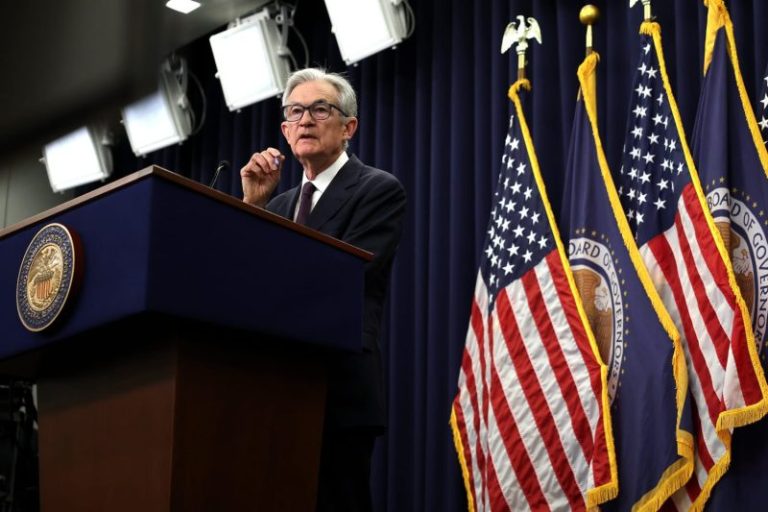
The Federal Reserve has brought in its inspector general to review a building expansion that has drawn fire from the White House, according to a source familiar with the issue.

Fed Chair Jerome Powell asked for the review, following blistering criticism of the project, initially pegged at $2.5 billion but hit by cost overruns that have brought accusations from President Donald Trump and other administration officials of “fundamental mismanagement.”

“The idea that the Fed could print money and then spend $2.5 billion on a building without real congressional oversight, it didn’t occur to the people that framed the Federal Reserve Act,” Kevin Hassett, director of the National Economic Council, said Monday on CNBC’s “Squawk Box.” “We’ve got a real problem of oversight and excess spending.”

The inspector general serves the Fed and the Consumer Financial Protection Bureau and is responsible for looking for fraud, waste and abuse. Powell’s request was reported first by Axios.

In a letter posted to social media last week, Russell Vought, head of the Office of Management and Budget, also slammed the project, which involves two of the Fed’s three Washington, D.C., buildings including its main headquarters known as the Eccles Building.

Vought, during a CNBC interview Friday, likened the building to the Palace of Versailles in France and charged that Powell was guilty of “fiscal mismanagement” at the Fed.

For its part, the central bank has posted a detailed frequently asked questions page on its site, highlighting key details and explaining why some of the specifications were changed or “scaled back or eliminated” at least in part due to higher-than-expected construction costs.

“The project also remediates safety issues by removing hazardous materials such as asbestos and lead and will bring the buildings up to modern code,” the page explains. “While periodic work has been done to keep the buildings occupiable, neither building has seen a comprehensive renovation since they were constructed.”

The Fed is not a taxpayer-funded institution and is therefore not under the OMB’s supervision. It has worked with the National Capital Planning Commission in Washington on the project, but also noted on the FAQ page that it “does not regard any of those changes as warranting further review.”

In separate comments, former Fed Governor Kevin Warsh, speaking Sunday on Fox News, called the renovation costs “outrageous” and said it was more evidence the central bank “has lost its way.” Warsh is considered a strong contender to succeed Powell when the latter’s term as chair expires in May 2026.

This post appeared first on NBC NEWS

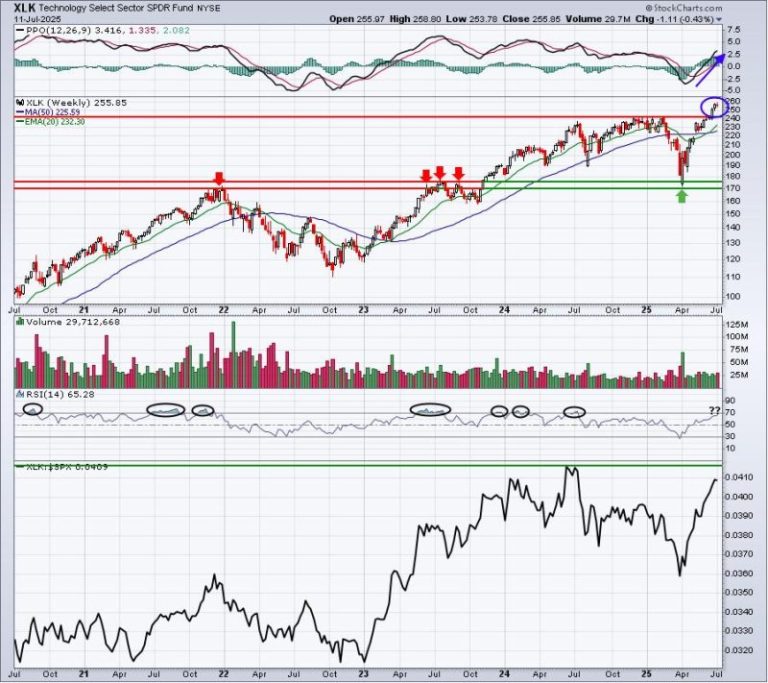
I remain very bullish and U.S. stocks have run hard to the upside off the April low with growth stocks leading the way. I expect growth stocks to remain strong throughout the summer months, as they historically do, but we need to recognize that they’ve already seen tremendous upside. Could technology (XLK) names, in particular, use a period of consolidation? Well, if we look at a 5-year weekly chart, the XLK really isn’t that overbought just yet:

The weekly PPO has crossed its centerline and is gaining bullish momentum. The recent price breakout suggests to me that we likely have further to run. And if you look at the weekly RSI, you’ll note that we’ve seen the weekly RSI move well into the 70s and even close to 80 before witnessing a market top or pause. Outside a bit of profit taking, I really don’t see the likelihood of a big selloff here. Keep in mind that the XLK represents 31% of the S&P 500. If the XLK doesn’t slow down, it’s very unlikely that we’ll see any type of meaningful decline in the S&P 500 either.

Growth vs. Value

Growth stocks have historically performed well over the summer months. One way to visualize this is to compare large-cap growth (IWF) to large-cap value (IWD) using a seasonality chart. Check this out:

The average monthly outperformance since 2013 is reflected at the bottom of each month’s column. If you add those numbers for May through August, you get +5.4%. If you add those numbers for the other 8 months combined, you get +0.6%. Clearly, large-cap growth has the tendency to outperform value from May through August. We’re in the growth “sweet spot” right now.

So Should We Lower Our Market Expectations?

I say absolutely not. Yes, we’ve run substantially higher off that April low, but I see more left in the tank. Will we see profit taking from time to time and could we see a period of consolidation? Sure. But I still believe that remaining on the sidelines is a big mistake as plenty of market upside remains. In fact, I see another somewhat forgotten asset class that’s poised to scorch 50% higher or more, possibly over the next 6 months. I’m investing in this area now, as I believe it’s in the early stages of a significant rally, and believe it would be prudent for you to take a look as well. For more information, simply CLICK HERE, provide your name and email address, and I’ll send you a video that explains exactly why I’m favoring this group right now!

Happy trading!

Tom

NVIDIA (NASDAQ:NVDA) became the first publicly traded company to hit a US$4 trillion market cap this week.

Meanwhile, Apple (NASDAQ:AAPL) made headlines with a major leadership change as rumors of a lineup of upcoming product releases circulated, and Meta Platforms (NASDAQ:META) deepened ties with one of its hardware partners.

In the chip market, Huawei is trying to capitalize on the gap left by NVIDIA’s chips in China, while a startup is stepping up its efforts to help meet its ambitious plans to expand artificial intelligence (AI) chip delivery to Saudi Arabia.

1. Apple announces leadership shift

On Tuesday (July 8), Apple announced that Jeff Williams, its longtime chief operating officer, will retire at the end of 2025, ending a tenure that spanned decades and included overseeing hardware, software and operations.

“Jeff and I have worked alongside each other for as long as I can remember, and Apple wouldn’t be what it is without him,” said Apple CEO Tim Cook in a press release. “He’s helped to create one of the most respected global supply chains in the world; launched Apple Watch and overseen its development; architected Apple’s health strategy; and led our world-class team of designers with great wisdom, heart, and dedication.’

Williams will be succeeded by Sabih Khan, Apple’s senior vice president of operations, who has played a key role in managing Apple’s global supply chain.

In other Apple news, Bloomberg reported on Wednesday (July 9) that Apple plans to release its first hardware upgrade to the Vision Pro headset later this year. Anonymous sources say the upgrades will include a a new strap for added comfort, will incorporate the same M4 processor powering newer versions of the iPad Pro, MacBook Pri and iMac, and will incorporate a great number of cores in the neural engine to run AI more effectively.

The company is also working on a lighter version slated for release in 2027, according to the people.

The company is planning a series of product upgrades for the first half of 2026, including a new entry-level iPhone 17e, refreshed MacBook Pros and MacBook Airs with M5 chips and potentially a new external display, according to multiple reports this week. Entry-level iPad and iPad Air will reportedly also receive updates.

2. Meta makes eyewear bet

Meta acquired a nearly 3 percent stake in luxury eyewear maker EssilorLuxottica (EPA:EL), the creator of Ray-Bans and the manufacturing partner for Meta’s smart glasses, including the Ray-Ban Meta and Oakley Meta lines. This is according to a Tuesday report from Bloomberg that cites unnamed sources with knowledge of the matter.

The stake is reportedly worth around 3 billion euros. According to the people, Meta is considering increasing its stake to approximately 5 percent “over time,” but noted that the plans could change.

3. Huawei seeks to step in amid US restrictions

Huawei is reportedly developing a new class of AI chips designed to support more generalized AI workloads, according to the Information, which broke the news on July 5.

According to the report, Huawei’s chip will be built around an architecture resembling that of NVIDIA’s GPU architecture (like Hopper or Blackwell) and Advanced Micro Devices’ CDNA architecture (used in their Instinct GPUs), which would allow Chinese developers to seamlessly incorporate the alternative.

Huawei’s pivot reflects China’s broader effort to bolster domestic chip capabilities as export restrictions from the US limit its access to advanced semiconductors. NVIDIA’s highly sought-after Blackwell GPUs are difficult for Chinese developers to legally acquire, leading to the development of downgraded, China-specific versions and a drive by Chinese firms to secure the chips through other means or source high-end alternatives.

Illustrating these efforts, recent Bloomberg analysis reveals ambitious plans by Chinese companies to acquire over 115,000 high-end NVIDIA chips for dozens of new AI data centers rising in the remote desert regions of Yiwu.

4. Harmonic raises US$100 million for ‘Superintelligence’

Harmonic AI, a stealth-mode AI company co-founded by Robinhood (NASDAQ:HOOD) CEO Vlad Tenev, has raised US$100 million in a Series B funding round led by Kleiner Perkins. Sequoia Capital, Index Ventures and Paradigm also participated in the round, which brought the company’s valuation to US$875 million.

Founded in 2023 by Tenev and Tudor Achim, who previously led autonomous driving startup Helm.ai, the startup is focused on building “smarter” AI models using a concept it calls “Mathematical Superintelligence.’

Its flagship model, Aristotle, is being trained to generate answers grounded in formal mathematical logic. On Bloomberg News, Tenev has said the company’s goal was to build AI systems that can solve the type of complex math problems that currently elude chatbots, eventually expanding its capabilities to physics and computer science.

Harmonic also aims to eliminate chatbot hallucinations through formal verification, a mathematical method that guarantees correct AI system function.

The startup wants to make the model available to researchers and the general public later this year.

5. Groq seeks US$6 billion valuation to fuel Saudi AI ambitions

The Information reported on Wednesday that Groq, a US-based AI chip startup and challenger to NVIDIA, is seeking to raise between US$300 million and US$500 million in a new funding round that would value it at US$6 billion.

Groq’s language processing units (LPUs) are known for their fast inferencing technology.

Unlike general-purpose GPUs, which were originally made for graphics and then adapted for AI, Groq’s LPUs were designed specifically to process language.

According to the report, the funding would help Groq fulfill a US$1.5 billion deal to deliver advanced AI chips to Saudi Arabia. With its ambitious Vision 2030, Saudi Arabia is actively pursuing a role as a global AI and technology hub, driving its interest in obtaining cutting-edge chips.

Securities Disclosure: I, Meagen Seatter, hold no direct investment interest in any company mentioned in this article.

This post appeared first on investingnews.com