Author

admin

Browsing

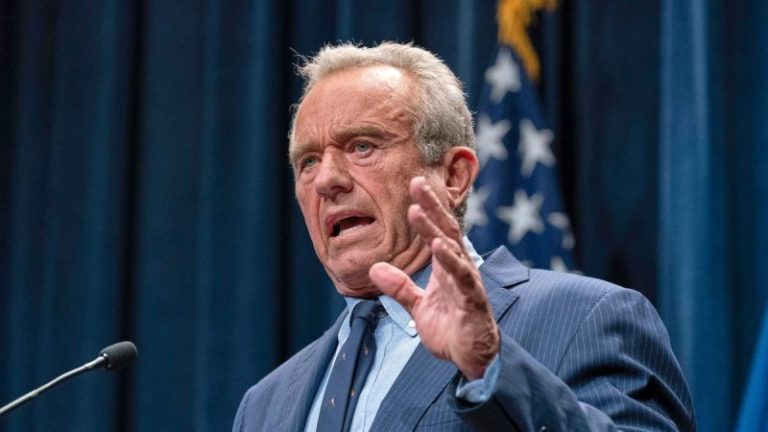
Three Senate Republicans are backing up Health and Human Services Secretary Robert F. Kennedy Jr.’s possible effort to reform the U.S. Preventive Services Task Force, saying that the group has recently been ideologically motivated.

The ‘independent’ task force is used to determine recommendations of what services health insurance companies in the United States have to cover for free, such as checking for cancer.

‘Americans deserve to know health guidelines are based on real science, not radical wokeness. The Task Force needs to get back to its mission of giving clear, evidence-based recommendations people can trust,’ Sen. Jim Banks, R-Indiana, said in a statement.

The Wall Street Journal reported that Kennedy is considering removing members of the board, and the senators are saying they back any change to veer away from certain DEI tactics employed by the group currently, including the 2023 Report to Congress on High-Priority Evidence Gaps for Clinical Preventive Services and ‘social justice activism’ by people in the group.

‘In particular, the USPSTF departed from its proper activities in its December 2023 Health Equity Framework. The framework criticizes ‘equal access to quality health care for all’ as an inadequate goal of public health and announces that the Task Force will instead use equity as ‘a criterion of the ‘public health importance’ of a topic’ for consideration,’ the letter added.

‘Far from simply recognizing health disparities between certain populations, ‘health equity’ as described by the USPSTF includes ‘information on risk factors that intersect with race and/or ethnicity or other disadvantaged populations (e.g., sexual and gender minorities) and that affect prevalence and burden of disease’ and ‘any inequities in how preventive services are provided, accessed, or received.’ These criteria would allow the Task Force to issue recommendations outside its proper purview and impose leftwing ideology,’ it continues.

Specifically, they said that changes could be needed to fulfill President Donald Trump’s Executive Order to scrap DEI efforts within the federal government, along with an EO on ‘restoring merit-based opportunity’ and ‘ending illegal discrimination.’

‘Allowing the Task Force to pursue the Health Equity Framework means allowing it to exceed its statutory mission and target social groups that comport with a progressive agenda. It means discounting universally beneficial recommendations as inadequate. It means disregarding statutory limits and instead undertaking a social justice crusade through the lens of critical race theory and gender ideology. This would be a mistake. The result is ineffectiveness, discrimination, and division. The USPSTF should be working for all Americans equally,’ the letter added.

‘No final decision has been made on how the USPSTF can better support HHS’ mandate to Make America Healthy Again,’ an HHS spokesperson told Fox News Digital in a statement when asked about the WSJ report. 

There has already been some opposition to the possibility of removing the members, including from the American Medical Association.

‘USPSTF plays a critical, non-partisan role in guiding physicians’ efforts to prevent disease and improve the health of patients by helping to ensure access to evidence-based clinical preventive services,’ the AMA wrote in a letter to Kennedy. ‘As such, we urge you to retain the previously appointed members of the USPSTF and commit to the long-standing process of regular meetings to ensure their important work can continue without interruption.’

This post appeared first on FOX NEWS


(TheNewswire)


Vancouver, British Columbia TheNewswire – August 1, 2025 ‑ Harvest Gold Corporation (TSXV: HVG,OTC:HVGDF) (‘ Harvest Gold ‘ or the ‘ Company ‘) announces that, subject to the approval of the TSX Venture Exchange (the ‘ Exchange ‘) and further to its news release of July 3, 2025, it has closed its non-brokered private placement raising gross proceeds of $2,295,549.86 (the ‘ Offering ‘).


The Offering consisted of 11,660,199 units (the ‘ Units ‘) at a price of $0.075 per Unit for proceeds of $874,514.93 and 13,533,666 charity flow-through units (the ‘ CFT Units ‘) at a price of $0.105 per CFT Unit for proceeds of $1,421,034.93.


Crescat Capital LLC (‘ Crescat ‘), as the lead investor in the Offering, purchased 5,866,666 Units, bringing its non-diluted ownership of Harvest Gold common shares to approximately 19.73%.  Crescat’s participation constitutes a ‘related party transaction’ as defined under Multilateral Instrument 61-101   Protection of Minority Security Holders in Special Transactions   (‘   MI 61-10   1′). Such participation is exempt from the formal valuation and minority shareholder approval requirements of MI 61-101 based on the exemptions provided in Section 5.5(c)   Distribution of Securities for Cash   and Section 5.7(b)   Fair Market Value Not More than $2,500,   000, respectively.  


  Quinton Hennigh, Geologic and Technical Advisor at Crescat Capital LLC states: ‘Harvest Gold has, in my view, a very attractive land position over a highly prospective greenstone belt that hosts the nearby Windfall deposit. Although in the early stage, Harvest Gold’s team collected solid geophysical and geochemical data that define some compelling green field targets. They are now set to conduct their first drill program to test these targets. I find it refreshing to see a company tackle something bold and new like this and look forward to seeing what they encounter.’  


  Rick Mark, President and CEO of Harvest Gold states: ‘We are grateful to Crescat and the outstanding group of investors who have supported us in this round and over the past two year as we established ourselves in Quebec. I am very pleased to say that the drilling at Mosseau will begin shortly and that, concurrently, we will be exploring Urban Barry and Labelle for the first time.’  


Each CFT Unit is comprised of one common share of the Company (each, a ‘ Common   Share ‘) and one common share purchase warrant of the Company (each, a ‘ Warrant ‘), each of which qualifies as a ‘flow-through share’ (within the meaning of subsection 66(15) of the Income Tax Act (Canada)). Each Unit consists of one Common Share and one Warrant. Each Warrant entitles the holder thereof to acquire one Common Share (each, a ‘ Warrant Share ‘) at a price of $0.12 per Warrant Share for a period of two years following the closing date of the Offering (the ‘ Expiry Date ‘).


  The Company anticipates using the proceeds from the issue and sale of the Units for the 2025 drilling campaign, various other exploration expenses and general working capital.  


  The gross proceeds raised from the CFT Units will be used by the Company to incur eligible ‘Canadian exploration expenses’ that qualify as ‘flow-through mining expenditures’ (as both terms are defined in the Income Tax Act (Canada)) (the ‘ Qualifying Expenditures ‘) related to the Company’s projects in Québec. The Company will renounce Qualifying Expenditures with an effective date of no later than December 31, 2025, in an amount of not less than the total amount of the gross proceeds raised from the issuance of the CFT Units, and incur such expenses by December 31, 2026.


All securities issued will be subject to a four-month hold period pursuant to securities laws in Canada, expiring on December 1, 2025.  


  In connection with the Offering, the Company paid finder’s fees consisting of $19,790 cash and 263,867 non-transferable finder’s warrants (the ‘   Finder’s   Warrants   ‘) to arm’s length finders.  Each Finder’s Warrant is exercisable at $0.12 until the Expiry Date.  


  About Harvest Gold Corporation  


  Harvest Gold has three active gold projects focused in the Urban Barry area, totalling 329 claims covering 17,539.25 ha , located approximately 45-70 km east of the Gold Fields Windfall Deposit.  


The Company’s board of directors, management team and technical advisors have collective geological and financing experience exceeding 400 years.


  Harvest Gold acknowledges that the Mosseau Gold Project straddles the Eeyou Istchee-James Bay and Abitibi territories.  Harvest Gold is committed to developing positive and mutually beneficial relationships based on respect and transparency with local Indigenous communities.  


  ON BEHALF OF THE BOARD OF DIRECTORS  


Rick Mark
President and CEO
Harvest Gold Corporation


  For more information please contact:  


  Rick Mark or Jan Urata
@ 604.737.2303 or
    info@harvestgoldcorp.com    


  Neither TSX Venture Exchange nor its Regulation Services Provider (as that term is defined in the policies of the TSX Venture Exchange) accepts responsibility for the adequacy or accuracy of this release.  


  Forward Looking Information  


  This news release includes certain statements that may be deemed ‘forward looking statements’. All statements in this news release, other than statements of historical facts, that address events or developments that Harvest Gold expects to occur, are forward looking statements. Forward looking statements are statements that are not historical facts and are generally, but not always, identified by the words ‘expects’, ‘plans’, ‘anticipates’, ‘believes’, ‘intends’, ‘estimates’, ‘projects’, ‘potential’ and similar expressions, or that events or conditions ‘will’, ‘would’, ‘may’, ‘could’ or ‘should’ occur.  


  Forward-looking statements in this news release include, but are not limited to, statements regarding: the final approval of the Offering by the Exchange; the anticipated commencement of drilling at Mosseau and initial exploration at Urban Barry and Labelle; the Company’s exploration plans and strategy; the expected use of proceeds from the Offering; and the Company’s intention to incur and renounce Qualifying Expenditures under the   Income Tax Act   (Canada) within the prescribed timelines.  


  Although the Company believes the expectations expressed in such forward-looking statements are based on reasonable assumptions, such statements are not guarantees of future performance and actual results may differ materially from those in the forward-looking statements. Factors that could cause the actual results to differ materially from those in forward looking statements include market prices, exploitation and exploration successes, and continued availability of capital and financing, and general economic, market or business conditions. Investors are cautioned that any   such statements are not guarantees of future performance and actual results or developments may differ materially from those projected in the forward-looking statements. Forward looking statements are based on the beliefs, estimates and opinions of the Company’s management on the date the statements are made. Except as required by securities laws, the Company undertakes no obligation to update these forward-looking statements in the event that management’s beliefs, estimates or opinions, or other factors, should change.  


  The securities referred to in this news release have not been, and will not be, registered under the United States Securities Act of 1933, as amended (the ‘U.S. Securities Act’), or any applicable securities laws of any state of the United States, and may not be offered or sold within the United States or to, or for the account or benefit of, U.S. persons (as such term is defined in Regulation S under the U.S. Securities Act) or persons in the United States unless registered under the U.S. Securities Act and any other applicable securities laws of the United States or an exemption from such registration requirements is available.  


  This press release does not constitute an offer to sell or a solicitation of an offer to buy any of these securities within any jurisdiction, including the United States.  Any public offering of securities in the United States must be made by means of a prospectus containing detailed information about the company and management, as well as financial statements.  


Copyright (c) 2025 TheNewswire – All rights reserved.



News Provided by TheNewsWire via QuoteMedia

This post appeared first on investingnews.com

The Canadian province of Ontario has canceled a C$100 million ($68.12 million) satellite high-speed internet contract with Elon Musk’s company Starlink, following through with a vow by the province’s premier to cut ties in retaliation for U.S. tariffs imposed on Canada.

Stephen Lecce, Ontario’s minister of energy and mines, confirmed the cancellation of the contract for internet services at an unrelated news conference in Toronto on Wednesday. Lecce, who oversees broadband connectivity in Canada’s most populous province, didn’t say how much the termination would cost.

“I can confirm that the premier has fulfilled his word, which is to cancel that contract because of the very reasons he cited in the past,” Lecce said. “We are standing up for Canada.”

Under the terms of the deal, which Ontario signed last November, Starlink was to provide high-speed internet access to 15,000 eligible homes and businesses in more remote communities.

In February, Ontario Premier Doug Ford threatened to end the agreement with Starlink in response to U.S. President Donald Trump imposing tariffs on Canadian goods. He later postponed the cancellation after Trump agreed to a 30-day pause on tariffs.

SpaceX, Starlink’s parent, did not immediately respond to a request for comment.

Musk headed Trump’s drive to shrink the federal government and was a close ally before falling out with the president.

Canada and the U.S. are working on negotiating a trade deal by August 1, the date Trump is threatening to impose a 35% tariff on all Canadian goods not covered by the U.S.-Mexico-Canada trade agreement.

Earlier this week, Canadian Prime Minister Mark Carney said talks were at an intense phase while reiterating that a deal that would remove all U.S. tariffs was unlikely.

Lecce said Ontario has taken other measures against the U.S., including restricting the ability of U.S. companies to bid on provincial government contracts, removing U.S.-made alcoholic beverages from store shelves and working to decouple the province’s energy sector from the U.S.

This post appeared first on NBC NEWS

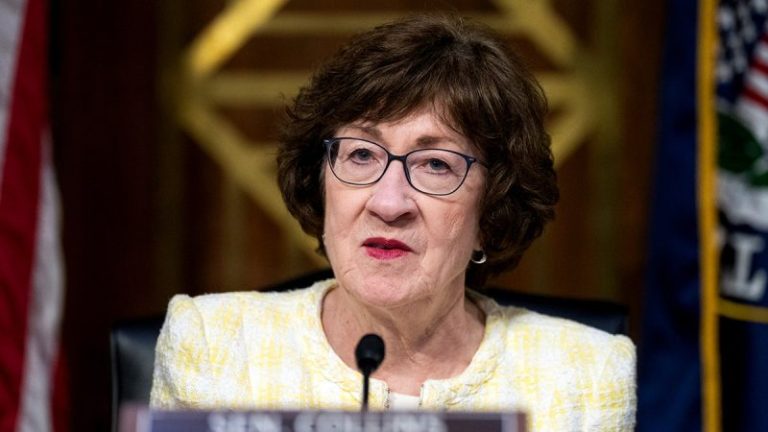
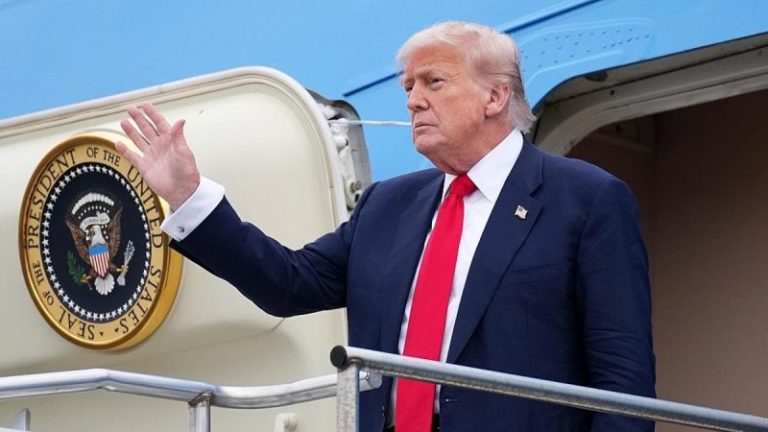
President Donald Trump targeted Sen. Susan Collins, R-Maine, in a Thursday night Truth Social post, urging Republicans to vote in the opposite of the way that she does.

‘Republicans, when in doubt, vote the exact opposite of Senator Susan Collins. Generally speaking, you can’t go wrong. Thank you for your attention to this matter and, MAKE AMERICA GREAT AGAIN!’ the president declared in the post.

Fox News Digital reached out to Collins’ office early on Friday morning to request a comment from the senator.

Last month Collins voted against passage of the One Big Beautiful Bill Act and against passage of a rescissions measure, both of which Trump ultimately signed.

Earlier this year she voted against confirming Pete Hegseth to serve as secretary of defense and against confirming Kash Patel to serve as FBI director.

In February 2021, she voted to convict Trump after the House impeached him in the wake of the Jan. 6, 2021 Capitol riot, but that Senate vote, which occurred after Trump had already departed from office, did not reach the threshold necessary for conviction.

Collins has served in the Senate since 1997.

This post appeared first on FOX NEWS

President Donald Trump clashed with a reporter Thursday over questions about a newly signed tariff, telling him that he had spent his first term ‘fighting lunatics like you.’ The intense exchange follows a White House signing ceremony for a series of executive actions aimed at expanding reciprocal tariffs and strengthening U.S. trade policy.

While speaking with reporters at the White House after the signing, a reporter confronted Trump on why he is emphasizing tariffs more in his second term. 

‘You’re weighing your decision to do that, your authority to do that based on a 1977 law. It’s never been invoked before,’ said the reporter. ‘Why didn’t you invoke this law in your first term? You could have taken in billions upon billions of dollars in your first term, but you waited until your second term?’

Without missing a beat, the president shot back: ‘Yeah, because in my first term, I was fighting lunatics like you who were trying to do things incorrectly and inappropriately to a president that was duly elected.’ 

‘And we did do certain tariffs in the first term,’ he continued. ‘If you look at China, China, we took in hundreds of billions of dollars from China.’ 

He also said that the COVID-19 pandemic also played a factor in his decision to not emphasize tariffs as much in his first term.

‘When Covid came the last thing I was going to do is tell France and Italy and Spain and a couple of other countries that we’re going to hit you with tariffs,’ he explained. ‘We had to fight the Covid situation when that came.’ 

‘But if you look at my first term,’ he went on, ‘We took in hundreds of billions of dollars’ worth of tariffs, but you people didn’t cover it very well.’ 

A statement by the White House said that Trump’s executive actions taken on Thursday ‘reflects the President’s continued efforts to protect the United States against foreign threats to the national security and economy of the United States by securing fair, balanced, and reciprocal trade relationships to benefit American workers, farmers, and manufacturers and to strengthen the United States’ defense industrial base.’ 

This comes shortly after Trump and European Commission President Ursula von der Leyen announced a trade deal between the U.S. and E.U. on Sunday.

‘We are agreeing that the tariff straight across for automobiles and everything else will be a straight-across tariff of 15%,’ Trump said.

‘So, we have a tariff of 15%. We have the opening up of all of the European countries, which I think I could say were essentially closed. I mean, you weren’t exactly taking our orders. You weren’t exactly taking our agriculture,’ he added, addressing von der Leyen.

Von der Leyen said Europe will also purchase $150 billion worth of U.S. energy as part of the deal, in addition to making $600 billion in other investments into the U.S.

Fox News Digital’s Anders Hagstrom and Stephen Sorace contributed to this report.

This post appeared first on FOX NEWS

The Secret Service must move to ‘course correct’ after reports a Secret Service agent attempted to smuggle his wife onto a Secret Service cargo plane accompanying President Donald Trump on his trip to Scotland, according to a former agent. 

Tim Miller, who served as a Secret Service agent during the administrations of presidents George H.W. Bush and Bill Clinton, said the alleged incident was unusual and that the agency must ‘step up’ to address growing threats against Trump. 

‘The threats to the President are serious and growing,’ Miller said in an email Thursday to Fox News Digital. ‘This agency must step up to address these threats. … Imagine a world where our elected leaders are not safe to lead the critical issues facing our world? 

‘The mission that they have been given requires the absolute best people available who have the highest level of commitment, experience, professionalism and skill.’

While Miller predicted conduct like this would have previously resulted in a suspension or firing of the agent, Miller said that is unlikely given that the Secret Service did not fire those on duty during the assassination attempt against Trump in Butler, Pennsylvania, in July 2024. 

The agency did, however, announce that it suspended six of its agents due to their response to the attempt.

Likewise, Miller said he anticipates an investigation into the Scotland incident will be handled meticulously. 

‘I am confident that they will thoroughly investigate this matter,’ Miller said. ‘To that end, the Secret Service must course correct and hold agents accountable for these types of errors in judgment. The current threats are too high. It’s time for high levels of accountability and a return to mission focus. The lives of our elected leaders depend on it! This truly is a ‘no fail’ mission!’ 

Even so, Miller said the agency did the right thing in identifying the threat and fixing the problem. 

‘The bottom line is there is more to this story and, with the exception of one agent’s extremely poor judgment, the Secret Service did a good job identifying and correcting this issue,’ Miller said. 

RealClearPolitics first reported that a Secret Service agent attempted to smuggle his wife aboard a Secret Service cargo aircraft during Trump’s travels for his Scotland trip.

Trump told reporters Tuesday he had just heard about the alleged incident, describing it as a ‘weird deal.’ He also told reporters the agency is handling the matter. 

‘I don’t know, that’s a strange one. I just heard that two minutes ago. I think Sean’s taking care of it. … Is that a serious story?’ Trump told reporters on Air Force One Tuesday, appearing to reference Sean Curran, Secret Service director.

The White House confirmed to Fox News Digital Wednesday that Trump had been briefed on the matter and that an investigation was ongoing. 

‘The U.S. Secret Service is conducting a personnel investigation after an employee attempted to invite his spouse, a member of the United States Air Force, aboard a mission support flight,’ a Secret Service spokesperson told Fox News Digital Tuesday.

‘The aircraft, operated by the U.S. Air Force, was being used by the Secret Service to transport personnel and equipment,’ the spokesperson added. ‘Prior to the overseas departure, the employee was advised by supervisors that such action was prohibited, and the spouse was subsequently prevented from taking the flight. No Secret Service protectees were aboard, and there was no impact to our overseas protective operations.’

This post appeared first on FOX NEWS

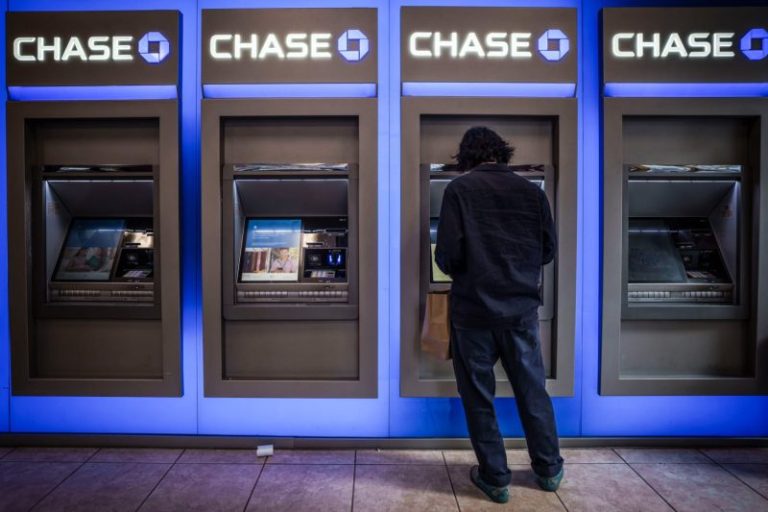
JPMorgan Chase has built 1,000 new branches in seven years. That’s more locations than most of its competitors operate in total.

The bank is marking the milestone opening in Charlotte, North Carolina, on Thursday where Chairman and CEO Jamie Dimon is attending a ribbon-cutting ceremony. The firm has roughly 5,000 branches, the most of any American bank, according to Federal Reserve data from March.

“It’s a great marker for us to be able to say, you can see our commitment over time and we’re on a marathon with regard to this expansion,” said Jennifer Roberts, the CEO of Chase Consumer Banking, in an interview. “A thousand [branches] is significant — a thousand is bigger than many regional competitors have at all.”

In 2018, JPMorgan operated bank branches in 23 states and said it would expand into as many as 20 new markets over the following five years with about 400 new locations. By 2021, the firm said it had branches in all 48 lower states. And last February, JPMorgan announced a new, multibillion-dollar investment to open another 500 new locations by 2027.

JPMorgan said over the past seven years, Chase has opened more bank branches than all of its large bank peers combined. However, many of JPMorgan’s competitors have recently announced plans to expand their own footprints as the quest for deposits heats up.

Bank of America recently announced a branch expansion, with plans to open 150 new centers by 2027. And Wells Fargo plans to add branches, especially now that it’s fulfilled a regulatory consent order that had been constraining its growth.

The industry-wide growth plans could help reverse a trend dating back to the 2008 financial crisis in which the U.S. has seen the net number of bank branches plummet. The combination of fewer overall banks and the advent of online banking has broadly made brick-and-mortar locations lower priority. However, in recent years, especially amid the population migration during and after the pandemic, banks have been reorienting their footprints to capture more deposits.

Expanding in Charlotte puts JPMorgan head-to-head with rival Bank of America, which is headquartered there and has 71% market share in the city, according to KBW and S&P Global Market Intelligence data.

Roberts said after this latest opening, Chase will have about 75 branches in North Carolina. She said that the bank is expanding there due to its “young, fast-growing population” and that there’s a “lot of wealth coming into that area” as well.

JPMorgan said at its investor day in May that its newer branches are expected to ultimately contribute more than $160 billion in incremental deposits. The firm said each new branch breaks even within four years.

JPMorgan said when its expansion is complete, Chase will have added more than 1,100 branches, renovated 4,300 locations and entered 80 new markets. It also expects that 75% of the U.S. population will be able to reach one of its branches within an “accessible drive.”

This post appeared first on NBC NEWS

SAN FRANCISCO — Apple on Thursday reported sales and profit that far surpassed expectations, showing that its efforts to re-route its sprawling global supply chain away from U.S. President Donald Trump’s trade war have so far succeeded.

Apple said it earned $94.04 billion in revenue for its fiscal third quarter ended June 28, up nearly 10% from a year earlier and beating analyst expectations of $89.54 billion, according to LSEG data. Its earnings per share of $1.57 per share topped expectations of $1.43 per share.

Sales of iPhones, the Cupertino, California, company’s best-selling product, were up 13.5% to $44.58 billion, beating analyst expectations of $40.22 billion.

Apple has been shifting production of products bound for the U.S., sourcing iPhones from India and other products such as Macs and Apple Watches from Vietnam. Still, the company had warned investors that U.S. tariffs could cost it $900 million in the fiscal third quarter, and it trimmed its annual share buyback program by $10 billion, a move analysts viewed as helping to free up cash to remain nimble in uncertain times.

The ultimate tariffs many Apple products could face remain in flux, and many of its products are currently exempt. Sales in its Americas segment, which includes the U.S. and could face tariff impacts, rose 9.3% to $41.2 billion.

In an interview with Reuters, Apple CEO Tim Cook said the company set seasonal records for upgrades of iPhones, Macs, and Apple Watches. He said Apple estimates about 1 percentage point of its 9.6% of sales growth in the quarter was attributable to customers making purchases ahead of potential tariffs.

“We saw evidence in the early part of the quarter, specifically, of some pull-ahead related to the tariff announcements,” Cook told Reuters, though he also said the active user base for iPhones hit a record high in all geographies.

The U.S. is still negotiating with both China and India, with Trump saying India could face 25% tariffs as early as Friday. However, analysts said India could still retain cost advantages for Apple in the longer term.

Tariffs are only one of Apple’s challenges. The company faces competition from rivals such as Samsung in a tough market for premium-priced mobile phones. On the software front, Apple faces challenges from Alphabet, which is quickly weaving AI features into its competing Android operating system.

Apple has delayed the release of an AI-enriched version of Siri, its virtual assistant, but Cook said the company is “making good progress on a personalized Siri.” He also said Apple, which has thus far not engaged in the massive capital expenditures of its Big Tech rivals to pursue AI, is “significantly growing” its investments in artificial intelligence.

“Apple has always been about taking the most advanced technologies and making them easy to use and accessible for everyone, and that’s at the heart of our AI strategy,” Cook said.

Apple faces regulatory rulings in Europe that threaten to undermine its lucrative App Store business. Apple said sales from its services business, which includes the App Store as well as music and cloud storage, were $27.42 billion, topping analyst expectations of $26.8 billion.

Sales of wearables such as AirPods and Apple Watches were $7.4 billion, missing estimates of $7.82 billion. Mac sales of $8.05 billion beat expectations of $7.26 billion, while iPads hit $6.58 billion in sales, missing expectations of $7.24 billion.

In Greater China, where Apple has faced long delays in approval to introduce AI features on its devices, sales were $15.37 billion, up from a year ago and above expectations of $15.12 billion, according to a survey of five analysts from data firm Visible Alpha.

Apple said gross margins were 46.5%, beating analyst expectations of 45.9%, according to LSEG estimates.

This post appeared first on NBC NEWS

The psychedelic drugs market is emerging as a strategic investment opportunity in healthcare, with forecasts generally placing its value around US$6.4 billion in 2025.

This burgeoning sector is set for robust, double-digit compound annual growth, significantly driven by North America, which is anticipated to account for approximately 45–50 percent of this market.

The first half of 2025 was characterized by clinical advancements and softening policy stances, furthering momentum and contributing to growing market interest.

Clinical progress and policy shifts drive market interest

Interest in the space continued in H1 as drug candidates advanced into pivotal trials, particularly in the treatment of depression, anxiety and PTSD. Cybin (NYSEAMERICAN:CYBN) reported meaningful progress, citing investor and regulatory confidence in the therapeutic potential of psilocybin, LSD analogs and DMT derivatives.

Cybin’s 2025 financial results, released on June 30, highlighted significant progress in its lead programs, as well as its strong financial position, with C$135 million in cash reported.

CEO Doug Drysdale emphasized the company’s progress in building a strong foundation for anticipated clinical and regulatory milestones.

Key highlights include strengthened intellectual property with new patents for CYB003 and CYB004, strategic partnerships with Osmind and Thermo Fisher Scientific, and promising Phase 2 efficacy data for CYB003 in MDD, showing 100 percent responder rates and 71 percent remission with two 16 mg doses. The Phase 2 study for CYB004 in GAD is underway and expected to be completed around mid-2025.

Likewise, COMPASS Pathways (NASDAQ:CMPS) announced that its COMP360 psilocybin treatment successfully met its primary goal in a Phase 3 trial for treatment-resistant depression on June 23.

A single 25mg dose of COMP360 significantly reduced depression symptoms compared to a placebo at six weeks, showing a clinically meaningful difference and strong statistical significance. This marks the first Phase 3 efficacy data reported for a classic psychedelic, and Compass Pathways said it plans to discuss these positive results with the FDA.

Policy signals were equally consequential. Notably, the Texas House and Senate passed SB 2308 in May, which will provide up to US$100 million in state funds for ibogaine trials.

The results of the trials will be presented to the US Food and Drug Administration (FDA) for potential approval of ibogaine for opioid use disorder, co-occurring substance use disorder and other neurological or mental health conditions. Governor Abbott signed the bill into law on June 11, representing a notable and progressive shift in the Republicans’ approach to drug policy.

However, the sector continues to face real challenges, such as costly clinical access and inconsistent regulatory frameworks that have resulted in a patchwork of state-level regulations. Despite these challenges, there are ongoing efforts towards federal reform and standardized guidelines.

Health Secretary Robert F. Kennedy Jr. recently told members of Congress that new therapeutics using psychedelic substances could revolutionize treatment for mental health challenges.

‘This line of therapeutics has tremendous advantage if given in a clinical setting and we are working very hard to make sure that happens within 12 months,” he said during a House subcommittee meeting regarding the Trump administration’s proposed budget for the US Department of Health and Human Services (HHS).

FDA head Marty Makary has likewise labeled the assessment of MDMA and other psychedelics as a “top priority,” announcing initiatives aimed at potentially expediting their approval.

One new program in particular aims to accelerate drug approval, potentially cutting review times from six months to one month.

This initiative might relax requirements for some drugs, possibly waiving placebo-controlled studies, which have been a hurdle for psychedelic research because patients often know if they’ve received the drug.

Looking ahead

The National Psychedelic Landscape Assessment (NPLA) identifies 11 states with a high likelihood of future movement based on legislative viability, advocacy strength, public support, legislative momentum and strategic impact: New Mexico, Nevada, Texas, Illinois, Missouri, California, Massachusetts, Connecticut, Indiana, New York and Arizona.

The report also points to several key trends and persistent challenges in the current psychedelic market.

Decriminalization at the state level has seen an enactment rate of just two percent, despite being a frequently introduced legislative concept, with 67 bills introduced since 2020. Movements have been hampered by public health and safety concerns, although local efforts are gaining momentum.

However, adult-use access has seen no legislative enactments through state legislatures, with existing programs in Oregon and Colorado being implemented predominantly via citizen-led ballot initiatives.

When it comes to medical access programs, New Mexico stands out as the sole state to successfully enact a licensed and regulated psilocybin therapy program through SB 219, battling hurdles such as regulatory complexity, affordability and securing sufficient provider participation.

The report also found that clinical trials have been gaining traction, particularly when state-funded and focused on vulnerable populations like veterans and first responders, with Indiana emerging as a leader in this area.

The state established a therapeutic psilocybin research fund in 2024 that compares psilocybin against existing treatments, and ensures transparent fund administration and research application processing.

A more moderate approach is seen in pilot programs, which offer a controlled environment for access and data collection. The crucial step of implementing legislation, necessary to operationalize enacted policies, shows a 50 percent success rate, according to the report’s findings.

The report also points to corporate influence and the strategic efforts by corporate entities to gain commercial advantage through state trigger laws and compound-specific legislation favoring patented compounds like COMP360.

Securities Disclosure: I, Meagen Seatter, hold no direct investment interest in any company mentioned in this article.

This post appeared first on investingnews.com

Here’s a quick recap of the crypto landscape for Wednesday (July 30) as of 9:00 p.m. UTC.

Get the latest insights on Bitcoin, Ethereum and altcoins, along with a round-up of key cryptocurrency market news.

Bitcoin and Ethereum price update

Bitcoin (BTC) was priced at US$16,964, down by 0.5 percent over the last 24 hours. Its highest valuation on Wednesday was US$118,644, while its lowest valuation was US$116,079.

Bitcoin price performance, July 30, 2025.

Chart via TradingView

Markets rallied briefly following the release of the White House’s crypto policy report, which called for greater SEC clarity and new legislation to regulate digital assets, but pulled back after the Federal Reserve left interest rates unchanged and warned of slowing economic growth.

Ethereum (ETH) was priced at US$3,764.26, down by 0.1 percent over the past 24 hours. Its lowest valuation on Wednesday was US$3,708.13, and its highest was US$3,820.17.

Altcoin price update

  • Solana (SOL) was priced at US$176.09, down by 2.9 percent over 24 hours. Its lowest valuation on Wednesday was US$173.22, and its highest was US$179.83.
  • XRP was trading for US$3.10, down by 0.6 percent in the past 24 hours. Its lowest valuation of the day was US$3.04, and its highest valuation was US$3.15.
  • Sui (SUI) is trading at US$3.77, down 1.3 percent over the past 24 hours. Its lowest valuation of the day was US$3.66, and its highest was US$3.81.
  • Cardano (ADA) was trading at US$0.7600, down by 2.3 percent over 24 hours. Its lowest valuation on Wednesday was US$0.7414, and its highest was US$0.7759.

Today’s crypto news to know

Ethereum marks a decade since launch

Ethereum marked its 10th anniversary on July 30 with growing corporate interest in Ether as a potential treasury reserve asset.

The Ethereum network launched in 2015 and has since maintained uninterrupted uptime, becoming the backbone of the decentralized finance (DeFi) movement. In the lead-up to the anniversary, Ether’s price approached US$4,000, driven in part by renewed institutional inflows and growing confidence in the asset’s long-term utility.

The Ethereum Foundation will commemorate the milestone by issuing celebratory NFTs and organizing more than 100 events globally.

A live broadcast featuring Vitalik Buterin, Joseph Lubin, and Tim Beiko will also be hosted to reflect on the network’s origins and future direction.

SEC greenlights in-kind ETP creations and redemptions

On Tuesday, July 29, the Securities and Exchange Commission (SEC) gave its approval for in-kind creations and redemptions by authorized participants for crypto asset exchange-traded products (ETPs).

“It’s a new day at the SEC, and a key priority of my chairmanship is developing a fit-for-purpose regulatory framework for crypto asset markets,” said Chairman Paul Atkins in the announcement. “Investors will benefit from these approvals, as they will make these products less costly and more efficient.

“Today’s approvals continue to build a rational regulatory framework for crypto, leading to a deeper and more dynamic market, which will benefit all American investors. This decision aligns with the standard practices for similar ETPs.”

Authorized institutions can now directly exchange crypto assets like Bitcoin or Ethereum for shares of a crypto ETP, and vice versa, making these products more efficient and potentially cheaper to manage than when only cash transactions were allowed.

Senator Lummis proposes bill to allow digital assets for mortgages

In a Tuesday notice, Wyoming Senator Cynthia Lummis introduced the 21st Century Mortgage Act, a law that could compel mortgage purchasers to consider digital assets in applications.

Lummis said her proposed bill would initiate congressional action following a June order from the US Federal Housing Finance Agency (FHFA) that mandated US mortgage purchasers Fannie Mae and Freddie Mac “consider cryptocurrency as an asset for single-family loans.”

“This legislation embraces an innovative path to wealth-building, keeping in mind the growing number of young Americans who possess digital assets,” said Lummis.

A similar crypto mortgage proposal, the American Homeowner Crypto Modernization Act, was introduced by Republican Representative Nancy Mace on July 14. Mace’s proposed bill would mandate that mortgage lenders incorporate the value of a borrower’s digital assets held in cryptocurrency brokerage accounts into their mortgage credit evaluations.

The bill is one of three that the US Senate may consider after a month-long recess, alongside a digital asset market structure bill and a bill aimed at barring the Federal Reserve from launching a central bank digital currency.

eToro expands 24/5 trading and tokenizes US stocks

Trading platform eToro has announced plans to expand its current 24/5 trading for 100 popular US stocks and ETFs, meaning customers can now trade these assets five days a week, almost around the clock, even outside regular market hours.

Co-founder and CEO Yoni Assia spoke with Yahoo Finance Executive Editor Brian Sozzi about the move on Tuesday (July 29).

“We’re expanding a lot of the trading universe and trading hours on the eToro platform. Announced today, more 24-hour stock trading on the platform, as well as near 24/5 trading on exchange CME traded futures, a new type of futures product,” Assia said.

“That’s very exciting for our users worldwide. And very excited also about revamping tokenization in eToro, launching those 100 stocks that trade 24/5 on the eToro platform as tokenized assets, gradually available to people with the eToro crypto wallet.”

The company also announced the launch of tokenized versions of these same US stocks as ERC20 tokens on the Ethereum blockchain.

This will eventually enable true 24/7 trading and transfers, and is part of eToro’s strategy to tokenize all assets on their platform and integrate them into the broader decentralized finance world. They’re also rolling out spot-quoted futures with CME Group, a simpler futures product, currently in Europe, with plans for wider availability.

Trump Working Group calls for aggressive federal action on crypto markets

A White House-appointed working group on digital asset markets has released a sweeping set of recommendations to overhaul US crypto policy, according to a preview.

The group, established under an executive order by Donald Trump in January, urged Congress to pass the Digital Asset Market Clarity Act and called on regulators to use existing powers to support immediate crypto market growth.

The report recommends that the Commodity Futures Trading Commission be granted broader oversight over spot markets for non-security tokens and that safe harbor provisions be used to accelerate product launches.

It also advises federal banking regulators to clarify permissible crypto-related bank activities and modernize capital rules to reflect token-based risks.

The Trump administration said the proposals would help ensure US leadership in the “blockchain revolution” and usher in a “Golden Age of Crypto.”

JPMorgan to let Chase customers buy Crypto via Coinbase

JPMorgan Chase (NYSE:JPM)has announced a major partnership with Coinbase that will allow Chase credit card users to purchase cryptocurrencies directly from the exchange.

The service is expected to roll out in fall 2025, with full account-linking functionality available by 2026. Customers will also be able to redeem Chase credit card reward points for USDC, a stablecoin pegged to the US dollar.

The move marks a notable shift in the firm’s stance toward crypto, going from a cautious observer to an active participant in retail-focused blockchain infrastructure.

With crypto’s total market cap recently crossing US$4 trillion, large banks are now racing to integrate digital asset capabilities into their core offerings.

Securities Disclosure: I, Giann Liguid, hold no direct investment interest in any company mentioned in this article.

Securities Disclosure: I, Meagen Seatter, hold no direct investment interest in any company mentioned in this article.

This post appeared first on investingnews.com