
Author

admin

Browsing

(TheNewswire)

Vancouver, BC August 15, 2025 TheNewswire – Element79 Gold Corp. (CSE: ELEM,OTC:ELMGF | FSE: 7YS0 | OTC: ELMGF) (the ‘Company’), is a Canadian mining company focused on developing its portfolio of gold and silver projects in Nevada and Peru, announces strategic leadership changes which will be effective August 31, 2025, alongside an update on its advancing growth strategy.

Key Highlights Discussed:

Advancing Lucero, Peru – Continued incubation of the high-grade Lucero Project in southern Peru, with a mid-long-term objective of restarting exploration and production.

  • Leadership Transition – Effective August 31, 2025, including strategic changes to both Management and the Company’s Board of Directors, with the goal of accelerating asset development in Nevada.

Corporate Strategy Update

Nevada

Over the past year, Element79 Gold has sharpened its focus on building a long-term exploration and development portfolio in Nevada , anchored by the recent acquisition of the drill-ready Gold Mountain project and plans to explore the Elephant project, both located in the prolific Battle Mountain trend.  The Company has had success in developing projects in this Tier 1 mining region in the past, and this refocused strategy forms the foundation for the Company’s next phase of resource growth, positioning Element79 in one of the world’s most established gold districts. The Company currently has two projects in Battle Mountain, Nevada:

  • Gold Mountain , a Drill-ready asset with near-term exploration plans aimed at expanding known mineralization and advancing toward resource definition. The Company has engaged Rangefront Mining Services to prepare a NI 43-101 technical report as disseminated on August 6, 2025, in previous news.

  • Elephant Located in the heart of the Battle Mountain trend, targeted for systematic exploration to evaluate and advance its Gold, Silver, Lead and Copper potential.

The Company is currently pursuing additional high grade mineral concessions in the region to add to its evolving portfolio.

Peru

At the same time, the Company continues to incubate its high-grade Lucero Project in Arequipa, Peru , preparing for the eventual restart of exploration and production. Work in Peru is currently focused on community engagement, legal and regulatory readiness, and aligning future project development for win-win outcomes with key stakeholders with an eye to the access issues being resolved in the coming months.

Key project points for Lucero into 2026:

  • Maintain regular communication and presence in the Chachas community, anticipating a more favorable local administration beginning in 2026–2028 (local meetings starting at the end of August 2025 will focus on the local mayoral race).

  • Monitor federal updates to the ‘systemic push’ towards formalization under the former-REINFO-to-new-Ley MAPE transition, with a key catalyst deadline of December 31, 2025, approaching.

  • Upon the implementation of the new formalization regime, working with legal counsel and the community to forge surface rights and operating agreements.

  • Target mobilization for on-site work in mid-2026, contingent on formalization progress and community agreements.

  • Work with contractual counterparties to restructure terms, linking payments to mutually beneficial project advancement and production goals.

Leadership and Board Changes

Effective August 31, 2025:

  • James C. Tworek , Chief Executive Officer since inception, has elected to step down from the role and continue to support the Company as a Director.

  • Michael Smith , currently Vice President, Corporate Development, will be appointed Chief Executive Officer.

  • Neil Pettigrew will resign as Director and Qualified Person (‘QP’).  The Company is grateful for Mr. Pettigrew’s investment of expertise and help applied through the Company’s history from inception.

  • Kim Kirkland , currently Chief Operating Officer, will formally take on the Company’s QP role and join the Board of Directors, while stepping down from his role as COO.

  • Warren Levy will remain as Director and will assume the role of Chairman of the Board.

  • Zara Kanji will continue as Director.

Outgoing CEO James C. Tworek commented:

‘It has been a privilege to build, grow and lead the talented team professionals at Element79 Gold from its private company roots through multiple transformative milestones and successes since our IPO in August 2021.  These changes to the Element79 Gold Corp team make the Company nimbler while retaining expertise, intimate project knowledge and relationships.

We are grateful for our Director, Neil Pettigrew’s leadership and expertise with the Company’s multitude of projects, and guidance through many challenges that we have faced, both before and since our IPO.  I wish him success in his current and future professional endeavors and look forward to the possibility to work with him again.

With the Company’s recent refocus on exploration and resource development in Nevada while continuing a mid-to-long term strategy of restarting production at Lucero in Peru, I am confident that Michael is the right leader to guide the current phase of growth.  I remain committed to supporting the Company, helping to manage strategy, relationships and projects as a board member.’

Incoming CEO Michael Smith added:

‘I am honored and excited to take on the role of CEO during this exciting time of refocus and development opportunity underway at Element79 Gold Corp. Our immediate priorities lead a raise focused on drilling Gold Mountain, developing Elephant and maintaining momentum at Lucero in Peru.  I look forward to building upon the strong foundation laid by James and the team.’

Warren Levy, Chairman added:

‘I would like to thank James and Neil for their efforts over the years to keep Element79 moving forward, and am looking forward to Michael taking the lead going forward. The refocused company has an attractive portfolio and has maintained access to the upside in Peru. We feel that the hard work of positioning the company has been well done by James and Kim, and their continued involvement on the board will be important to assist the new management team in taking the company forward successfully.’

Qualified Person

The technical information in this release has been reviewed and approved by Kim Kirkland, Fellow of AusIMM #309585, Chief Operating Officer of Element79 Gold Corp, and a ‘qualified person’ as defined by National Instrument 43-101.

About Element79 Gold Corp

Element79 Gold Corp is a mining company focused on gold and silver exploration, with assets in Nevada and Peru. The Company is actively advancing its drill-ready Gold Mountain Project in Nevada’s Battle Mountain trend and holds an option to purchase the high-grade Lucero Mine in southern Peru. Element79 has transferred its Dale Property in Ontario to its wholly owned subsidiary, Synergy Metals Corp., and is progressing through the spin-out process. Element79 Gold is listed on the CSE (CSE: ELEM,OTC:ELMGF), the Frankfurt Stock Exchange (FSE: 7YS0), and the OTC Markets (OTC: ELMGF).

On Behalf of the Board of Directors,

James C. Tworek, CEO, Director

Investor Relations Department

Email : investors@element79.gold

Phone : +1.604.319.6953

Corporate Contact

James Tworek, CEO, Director

Email: jt@element79.gold

Cautionary Note Regarding Forward Looking Statements

This press release contains forward-looking statements within the meaning of applicable securities laws. The use of any of the words ‘anticipate,’ ‘plan,’ ‘continue,’ ‘expect,’ ‘estimate,’ ‘objective,’ ‘may,’ ‘will,’ ‘project,’ ‘should,’ ‘predict,’ ‘potential’ and similar expressions are intended to identify forward-looking statements. This press release contains forward-looking statements concerning the Company’s exploration plans, development plans and the Force Majeure Event. Although the Company believes that the expectations and assumptions on which the forward-looking statements are based are reasonable, undue reliance should not be placed on these statements because the Company cannot provide assurance that they will prove correct. Forward-looking statements involve inherent risks and uncertainties, and actual results may differ materially from those anticipated. Factors that could cause actual results to differ include conditions in the duration of the Force Majeure Event, and receipt of regulatory and shareholder approvals. These forward-looking statements are made as of the date of this press release, and, except as required by law, the Company disclaims any intent or obligation to update publicly any forward-looking statements.

Neither the Canadian Securities Exchange nor the Market Regulator (as that term is defined in the policies of the Canadian Securities Exchange) accepts responsibility for the adequacy or accuracy of this release.

Copyright (c) 2025 TheNewswire – All rights reserved.

News Provided by TheNewsWire via QuoteMedia

This post appeared first on investingnews.com

Investor Insight

Asra Minerals is an emerging gold explorer with a compelling investment case as it focuses on strategic expansion and development of high-grade resources across its Leonora gold project in Western Australia.

Overview

Asra Minerals (ASX:ASR) is unlocking the potential of its portfolio of existing resources and underexplored prospects within Western Australia’s renowned Leonora Goldfields. The company controls one of the largest and most prospective land positions in the district, strategically surrounded by high-profile gold producers such as Genesis Minerals’ (ASX:GMD) with its 8.9 million oz (Moz) Leonora Operations; Vault Minerals (ASX:VAU), which operates the 1.9 Moz Darlot mine and 4.1 Moz King of the Hills mine; and Northern Star (ASX:NST), which operates the 4.2 Moz Thunderbox mine.

With existing JORC 2012 resources of 200,000 oz gold and a clear strategy to reach 500,000 oz in the near-term, Asra Minerals is leveraging its 936 sq km Leonora landholding in one of Australia’s most prolific gold belts. Asra’s tenements span 75 km of strike length, including two primary zones – Leonora North and Leonora South – each with resource-stage projects, brownfields upside and newly identified high-priority drill targets.

A strategic reset in late 2024 led to a new CEO, technical team and drilling strategy aimed squarely at resource growth and project consolidation. With global unrest supporting sustained high gold prices and WA’s regulatory stability, Asra’s ground – historically underexplored and fragmented – is now primed for discovery, growth and value creation.

Company Highlights

  • District-Scale Gold Project in Tier-One Jurisdiction: 936 sq km landholding in WA’s Leonora region, proximal to more than 15 Moz of gold resources across neighboring major mines.
  • JORC Resource of 200 koz at 1.8 g/t gold: Existing resource includes high-grade shallow mineralization at Orion, Sapphire, Mt Stirling and Stirling Well.
  • Aggressive Growth Strategy: Targeting >500 koz resource base in 2025 through near-resource and greenfield drilling.
  • Ongoing Exploration: Systematic exploration underway across the portfolio with multiple high-priority targets identified for further follow-up.
  • New High-impact Leadership: Rebuilt management and technical team in late 2024, including renowned gold discoverers behind Gruyere (6.2 Moz) and Raleigh (1 Moz).
  • Undervalued Opportunity: With a ~$10 million market cap, Asra offers substantial re-rating potential amid rising gold prices and renewed institutional interest.

Key Project

Leonora Gold Project

Asra Minerals’ flagship Leonora gold project spans more than 936 sq km in Western Australia’s prolific Eastern Goldfields. The asset is subdivided into the Leonora North and Leonora South project areas. The region hosts multiple world-class gold operations, including Genesis Minerals’ Leonora operations, Vault Minerals’ King of the Hills, and Northern Star’s Thunderbox mine, all within trucking distance. Asra’s tenements lie along the highly prospective granite-greenstone contacts and major fault systems such as the Ursus Fault, known for controlling high-grade orogenic gold mineralization.

Leonora South

The Leonora South project is 549 sq km with eight granted mining leases, located within the historic Kookynie goldfields. This area is host to numerous high-grade deposits, including Genesis Minerals’ Ulysses Hub (~2 Moz gold). Asra is focused on the Sapphire and Orion open pit deposits, which together comprise a JORC 2012 inferred resource of 48,014 oz grading at 2.2 grams per ton (g/t) gold. High-grade intercepts include standout results such as 166 g/t gold over 6 m from 135 m, including 248.8 g/t gold over 4 m (Sapphire), and 46.4 g/t gold over 4 m from 3 m (Orion), demonstrating a potential for bonanza-grade extensions at depth.

Diamond drilling completed in Q4/2024 confirmed down-dip continuity of high-grade gold zones approximately 30 to 50 m below historical intercepts, with assays such as 47.95 g/t gold over 1 m from 115.2 m, 23.12 g/t gold over 1 m from 148.7 m, and 23.97 g/t gold over 0.8 m from 161.2 m. A new 1,300 m RC and diamond-tail drilling program commenced in Q2/2025 to test these high-priority targets, aiming to significantly increase the resource base. The mineralized quartz veins at Sapphire and Orion trend east-northeast and dip steeply – 50 to 80 degrees – southwards and remain open at depth and along strike.

Exploration across Leonora South has identified 21 high-priority targets, of which 15 have never been drill tested. These were derived from detailed 2025 airborne magnetics, structural reinterpretation and geochemical mapping. Planned work includes follow-up aircore and RC drilling to expand the mineralized footprint, including at Gladstone and Jessop Creek, with approvals already received from the Department of Energy, Mines, Industry Regulation and Safety.

Leonora North

Situated 40 km northeast of Leonora and just 5 km from Vault’s King of the Hills mine, Leonora North is a brownfields gold asset with significant exploration and expansion potential. The area lies within the Eastern Goldfields Superterrane of the Yilgarn Craton and is hosted along the structurally controlled Ursus Fault Zone, a major gold-bearing shear corridor. The project contains multiple zones with a total JORC 2012 resource of 152,000 oz grading at 1.7 g/t gold, including:

  • Mt Stirling–Viserion Deposit: 2.16 Mt @ 1.6 g/t gold for 111,000 oz (inferred), plus 391,000 t @ 2.1 g/t for 26,000 oz (indicated).
  • Stirling Well: 198,000 t @ 2.3 g/t gold for 15,000 oz (inferred).

The Mt Stirling resource remains open along strike and at depth, with high-grade shoots identified to the north. The flat-lying Stirling Well orebody has potential for parallel lodes and deeper extensions into mafic host rocks. A major aeromagnetic and litho-structural reinterpretation, completed in December 2024, identified +20 high-priority gold targets across the northern strike extensions. Several of these are situated adjacent to the historically mined Diorite King Mine, which reportedly produced at high grades. The untested 12 km Ursus Fault corridor remains a key focus, with ~9 km still unexplored.

Importantly, Asra secured 100 percent ownership of the Mt Cutmore prospect in May 2025, consolidating a highly strategic zone within the Mt Stirling region. This acquisition covers multiple live and pending tenements, and enhances Asra’s ability to deploy a focused drilling campaign across the Leonora North project area. Drill permits have been secured, and both AC and RC programs are planned for H2/2025 to evaluate new geophysical anomalies, follow up on known mineralization, and grow the current resource base.

Management Team

Paul Stephen – Managing Director

A seasoned mining executive, Paul Stephen has held various executive and directorship roles across ASX and LSE-listed companies prior to joining Asra. He was a co-founder and executive director of Crusader Resources, where he was instrumental in the discovery, development and operation of the Posse Iron Ore mine in Brazil. During his tenure, he oversaw the delineation of over 2.6 million ounces of gold, significantly contributing to Crusader’s market capitalization exceeding AU$160 million.

Paul Summers – Non-executive Chair

Paul Summers has been a legal practitioner since 1985, and founded his own firm, Summers Legal in 1989. He has been Asra’s counsel for more than 10 years and has provided extensive advice and service during the recent takeover of Cascade Resources. Summers is currently lead counsel – commercial, corporate and property of Summers Legal and is familiar with the company’s affairs, projects and strategy.

Mathew Longworth – Non-executive Director

Mathew Longworth is a geologist with over 35 years’ experience in large projects, exploration and discoveries in Australia, Greenland, Africa, South America and the Pacific. He is currently chairman of Ardea Resources and Greenfields Exploration, and non-executive chairman of Northam Resources. As a director and chairman, he has guided companies through challenging corporate times including IPO listings, takeovers, major capital raisings, 249D notices and joint venture negotiations while maximizing value for shareholders.

Leonard Math – Non-executive Director, Chief Financial Officer and Company Secretary

Leonard Math is a chartered accountant with more than 15 years of resource industry experience. He was an auditor at Deloitte and is experienced with public company responsibilities including ASX and ASIC compliance, control and implementation of corporate governance, statutory financial reporting and shareholder relations. He previously held company secretary and directorship roles for a number of ASX listed companies.

Ziggy Lubieniecki – Technical Consultant

Ziggy Lubieniecki is a highly experienced geologist with over three decades of expertise spanning exploration, mining, management, property acquisition and company listings. His previous senior roles include chief mine geologist at Plutonic, exploration manager at Australian Platinum Mines, and executive director at Gold Road Resources. Along with a successful exploration track record, Lubieniecki is credited for the discovery of the 6.2 Moz Gruyere gold deposit.

This post appeared first on investingnews.com

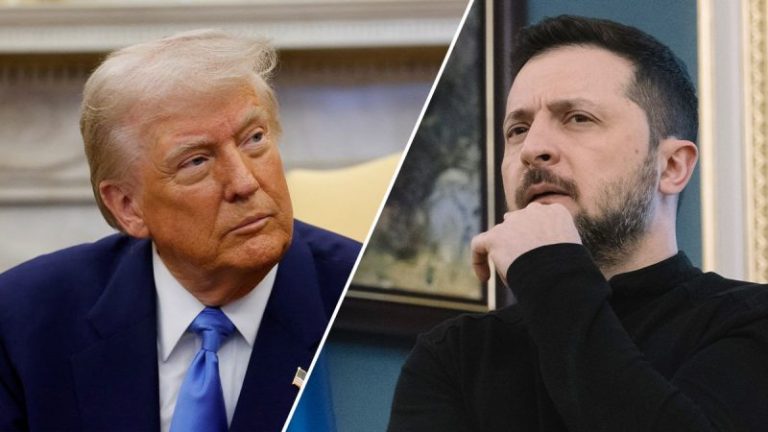
Ukrainian President Volodymyr Zelenskyy said on Saturday he will travel to Washington, D.C. on Monday to meet with President Donald Trump.

Zelenskyy’s announcement comes a day after Trump met with Russian President Vladimir Putin in Alaska on Friday to negotiate an end to the war in Ukraine.

‘On Monday, I will meet with President Trump in Washington, D.C., to discuss all of the details regarding ending the killing and the war. I am grateful for the invitation,’ Zelenskyy wrote on X.

This is a breaking news story. Check back for updates.

This post appeared first on FOX NEWS

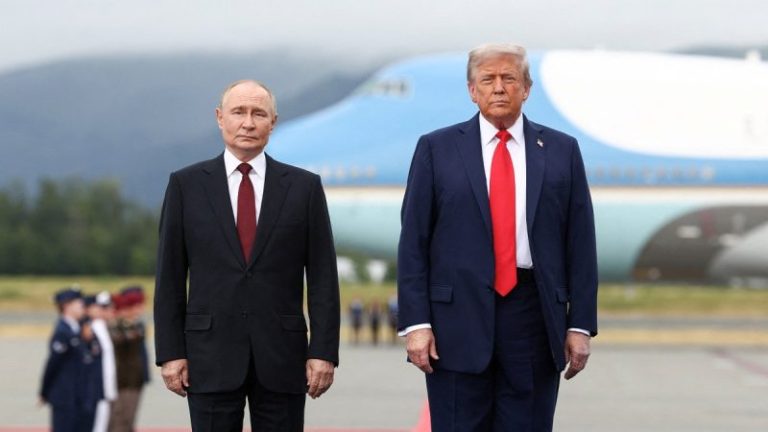
As President Donald Trump greeted Russian President Vladimir Putin on the tarmac at Joint Base Elmendorf-Richardson, a B-2 stealth bomber soared overhead, flanked by four F-35 jets. 

Putin looked up at the sky as the planes buzzed overhead while he walked alongside Trump, and then made a comment to the U.S. president. 

The display was as much a symbol as it was a show of force—a pointed reminder of America’s military reach at the very moment the two leaders prepared to discuss the future of global security.

The dramatic arrival underscored the high-stakes nature of the Alaska summit, the first face-to-face meeting between Trump and Putin since Trump’s return to the White House earlier this year. Joint Base Elmendorf-Richardson, situated just outside Anchorage, was chosen for its robust security, strategic location, and symbolic position—physically closer to Russia than Washington, D.C., yet firmly on American soil.

Onlookers in Anchorage and across social media quickly seized on the moment. Many called it an ‘insane flex,’ noting the B-2 bomber’s recent combat history.

Only two months ago, the stealth aircraft played a central role in U.S. and Israeli strikes on Iranian nuclear facilities, dropping bunker-buster bombs in a move that drew both praise and condemnation on the world stage.

The B-2 Spirit, built by Northrop Grumman, is one of the most advanced aircraft ever created—capable of penetrating dense air defenses and striking targets anywhere in the world without refueling. Its distinctive flying-wing design and radar-absorbent coating make it nearly invisible to enemy radar. 

With a range of over 6,000 nautical miles and the ability to carry both conventional and nuclear weapons, the B-2 serves as a critical component of America’s nuclear triad. Only 21 were ever built, and fewer than 20 remain in service, making any public appearance a rare and deliberate statement.

‘Absolutely incredible,’ wrote one X user. Another added, ‘Putin now knows what will be greeting him if he were to ever cross that line that should never be crossed.’

After the brief tarmac ceremony, Putin entered ‘The Beast’ alongside Trump. The heavily armored presidential limousine rolled past a row of American fighter jets lined up in silent formation, their presence another visual reminder of the stakes surrounding the talks.

The two leaders traveled to a secure meeting hall on the base, beginning discussions at about 3:30 p.m. Eastern Time. Trump has said he plans to ‘set the table’ during the meeting for a future summit that includes Ukrainian President Volodymyr Zelenskyy. But still, he told Fox News’ Bret Baier he ‘won’t be happy’ if Putin does not agree to a ceasefire in Ukraine. 

This post appeared first on FOX NEWS

Congressional Democrats remained skeptical that any progress toward an end to the war in Ukraine would be made ahead of the meeting between President Donald Trump and Russian President Vladimir Putin.

The high-stakes meeting in Anchorage, Alaska, comes as lawmakers have grown anxious to see an end to the conflict between Russia and Ukraine, and with many ready to slap a bone-breaking sanctions package on Moscow and its allies unless Putin relents.

But Democrats are not so sure that Trump will yield results in his closed-door meeting with Putin, the first between U.S. and Russian leaders since the invasion of Ukraine in 2022.

‘I fear this meeting could once again end with America ceding ground to an autocrat who has spent his career undermining democratic values,’ Sen. Mark Warner, D-Va., and the top Democrat on the Senate Intel Committee, said.

He warned that there could be no concessions without Ukraine’s involvement, Russia’s withdrawal from Ukrainian territory and ‘enforceable guarantees’ for Ukraine’s security.

‘Anything less would be an invitation for further aggression from Moscow and every autocrat watching to see if the United States still has the backbone to defend the principles that have kept Americans safe since the Second World War,’ he said.  

House Minority Leader Hakeem Jeffries, D-N.Y., accused Trump of previously ‘playing footsie’ with Putin, but noted that it appeared that the president’s disposition toward his Russian counterpart had shifted.

He added that last year, House Democrats and Republicans worked together to pass another military aid package for Ukraine, and likened it to a ‘Churchill or Chamberlain moment.’

‘We are either going to appease the dictator or we’re going to aggressively oppose the dictator,’ Jeffries said. ‘And as we saw with Chamberlain, appeasing the dictator never works.’

Trump himself sought to set expectations for the summit, telling Fox News Radio earlier this week that there would be a 25% chance that the meeting would end in failure.

And aboard Air Force One, Trump told reporters that he wanted to ‘see a ceasefire rapidly.’

‘I don’t know if it’s going to be today, but I’m not going to be happy if it’s not today,’ he said. ‘Everyone said it can’t be today, but I’m just saying I want the killing to stop.’

The Trump administration has threatened to slap secondary tariffs on India, a major buyer of Russian oil, if the meeting did not go well. That comes after Trump gave Putin a 50-day deadline to reach a ceasefire agreement, which the president recently shortened to ’10 or 12′ days.

Sen. Jeanne Shaheen, the top Democrat on the Senate Foreign Intelligence Committee, told reporters that ‘people have been willing to give the White House and the president the benefit of the doubt.’

‘But if he doesn’t produce anything at this summit, after drawing red line after red line … there will be growing concern and a growing pressure to try and get something done,’ the New Hampshire Democrat said.

One area where many lawmakers in the upper chamber agree is the necessity for a sanctions package against Russia. Currently, Sens. Lindsey Graham, R-S.C., and Richard Blumenthal, D-Conn., have a bill in the works that would slap up to 500% tariffs on countries buying energy products from Moscow.

Blumenthal told MSNBC earlier this week if Trump stood firm and insisted on a ceasefire, Putin come to the table with European leaders and secure security guarantees ‘he has the makings of a potential agreement that could win him the Nobel Peace Prize.’

‘But my fear is that he will be the mercurial Donald Trump who allowed the deadline for sanctions to pass last Friday without any imposition of new levies on Russia, and that he will fail to adhere to those principles adopted yesterday by the European countries in their meeting,’ he said. 

This post appeared first on FOX NEWS

It was a made-for-TV moment: The two leaders met on the tarmac at Joint Base Elmendorf–Richardson in Anchorage, Alaska, Air Force One and two F-35 fighters in the background. As they walked together, overhead came the roar of those F-35s, followed by the low, almost ghostly sweep of a B-2 stealth bomber — a display of U.S. airpower as much as a nod to the Cold War history between the nations.

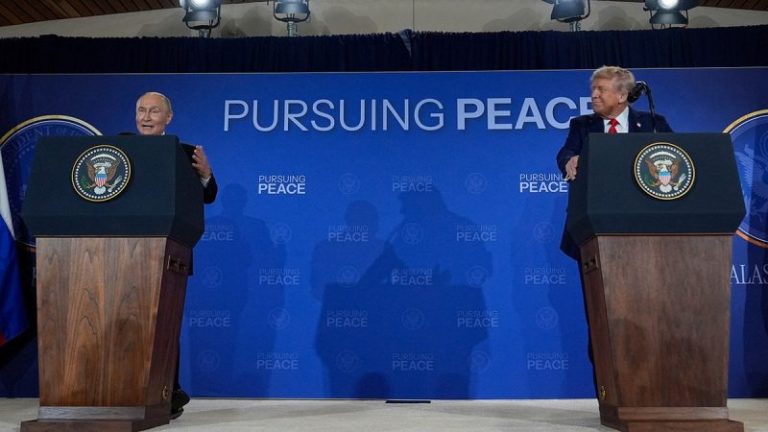
Hours later, after their closed-door discussions, President Donald Trump and Russian President Vladimir Putin appeared again — this time on a raised stage, each behind a podium, U.S. and Russian flags flanking both sides, with a blue backdrop behind them that read ‘Pursuing Peace.’ It was the first U.S.-hosted summit between American and Russian presidents on U.S. military soil.

Trump had spent days rehearsing via secure calls with European leaders and Ukrainian President Volodymyr Zelenskyy, coordinating ‘red lines’ to take into the meeting: no territorial concessions to Russia, Ukraine in the room for all negotiations, and clear conditions for any sanctions relief. Yet, despite the military pomp and the careful stagecraft, what emerged from Alaska was not a deal, but a diplomatic pause — warm words, thin details, and the hard work still ahead.

Putin spoke first, describing the talks as ‘constructive and mutual respect.’ He recalled moments in history when the U.S. and Russia ‘worked together’ and said he sought a ‘long-term settlement.’ He acknowledged Russia’s ‘legitimate concerns’ and said it was ‘very important for our countries to turn the page.’ He described a ‘trustworthy tone’ in the conversation and praised Trump for having ‘a good idea of what he wants.’ In a line clearly aimed at the cameras back home, Putin claimed Trump told him that if he had been president earlier, ‘there would not have been war,’ and confirmed that he believed it was true.

Trump followed, also taking no questions. ‘We had productive meetings,’ he said. ‘Big agreements. No deal until there is a deal.’ He promised to call ‘NATO,’ to ‘call Zelenskyy,’ and declared, ‘We really made great progress today.’ He reminded the audience of his ‘fantastic relationship with Putin’ and judged there was ‘a good chance of getting there,’ even if ‘we’re not there yet.’ Most importantly, Trump said, ‘We need to stop thousands of people being killed every week.’

For all the positive tone, the substance was modest. Putin left Alaska dangling the prospect of a ceasefire — but with strings attached. We know from prior statements that he wants the U.S. to lift certain sanctions and drop tariff threats aimed at countries like India that buy Russian energy. He intends to keep control of two eastern Ukrainian provinces seized in 2022. Likely, Trump did not concede those points, but evidently they agreed to a follow-on meeting ‘soon.’ 

While the flags fluttered in Anchorage, the war did not stop. Russian forces pressed forward modestly near Dobropillia in Donetsk region, testing Ukrainian defenses in what looks like an attempt to improve their tactical position before any pause. Ukraine rushed reinforcements, stabilizing the line for now, but fighting remains intense.

Russia’s long-range bombardment shows no sign of abating. In July alone, Moscow launched more than 70 cruise missiles and thousands of Iranian-made Shahed drones at Ukrainian targets. Ukraine has answered with deep strikes — including a hit on a Russian oil refinery and the bombing of a cargo ship carrying drone parts in the Caspian Sea. Neither side is behaving as if the war’s end is imminent.

That’s why any ceasefire talk must be backed by ironclad verification: neutral observers on the ground, satellite surveillance, clearly mapped lines, and automatic ‘snap-back’ sanctions for violations. Without that, Moscow will have every incentive to rearm under the cover of diplomacy.

If nothing else, Alaska revealed the bottom lines.

For Putin, it’s about locking in territorial gains and relieving the economic pressure eroding his war machine. Rolling back sanctions on countries that help him skirt restrictions would boost his revenues and signal to others that U.S. economic warfare is negotiable.

For Trump, it’s about testing whether Putin can be moved toward de-escalation without sacrificing U.S. credibility. Involving Zelenskyy keeps Ukraine’s fate from being decided in absentia, and reaffirming NATO’s support reassures allies.

For Ukraine, it’s a double-edged sword. A follow-on meeting offers a diplomatic opening, but Putin’s explicit territorial demands remain a political, legal, and moral red line.

Washington must resist trading sanctions relief for vague promises. The sanctions regime is one of the few levers that works, and any easing must be tied to measurable, sustained compliance verified by independent intelligence as well as neutral monitors.

Putin leaves Alaska with the optics of being a willing negotiator — useful for his domestic image — but no immediate relief on sanctions or Western recognition of his land grabs. Expect him to probe Western unity with limited escalations in the next two weeks.

Kyiv has a brief window to reinforce its defenses and prepare a clear case for the next meeting: explicit security guarantees, timetables for arms deliveries, and a non-negotiable stance on sovereignty.

Allied capitals can point to a small win: the U.S. did not cut a side deal. But they must be ready to step up enforcement and fill any gaps if U.S. resolve wavers.

Beijing will study Alaska closely. If the West blinks on sanctions enforcement, it could embolden Chinese adventurism in the Pacific. A unified Western stand would send the opposite message.

If the U.S. wants these ceasefire talks to go anywhere, three steps are essential:

  1. Lock in Enforcement MechanismsBuild a monitoring framework that combines neutral observers, allied intelligence, and technological oversight. Make violations costly and automatic to deter cheating.
  2. Keep Ukraine at the Center‘No decision about Ukraine without Ukraine’ must remain non-negotiable. Zelensky needs a real voice and veto over any territorial terms.
  3. Use Sanctions as Leverage, Not CurrencyAny relief should be phased, conditional, and reversible. Sanctions should be the reward for sustained compliance, not an upfront concession.

The Alaska summit was not the breakthrough some hoped for, but it wasn’t a failure, either. It gave both sides a clearer picture of the negotiating terrain and bought time for positioning. But time favors the side that uses it best.

For the United States, that means holding firm on sanctions, bolstering Ukraine’s defenses, and treating any ceasefire as the start of a rigorous verification process, not the war’s conclusion. For Ukraine, it means preparing for two divergent paths: meaningful diplomacy or intensified conflict. For Russia, it means deciding whether continued war is worth the mounting cost when the West refuses to pay in land.

If Alaska was merely a pause, the next meeting will decide whether it becomes a bridge to peace — or a bridge to nowhere.

This post appeared first on FOX NEWS

Russian President Vladimir Putin said he agreed with Donald Trump’s claim that the war in Ukraine would not have ever even begun if he had not lost the 2020 election and was serving as president when the carnage began, instead of former President Joe Biden.  

‘I can confirm that,’ Putin said at the tail-end of a press conferece that took place Friday evening after the pair met for a summit at Joint Base Elmendorf-Richardson in Anchorage, Alaska. 

Trump made the assertion multiple times on the campaign trail, and continued saying it after he took back the White House. Trump has faced pushback on the claim, as well as on claims that Ukraine instigated the war’s inception and the Biden administration failed to do things that could have thwarted it from beginning in the first place.

‘I’d like to add one more thing,’ Putin said, as the two heads of state provided remarks to the press, according to a translation of the Russian president’s address. ‘I’d like to remind you that in 2022, during the last contact with a previous administration, I tried to convince my previous American colleague that the situation should not be brought to a point of no return when it would come to hostilities and I said it quite directly back then that it’s a big mistake. Today, when President Trump is saying that if he was the president back then there would be no war – I am quite sure that it would indeed be so. I can confirm that.’

Earlier in his address, Putin lamented that bilateral relations between the U.S. and Russia, prior to Trump, had ‘fallen to the lowest point since the Cold War,’ and highlighted the fact that there have been no summits between the U.S. and Russia over the last four years.

‘That’s not benefiting our counties and the world as a whole,’ Putin said, adding that it was ‘apparent that sooner or later [U.S. and Russia] had to amend the situation to move on from the confrontation to dialogue.’

Meanwhile, Putin praised Trump for ‘his strive to get to the crux of the matter and to understand this history,’ referring to the backstory surrounding the war. He called the commitment ‘precious.’ 

The Russian president also remarked during his address that he hopes this new chapter of foreign diplomacy under Trump will ‘help us rebuild and foster mutually beneficial and equal ties at this new stage, even during the hardest conditions.’

‘Overall, me and President Trump have built a very good business-like and trustworthy contact, and have every reason to believe that moving down this path we can come to the end of the conflict in Ukraine,’ Putin said Friday. 

The optics of Trump’s meeting with Putin were slammed by critics, who compared the scene Friday to when Ukrainian President Volodymyr Zelenskyy met with Trump at the White House. 

The infamous meeting saw Zelenskyy publicly argue back-and-forth with Trump and other top leaders in the administration, as President Trump criticized the Ukrainian president for his approach to ending the war.

‘Biden could’ve stopped it, Zelenskyy could’ve stopped it, and Putin should’ve never started it,’ Trump said in April about the war in Ukraine.

This post appeared first on FOX NEWS

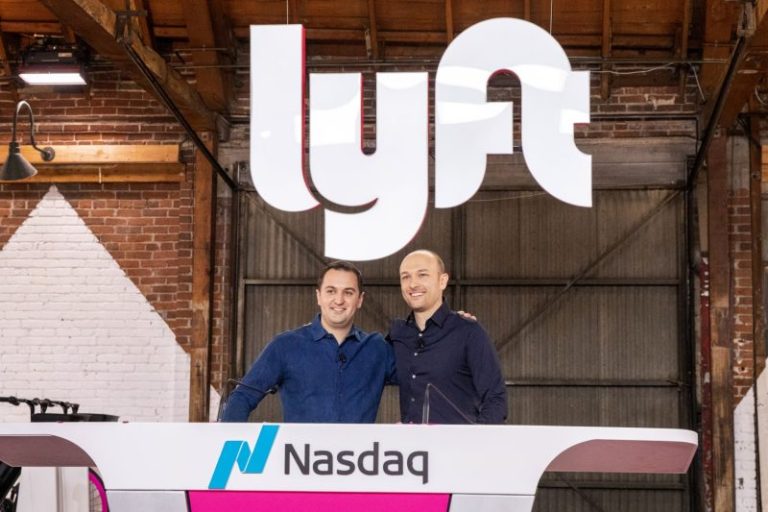
Lyft said Thursday its co-founders, Logan Green and John Zimmer, are stepping down from the ride-hailing services provider’s board, following the completion of a two-year transition plan.

Green and Zimmer began serving as the chair and vice chair of Lyft’s board in 2023 after stepping down as CEO and president, respectively, handing the reins to David Risher, who has been a board member since 2021.

The duo founded Lyft in 2012, with the company now operating across four continents and nearly 1,000 cities.

Sean Aggarwal, who was the chair of Lyft’s board from 2019 to 2023, will reprise his role.

Zimmer is launching a new consumer-focused business venture named YES&, while Green will continue as a venture partner at Autotech Ventures, a firm investing in the mobility and transportation sector.

Lyft, which recently completed its nearly $200 million acquisition of European mobility platform FreeNow, has signed a deal with China’s Baidu 9888.HK to introduce the search-engine giant’s robotaxis in the region.

It posted revenue of $1.59 billion in the second quarter, missing estimates of $1.61 billion, according to data compiled by LSEG.

Rides on Lyft’s platform grew 14% to a record high of 234.8 million in the quarter, slightly below estimates of 235.9 million, per Visible Alpha.

This post appeared first on NBC NEWS

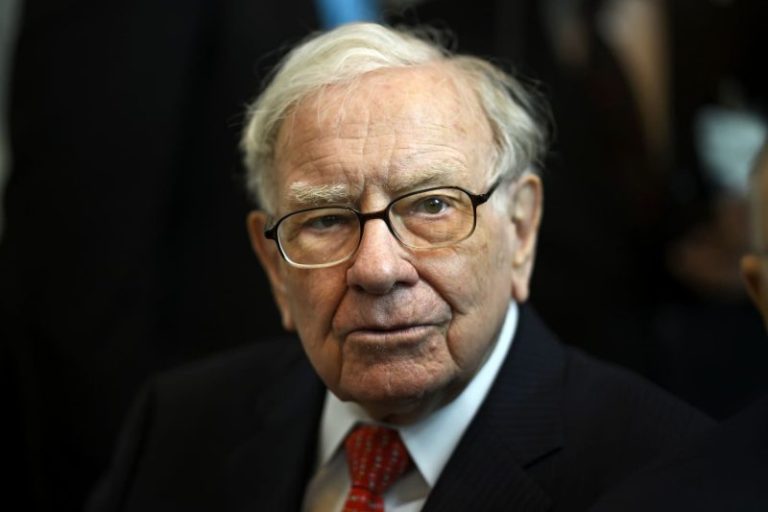
Warren Buffett’s Berkshire Hathaway revealed a new stake in troubled insurer UnitedHealth last quarter, according to a regulatory filing, a surprising buy because of the company’s current reputation, but perhaps not considering his history of bargain investing.

The Omaha-based conglomerate bought more than 5 million shares in the health care firm for a stake worth about $1.6 billion at the end of June. The stake puts it as the 18th biggest position in the Berkshire portfolio behind Amazon and Constellation Brands, according to VerityData.

Berkshire’s equity portfolio is worth about $300 billion, so it is possible that Buffett’s two investing lieutenants Todd Combs and Ted Weschler were more responsible for this purchase rather than the “Oracle of Omaha” himself. Buffett said one of his investment managers was behind the Amazon investment in 2019.

The insurer’s stock shot up 6% in extended trading following Berkshire’s disclosure.

Shares of UnitedHealth were down nearly 50% for 2025 through Thursday’s close before Buffett’s filing. The largest private health insurer has become the face of a public blowback in this country against the rising costs of health care. UnitedHealth is currently facing a Justice Department investigation into its Medicare billing practices.

In May, the company pulled its annual earnings outlook and CEO Andrew Witty stepped down. Last month, UnitedHealth gave a new 2025 outlook that was well short of Wall Street estimates, hitting the stock further.

Buffett, who’s turning 95 this month, has been critical of the healthcare system in the U.S., calling it a “tapeworm” on the economy due to its high costs. In 2018, he, along with Jeff Bezos and Jamie Dimon, launched a joint venture to improve healthcare for their employees and potentially for all Americans, but it was eventually shut down.

UnitedHealth isn’t the only stock Berkshire picked up recently. In fact, the conglomerate also took small stakes in steel manufacturer Nucor, outdoor advertising company Lamar Advertising and security firm Allegion. Berkshire also got back into homebuilders Lennar and DR Horton.

Shares of Nucor jumped nearly 8% in afterhours trading, while Lennar and DR Horton popped about 3% each.

Buffett also pared his positions in Bank of America and Apple. The Apple stake was cut by about 7%. Berkshire’s largest positions as of the end of the second quarter were Apple, American Express, Bank of America, Coca-Cola and Chevron.

The legendary investor is stepping down as Berkshire CEO at the end of the year, handing over the reins to Greg Abel. Buffett will stay on as chairman of the board. It’s still unclear who will be in charge of Berkshire’s gigantic equity portfolio, though Buffett has alluded that Abel will be making all capital allocation decisions at the conglomerate.

UnitedHealth attracted other buyers last quarter, according to filings, including Michael Burry and Appaloosa Management’s David Tepper. Shares of the insurer are trading at a price-earnings ratio of just under 12, near its lowest in more than a decade.

There was speculation regarding a mystery stock Buffett was buying as Berkshire had asked for permission to keep certain holdings secret last quarter. It turns out the secret stock was a combination of multiple positions and likely the stakes added in DR Horton, Nucor and Lennar “A” shares.

This post appeared first on NBC NEWS

Apple on Thursday announced a redesigned blood oxygen feature for some Apple Watch users, following a yearslong intellectual property dispute over the capability.

Apple said the redesigned feature is coming to some Apple Watch Series 9, Series 10 and Apple Watch Ultra 2 users on Thursday. The update was possible because of a recent U.S. Customs ruling, the company said.

In 2023, the International Trade Commission found that Apple’s blood oxygen sensors infringed on intellectual property from Masimo, a medical technology company. Apple paused the sale of some of its watches and began selling modified versions of the wearables without the blood oxygen feature.

“Apple’s teams work tirelessly to create products and services that empower users with industry-leading health, wellness, and safety features that are grounded in science and have privacy at the core,” the company said in a release announcing the feature rollout.

CNBC has reached out to Masimo for comment.

Users who do not currently have the feature will be able to access it by updating their iPhone to iOS 18.6.1 and their Apple Watch to watchOS 11.6.1, Apple said. Users will be able to see their results in the Respiratory section of the Health app.

Apple has been pushing deeper into health care in recent years.

The company recently released a sleep apnea detection feature for Apple Watch users and hearing health features for its AirPods headphones. In February, Apple launched its first major health study in five years.

This post appeared first on NBC NEWS