Author

admin

Browsing

President Trump told Brian Glenn of the conservative Real America’s Voice that he didn’t want to answer his question because it was ‘off-topic’ as he stood there with Volodymyr Zelenskyy and European leaders.

Then he proceeded to answer it at great length.

The idea, it turns out, began with Vladimir Putin, who has a bit of experience at keeping himself in power, which isn’t all that hard if you’re a dictator.

My source? Donald Trump.

He said Putin told him that ‘it’s impossible to have mail-in voting and have honest elections,’ in an interview with Fox’s Sean Hannity. He said Putin told him he won the 2020 election ‘by so much,’ as Trump has long claimed, ‘and you lost it because of mail-in voting. It was a rigged election.’

Music to the president’s ears.

So Trump was ready when a friendly reporter asked the question.

‘Mail-in ballots are corrupt,’ he declared. ‘Mail-in ballots, you can never have a real democracy with mail-in ballots, and we as a Republican Party are going to do everything possible that we get rid of mail-in ballots. We’re going to start with an executive order that’s being written right now by the best lawyers in the country to end mail-in ballots because they’re corrupt.’

He was just warming up.

And, you know, that we’re the only country in the world, I believe I may be wrong, but just about the only country in the world that uses [mail-in ballots] because of what’s happened, massive fraud all over the place. The other thing we want, change of the machines. For all of the money they spend, it’s approximately 10 times more expensive than paper ballots. And paper ballots are very sophisticated with the watermark paper and everything else, we would get secure elections. We get much faster results, the machines, I mean, they say we’re going to have the results in two weeks with paper ballots. You have the results that night. Most people almost have, but most people in many countries use paper ballots. It’s the most secure form.’

A little fact-checking is in order.

As Axios points out, many countries around the world have some form of mail-in voting. And millions of Americans who live overseas, such as military families, are eligible for mailing in their ballots.

Trump actually doesn’t have the power to do this. While he says the states are an ‘agent’ of the feds, the Constitution says the mechanics of holding elections ‘shall be prescribed in each State by the Legislature thereof.’ But Congress can change those requirements. Could the president get this through the narrow majorities in both chambers?

‘It’s a fraud,’ Trump said, adding: ‘It’s time that the Republicans get tough and stop it because the Democrats want it, it’s the only way they can get elected.’

Trump even invoked Jimmy Carter. In 2004, a commission set up by the former president and ex-Reagan aide James Baker III concluded that ‘absentee ballots remain the largest source of potential voter fraud.’

In 2020, Trump went all-out in favor of mail-in ballots, arguing that they would help Republicans. Of course, he may just have been trying to make the best of the tools already in place. No party believes in unilateral disarmament.

But his enthusiasm for mail-in ballots in that election stands in stark contrast to his current stance that they are corrupt and should be banned.

Trump wound up telling Brian Glenn, who is dating Marjorie Taylor Greene, ‘I’m glad you asked that question.’

The president doesn’t let himself be tied down by the rules of consistency that most conventional politicians have to obey. Until last Friday, he was insisting on a cease-fire between Russia and Ukraine as a precondition for any peace agreement. After the Alaska summit, he dropped the cease-fire idea that Zelensky had been demanding, given that his country is being bombarded every day, with significant civilian casualties, and adopted the Putin stance of allowing the war to continue to further freeze his military gains in the crucial Donbas region.

But that flexibility – what critics call flip-flopping – has put the president in the position where he has a shot at hammering out a peace agreement, though major obstacles remain.

So I expect we’ll hear a lot more about how mail-in ballots are horrible and evil in the coming months, though whether he can get his Hill allies to go along is very much an open question. 

This post appeared first on FOX NEWS

Apple clinched a major win Monday after the U.S. government announced that the U.K. had agreed to drop its demand for the company to provide a “back door” granting officials access to users’ encrypted data.

The iPhone maker won’t be alone to rejoice in the outcome.

The development came after extensive talks between Britain and the U.S., which had raised national security concerns over the request.

At the root of the row was end-to-end encryption, a technology which secures communications between two devices in a way that means not even the company providing a chat service can view any messages.

The story of Apple’s U.K. privacy battle started earlier this year, when it was reported that the British government had demanded access to the company’s encrypted cloud service via a technical “back door.”

Such a back door has long been contested by Apple. In 2016, the Federal Bureau of Investigation tried to get Apple to create software that would enable it to unlock an iPhone it recovered from one of the shooters involved in the 2015 terror attack in San Bernardino, California.

Other companies have also had to fend off government attempts to undermine end-to-end encryption. For example, when Meta announced plans to encrypt all messages on its Facebook Messenger app, the move drew condemnation from the U.K. Home Office. Meta had already offered encryption on WhatsApp.

The Monday news could have broader implications for the debate around end-to-end encryption globally.

Governments and law enforcement agencies have long pushed for methods to break such encryption systems to assist with criminal investigations into terrorism and child sexual abuse.

However, tech companies have said that building an encryption back door would not only undermine user privacy, but also expose them to possible cyberattacks. Cybersecurity experts say that any back door built for a government would eventually be found and exploited by hackers.

U.S. national intelligence officials were also worried by the ramifications of Apple offering such a back door.

For Apple, the U.K.‘s concession over encryption could mean that the company can bring back its most secure service for users’ cloud data, Advanced Data Protection (ADP), which the company stopped offering to Brits in February.

It is not yet clear if Apple will reintroduce its ADP service to the U.K. market.

CNBC has reached out to Apple and the U.K. government for comment.

This post appeared first on NBC NEWS

Best Buy is launching a third-party marketplace, as it tries to bulk up the variety of merchandise it offers and reverse slower sales.

Starting on Tuesday, shoppers who go to Best Buy’s website and app will see products and brands that weren’t available there before, including more tech-related accessories like custom video game controllers and some nontech items including seasonal decor and sports collectibles.

The company’s online marketplace riffs off those of other retailers, such as Amazon and Walmart, by relying on third-party sellers to stock, sell and ship inventory and taking a cut of their sales in the form of a commission.

“Everything we do is really centered around the customer and their technology needs, and we do see customers actually doing a lot of consumer electronics transactions through marketplaces,” Chief Customer, Product and Fulfillment Officer Jason Bonfig said. “And as a result of that, we need to make adjustments to be where the customer’s at.”

He said Best Buy noticed gaps in its assortment that the new platform will help it fill. For instance, Bonfig said the company didn’t carry batteries for some older cameras or cases for older smartphones. And it didn’t offer some items that complement Best Buy purchases, such as furniture that goes around a big-screen TV or cookware to use with a new kitchen appliance.

Along with adding those items, the marketplace makes it possible for smaller vendors with innovative products to sell on Best Buy’s website when they’re not yet big enough to make or distribute the volume needed for its stores, he added.

Best Buy’s marketplace launches at a time when its business could use a boost. Its annual sales have declined over the past three years as the company contends with a sluggish housing market, selective consumer spending and a decline in device replacements after a spike in tech purchases during the Covid pandemic.

The company cut its sales outlook in May and said it expects full-year revenue to range from $41.1 billion to $41.9 billion. That would be similar to Best Buy’s annual revenue of $41.5 billion in the most recent fiscal year, but below the numbers it posted in the years leading up to and during the pandemic.

Best Buy will share its most recent earnings results and sales forecast on Aug. 28.

Tariffs have complicated the backdrop for Best Buy, too, since the higher duties have added costs for consumer electronics vendors and distracted them from other priorities like research and development that leads to new and innovative products, said Jonathan Matuszewski, a retail analyst at Jefferies. He said Best Buy tends to win sales instead of big-box or online competitors when there’s a leap forward in technology.

With the platform’s launch, Best Buy joins other retailers that have jumped on the trend of introducing or expanding third-party marketplaces. Lowe’s and Nordstrom started marketplaces last year. Ulta Beauty plans to launch its own later this year. And Target said it will expand its existing marketplace, Target Plus.

On Best Buy’s earnings call in May, CEO Corie Barry described the third-party marketplace as one of the company’s strategic priorities for the year. She said that new profit stream “is even more important in this environment” and will provide greater flexibility with the range of items and price points.

Plus, she said the marketplace supports the company’s growing advertising business. Sellers can buy ads for their products, including by paying for better placement in search results.

Marketplaces and the advertising opportunities that come with them tend drive higher profits for retailers, said Justin MacFarlane, a managing director for the global retail group of AlixPartners. Sellers buy, stock and ship products instead of the retailer, and take on both the expense of buying inventory and the risk that they may have to mark down unwanted items, he said.

Yet the business model comes with risks, too, he said. For instance, sellers may not have the same standards as a retailer and it could anger a retailer’s customers if they send products in torn boxes, with missing pieces or days later than expected. And he said retailers can flood their websites with so many different categories, brands and products that they overwhelm customers with choices that seem irrelevant to their company’s identity.

“You get addicted to the growth and more is more until it’s not,” he said.

At launch, Best Buy’s marketplace will have about 500 sellers, Bonfig said. He said the company vetted applicants and whittled them down to the ones who can provide a high-quality customer experience. The sellers must match Best Buy’s return policy, he added.

Customers can return purchases either directly to the seller or to Best Buy stores, he said.

This post appeared first on NBC NEWS

Questcorp Mining Inc. (CSE: QQQ,OTC:QQCMF) (OTCQB: QQCMF) (FSE: D910) (the ‘Company’ or ‘Questcorp’) is pleased to announce they have completed 25% of the planned drilling program on its La Union Project in northwest Sonora, Mexico. This work is being carried out by property vendor and operator Riverside Resources Inc. (TSXV: RRI).

Highlights

  • The Company has completed 300 metres of the planned drill program of 1200 to 1500m.
  • Drilling to test the carbonate-hosted replacement deposit (CRD) style of mineralization, with gold associated with mantos, chimneys, and along structural zones.
  • Angled drill holes are aimed at cutting perpendicular to stratigraphic targets and some structural targets which is typical in CRD systems
  • Structural features may have served as mineralizing conduits and are key targets in the current drill program.

Questcorp is capitalizing on the recent exploration work over the past three months by Riverside that improved the understanding of the structural geology and stratigraphy that is guiding current exploration efforts at La Union. The exploration target focus is for a large potential gold discovery that expands from previous smaller scale mine operations on the property. The drill program will begin to test the new concepts and expand past previous mining.

Saf Dhillon, President & CEO states, ‘Questcorp is pleased with the progress being made at this first ever drill program at La Union. The Riverside team has been able to work throughout these hot summers months to enable the successful completion of this Maiden drill.

Earlier this year, Questcorp entered into a definitive option agreement with Riverside’s wholly owned subsidiary, RRM Exploracion, S.A.P.I. DE C.V. to acquire a 100% interest in the La Union Project. As part of the agreement, Questcorp issued shares to Riverside, making Riverside a shareholder and aligning both parties’ interests in the Project’s success. With funding provided by Questcorp, an initial C$1,000,000 exploration program is now underway. This marks the first phase of a larger, C$5,500,000 work commitment, contingent on exploration results and Questcorp’s continued participation.

The Drill Program Targets include more than four different areas, beginning with this early-stage stratigraphic and orientation phase of drilling exploration aimed at evaluating the scale of alteration and indications of a mineralized system. This will be the first drilling ever conducted on most of the targets, despite past mining having occurred in the majority of these areas. The initial program will consist of one to three holes per area, primarily for orientation purposes. Follow-up drilling is planned and can be expanded based on initial results, which will help verify the stratigraphy, lithologies, and structural features allowing for improved modeling and next-stage discovery targeting. The four areas are listed below:

  • Union Main Mine Area – The program will use angled drill holes to test limestone and other carbonate stratigraphic hosts within the Clemente Formation, with the potential to reach the underlying Caborca Formation. These units are considered the primary hosts for replacement-style mineralization.
  • North Union Mine Area – The initial focus of the program will be on testing structural interpretations. Additional drilling is anticipated following this first phase, as results will help guide future drill testing of areas with past mining activity and various structural orientations.
  • Cobre Mine Area – The Clemente Formation is the primary host unit, and structural features combined with areas of past mining provide multiple target zones. Drilling will begin with an initial stratigraphic test hole to help orient around the thickness of the host unit and extend into the lower Caborca Formation, which is also a favorable host for CRD-style mineralization.
  • Central Union Area – Structural targets, as possible mineralization feeder zones, are a key focus in this past mining manto area. There are extensive additional target zones in the area, and this initial orientation drilling will provide vectoring for the next stage of drilling and further study of the Clemente Formation, and possibly into the Caborca Formation as currently interpreted.

General Overview of La Union Project

The Project is summarized in a recently published NI 43-101 Technical Report available under Questcorp’s SEDAR+ profile (www.sedarplus.ca). Riverside initially acquired the Project and subsequently consolidated additional inlier mineral claims, building a strong land position. Riverside then advanced the Project through surface access agreements and drill permitting, making it a turn-key exploration opportunity for Questcorp.

The Project was originally identified through Riverside’s exploration work in the western Sonora Gold Belt, conducted in collaboration with AngloGold Ashanti Limited, Centerra Gold Inc., and Hochschild Mining Plc. Earlier research by Riverside Founder John-Mark Staude also contributed to recognizing the district’s potential. Initial work by members of the Riverside team, drawing on more than two decades of geological compilation and analysis, further confirmed the region as highly prospective.

At the Project, historical mining by the Penoles Mining Company targeted chimney and manto-style replacement bodies within the upper oxide zones. As a result, the underlying sulfide zones represent immediate and compelling drill targets for further exploration.

At the La Union Project, immediate drill targets offer the potential for significant-scale discoveries. La Union is well positioned for near-term exploration success, with targets that include both oxide and deeper sulfide mineralization.

The La Union Project

The La Union Project is a carbonate replacement deposit (‘CRD’) project hosted by Neoproterozoic sedimentary rocks (limestones, dolomites, and siliciclastic sediments) overlying crystalline Paleoproterozoic rocks of the Caborca Terrane. The structural setting features high-angle normal faults and low-to-medium-angle thrust faults that sometimes served as mineralization conduits. Mineralization occurs as polymetallic veins, replacement zones (mantos, chimneys), and shear zones with high-grade metal content, as shown in highlight grades of 59.4 grams per metric tonne (g/t) gold, 833 g/t silver, 11% zinc, 5.5% lead, 2.2% copper, along with significant hematite and manganese oxides, consistent with a CRD model (see the technical report entitled ‘NI 43-101 Technical Report on the Union Project, State of Sonora, Mexico’ dated effective May 6, 2025 available under Questcorp’s SEDAR+ profile). These targets also demonstrate intriguing potential for large gold discoveries potentially above an even larger porphyry Cu district potential as the Company’s target concept at this time.

Questcorp cautions investors that grab samples are selective by nature and not necessarily indicative of similar mineralization on the property.

The technical and scientific information in this news release has been reviewed and approved by R. Tim Henneberry, P. Geo (BC), a director of the Company and a ‘qualified person’ under National Instrument 43-101 – Standards of Disclosure for Mineral Projects.

About Questcorp Mining Inc.

Questcorp Mining Inc. is engaged in the business of the acquisition and exploration of mineral properties in North America, with the objective of locating and developing economic precious and base metals properties of merit. The Company holds an option to acquire an undivided 100% interest in and to mineral claims totaling 1,168.09 hectares comprising the North Island Copper Property, on Vancouver Island, British Columbia, subject to a royalty obligation. The Company also holds an option to acquire an undivided 100% interest in and to mineral claims totaling 2,520.2 hectares comprising the La Union Project located in Sonora, Mexico, subject to a royalty obligation.

Contact Information

Questcorp Mining Corp.

Saf Dhillon, President & CEO

Email: saf@questcorpmining.ca
Telephone: (604) 484-3031

This news release includes certain ‘forward-looking statements’ under applicable Canadian securities legislation. Forward-looking statements include, but are not limited to, statements with respect to Riverside’s arrangements with geophysical contractors to undertake orientation surveys and follow up detailed survey to confirm and enhance the drill targets. Forward-looking statements are necessarily based upon a number of estimates and assumptions that, while considered reasonable, are subject to known and unknown risks, uncertainties, and other factors which may cause the actual results and future events to differ materially from those expressed or implied by such forward-looking statements. Such factors include but are not limited to: the ability of Riverside to secure geophysical contractors to undertake orientation surveys and follow up detailed survey to confirm and enhance the drill targets as contemplated or at all, general business, economic, competitive, political and social uncertainties, uncertain capital markets; and delay or failure to receive board or regulatory approvals. There can be no assurance that the geophysical surveys will be completed as contemplated or at all and that such statements will prove to be accurate, as actual results and future events could differ materially from those anticipated in such statements. Accordingly, readers should not place undue reliance on forward-looking statements. The Company disclaims any intention or obligation to update or revise any forward-looking statements, whether as a result of new information, future events or otherwise, except as required by law.

To view the source version of this press release, please visit https://www.newsfilecorp.com/release/262984

News Provided by Newsfile via QuoteMedia

This post appeared first on investingnews.com

Oversupply and trade concerns were the most impactful factors in the graphite market through the first half of 2025.

China’s control of much of the market also came into focus as the US launched an investigation into the security of numerous supply chains including anodes which are key end use for graphite.

Heading into 2025, the graphite market was expected to see continued divergence between China and ex-China regions. The split was further hampered by a glut in the market.

As such prices for graphite fell by 10-20 percent in 2024, as noted in an International Energy Agency report.

Analysts anticipated domestic Chinese prices to remain low, while US and European benchmarks were forecasted to climb as supply shifts away from China create tighter markets.

While excess inventory and high supply levels were forecasted to keep prices under pressure in the first half of 2025, analysts aren’t ruling out a moderate recovery in the second half as inventories normalize, though competition from synthetic graphite could limit gains.

Graphite prices hit multi-year lows

Caught in the cross hairs of tariff troubles between US and China, graphite prices fell to their lowest levels since 2018, according to Fastmarkets.

In January, The US Department of Commerce officially launched anti-dumping (AD) and countervailing duty (CVD) investigations into imports of active anode material from China, following petitions filed by the American Active Anode Material Producers (AAMP) in mid-December 2024.

These probes stem from concerns that Chinese producers are unfairly undercutting domestic manufacturers through subsidized or dumped pricing.

“The new antidumping and countervailing duty investigation on active anode imports from China demonstrates that the anode production is the most challenging part of the battery supply chain for the US to compete with China,” wrote Fastmarkets Georgi Georgiev in a February report.

He added: “The existing 25 percent tariff has had limited impact on anode imports from China, demonstrating that currently Chinese anode makers remain the cornerstone of global anode supply chains.”

In May, the Department of Commerce issued an affirmative preliminary finding in its countervailing duty probe, identifying subsidy rates as high as 721 percent for some producers, while others faced rates near 6.55 percent.

In the related anti-dumping investigation, a July 17 preliminary determination confirmed dumping, and a provisional 93.5 percent duty was imposed.

If both Commerce and the US International Trade Commission deliver final affirmative decisions, steep duties could be imposed as soon as fall 2025 and remain in place for at least five years.

Supply and demand woes intensify

Despite natural graphite mined supply growing year over year from 2020’s 966,000 metric tons to 1,600,000 metric tons in 2024, concerns abound about future supply.

“Rare earth elements appear to be sufficiently supplied in 2035 based on the project pipeline. However, supply concentration for rare earths and graphite remains a key vulnerability,” a recent IEA report read.

The energy oversight agency expects graphite demand to double between now and 2040, driven by an uptick in eclectic vehicle demand.

To ensure ample supply is available, the IEA recommends broad growth outside of China up and down the supply chain.

“Diversification is the watchword for energy security, but the critical minerals world has moved in the opposite direction in recent years, particularly in refining and processing. Between 2020 and 2024, growth in refined material production was heavily concentrated among the leading suppliers,” it read.

Refining capacity for critical minerals has become increasingly concentrated, with graphite among the most affected. By 2024, the top three refining nations controlled an average of 86 percent of global output for key energy minerals, up from about 82 percent in 2020.

In graphite’s case, China dominates the sector, accounting for nearly all recent supply growth, a trend mirrored by Indonesia in nickel and China again in cobalt and rare earths.Despite China’s stronghold of the market, the IEA sees that weakening over the next decade.

“There is some diversification emerging in the mining of lithium, graphite and rare earth elements. The share of mined lithium supply from the top three producers is set to fall below 70 percent by 2035, down from over 75 percent in 2024,” the IEA states. “ Graphite and rare earth elements also see some improvement as new mining suppliers emerge over the next decade – Madagascar and Mozambique for graphite and Australia for rare earths.”

While mine supply diversification is a positive first step, growth in refinement and processing capacity is unlikely to see the same ex-China growth trends.

The IEA expects refining capacity for critical minerals to remain heavily concentrated well into the next decade, with graphite among the most tightly controlled.

Although some diversification is emerging for lithium and select minerals, China’s dominance shows little sign of waning. By 2035, the country is projected to supply roughly 80 percent of the world’s battery-grade graphite, alongside similar market shares in rare earths, and more than 60 percent of refined lithium and cobalt.

Tariff battle shakes anode supply chain

To counter China’s control the US is moving aggressively to curb reliance on Chinese graphite anodes, which account for more than 95 percent of global anode output.

Since June 2024, tariffs on Chinese synthetic graphite anodes have risen from zero to 160 percent — including the existing 25 percent Section 301 tariff and additional levies. North American producers have petitioned for duties as high as 920 percent.

Chinese producers initially absorbed much of the cost of early tariffs, but analysts expect they will pass more of the recent increases on to buyers.

US automakers and battery makers are bracing for higher costs, with trade data showing that all US graphite anode imports for the EV sector came from China in 2024.

China has responded with its own 84 percent import tariff on US petroleum coke and needle coke. While China has reduced reliance on US supply, it still sources about 30 percent of each from American producers, meaning higher costs for Chinese synthetic graphite and downstream anode products.

“US electric vehicle and battery producers have battled in recent years to keep US imports of graphite anodes from China tariff-free, but their efforts have proved futile over the past nine months and the trade status of graphite anodes has shifted dramatically,” Amy Bennett, principal consultant of metals and mining at Fastmarkets wrote in a May market report.

Fragility of supply

Global demand for battery-grade graphite is projected to surge by 600 percent over the next decade as the energy transition and electric vehicle (EV) adoption accelerate.

Yet, at today’s depressed prices, developing new supply outside China remains economically unviable — a challenge that’s fueling a looming supply crunch.

The US, which mines no natural graphite, was entirely dependent on imports to meet domestic demand in 2024, according to the US Geological Survey, leaving it and other non-China markets in a vulnerable position.

History offers a cautionary precedent: in 2010, rare earth prices spiked tenfold after China restricted exports.

Should a similar disruption hit lithium, nickel or graphite, prices could surge five to ten times, pushing average global battery pack costs up by 20 to 50 percent, the IEA warns.

Such a jump would erode EV affordability, slow adoption and threaten the pace of the clean energy transition.

Securities Disclosure: I, Georgia Williams, hold no direct investment interest in any company mentioned in this article.

This post appeared first on investingnews.com

Iron ore prices have displayed volatility in the past half decade as the world has dealt with the economic uncertainty surrounding COVID-19 lockdowns, the Russia-Ukraine war, ongoing conflicts in the Middle East and rising trade tensions.

Prices for the base metal reached a record high of over US$220 per metric ton (MT) in May 2021, but that level wouldn’t hold for long as lower demand from China alongside rising supply levels caused prices to dropped drastically in late 2021.

Iron ore prices rebounded to trade in the US$120 to US$130 range in 2023, spurred on by supply issues in Australia and Brazil, as well as the Russia-Ukraine war; higher export duties in India and renewed demand from China have also contributed to the commodity’s higher prices.

However, that positive sentiment in the iron ore market evaporated in 2024 as the global economic outlook weakened on higher interest rates, lower demand and challenges in China’s property sector. After starting the year at a high of US$144 per MT, iron ore prices slid to finish out the year at about US$95.

A cyclical rebound in Chinese steel production in Q1 2025 did manage to push prices for the metal back above US$100 again to briefly touch US$107 per MT in February. However, in Q2 2025, China’s economic woes, a growing surplus in iron mine supply and steel and aluminum tariffs were responsible for pressuring iron ore prices back down below US$95 as of late June.

‘Geopolitical tensions have spurred some countries to explore alternative sources of iron ore, raising the profile of new geographic markets,” reports Fastmarket in its June 2025 iron ore market outlook. “The emergence of resource nationalism, where governments exert greater control over mineral resources, is further complicating trade. Policy changes in iron ore-consuming regions, driven by trade tensions and domestic priorities, have led to adjustments in global supply chains.”

To better understand the dynamics of the iron ore market, it’s helpful to know which countries are major producers. With that in mind, these are the top 10 for iron ore production by country in 2024, using the latest data provided by the US Geological Survey. Production data for public companies is sourced from the mining database MDO.

1. Australia

Usable iron ore: 930 million metric tons
Iron content: 580 million metric tons

Australia is the largest iron producing country by far, with usable iron ore production of 930 million metric tons in 2024. Australia’s leading iron ore producer is BHP Group (ASX:BHP,LSE:BHP,NYSE:BHP), and Rio Tinto (ASX:RIO,NYSE:RIO,LSE:RIO) and Fortescue (ASX:FMG,OTCQX:FSUMF) are also large iron producers.

The Pilbara region is the most notable iron ore jurisdiction in Australia, if not the world. In fact, Rio Tinto calls its Pilbara Blend ‘the world’s most recognised brand of iron ore.’ One of the company’s iron producing operations in the region is Hope Downs iron ore complex, a 50/50 joint venture with Gina Rinehart’s Hancock Prospecting. The complex hosts four open-pit mines with an annual production capacity of 47 million metric tons.

In June 2025, the partners announced a combined investment of US$1.6 billion to develop the Hope Downs 2 iron ore project, a part of the main JV. The project hosts the Hope Downs 2 and Bedded Hilltop deposits, which together will have a total annual production capacity of 31 million metric tons.

As for BHP, the major iron miner’s Western Australia Iron Operations joint venture comprise five mining hubs and four processing hubs. One such hub is Area C, which hosts eight open-cut mining areas alone. The company also has an operating 85 percent interest in the Newman iron operations.

2. Brazil

Usable iron ore: 440 million metric tons
Iron content: 280 million metric tons

In Brazil, iron production totaled 440 million metric tons of usable iron ore in 2024.

The largest iron ore districts in the country are the states of Pará and Minas Gerais, which together account for 98 percent of Brazil’s annual iron ore output. Pará is home to the largest iron ore mine in the world, Vale’s (NYSE:VALE) Carajas mine. Headquartered in Rio de Janeiro, Vale is the world’s biggest producer of iron ore pellets.

Vale announced plans in February 2025 to make significant investments in increasing its production at Carajas by 13 percent through 2030.

3. China

Usable iron ore: 270 million metric tons
Iron content: 170 million metric tons

China’s iron production amounted to 270 million metric tons of usable iron ore in 2024. The Asian nation is the world’s largest consumer of iron ore, despite being the third largest iron-producing country.

China’s top producing iron ore mine is the Dataigou iron mine in Laioning province, with production of 9.07 million metric tons in 2023. The underground mine is owned by Glory Harvest Group Holdings.

With China being the world’s largest producer of stainless steel, its domestic supply is not enough to meet demand. The country imports over 75 percent of global seaborne iron ore as of mid-2025.

3. India

Usable iron ore: 270 million metric tons
Iron content: 170 million metric tons

India’s iron production for 2024 totaled 270 million metric tons of usable iron ore, tying for third place with China.

India’s largest iron ore miner, NMDC (NSE:NMDC), operates the Bailadila mining complexes in Chhattisgarh state and the Donimalai and Kumaraswamy mines in Karnataka state. NMDC hit a production milestone in 2021 of 40 million metric tons per year, the first such company to do so in the country. NMDC is targeting an annual production rate of 100 million metric tons by 2030.

5. Russia

Usable iron ore: 91 million metric tons
Iron content: 53 million metric tons

Russia’s iron ore production came in at 91 million metric tons in 2024, making it the fifth largest iron-producing country in the world.

The region of Belgorod Oblast is home to two of the country’s biggest iron ore producing mines: Metalloinvest’s Lebedinsky GOK, which in 2023 produced an estimated 22.05 million metric tons of iron ore; and Novolipetsk Steel’s Stoilensky GOK, which that same year produced an estimated 19.56 million metric tons of iron ore.

In response to serious economic sanctions on the country over its aggressive war against Ukraine, Russia’s iron ore exports fell dramatically in 2022 to 84.2 million metric tons from 96 million metric tons in the previous year. Together, these two countries previously accounted for 36 percent of global iron or non-alloy steel exports. The European Union has restricted imports of Russian iron ore.

Last year, imports of iron ore from Russia to the EU seemingly fell off a cliff, dropping from 332,300 tons to 9,360 tons.

6. Iran

Usable iron ore: 90 million metric tons
Iron content: 59 million metric tons

Iran surpassed 90 million metric tons in iron production in the form of usable iron ore in 2024. The country’s iron output has been on the rise in recent years — now in sixth place, it was the eighth highest iron producer in 2022 and the 10th in 2021.

One of Iran’s most important iron ore mines is Gol-e-Gohar in Kerman province, which is also the country’s top producer. During the March 2024 to January 2025 period, the country’s major mining companies’ combined iron pellet production reportedly increased by 7 percent year-over-year.

The country’s iron mines are supplying its steel industry, which produced 31 million MT of steel in 2024. In its 20 year roadmap released in 2005, the Iranian government set an annual steel production target of 55 million MT by 2025. To better meet the requirements of domestic steel producers, Iran began levying a 25 percent duty on iron ore exports in September 2019. The exact rate has changed multiple times since, and in February 2024 the country cut duties on these products significantly.

7. South Africa

Usable iron ore: 66 million metric tons
Iron content: 42 million metric tons

South Africa’s iron production was 66 million metric tons of usable iron ore in 2024. The country’s output has declined significantly in the past few years, down from 73.1 million MT three years earlier. South Africa’s mining industry is grappling with transport and logistics issues, most notably due to railway maintenance challenges.

Kumba Iron Ore is Africa’s largest iron ore producer. The company has three main iron ore production assets in the country, including its flagship mine, Sishen, which accounts for a large majority of Kumba’s total iron ore output. Anglo American (LSE:AAL,OTC Pink:AAUKF) owns a 69.7 percent share of the company.

8. Canada

Usable iron ore: 54 million metric tons
Iron content: 32 million metric tons

Canada’s iron production totaled 54 million metric tons of usable iron ore in 2024. In June of that year, the Canadian government updated the nation’s Critical Minerals List ‘to include high-purity iron, citing the necessity of that mineral’s role in decarbonization throughout the steel supply chain,’ according to the USGS.

Champion Iron (TSX:CIA) is one company producing iron ore in Canada. It owns and operates the Bloom Lake complex in Québec. Champion Iron ships iron concentrate from the Bloom Lake open pit by rail, initially on the Bloom Lake Railway, to a ship loading port in Sept-Îles, Québec. A Phase 2 expansion, which entered commercial production in December 2022, increased annual capacity from 7.4 million metric tons to 15 million metric tons of 66.2 percent iron ore concentrate.

As of 2025, Champion is investing in upgrading half of its Bloom Lake mine capacity to a direct reduction quality pellet feed iron ore with up to 69 percent iron.

9. Ukraine

Usable iron ore: 42 million metric tons
Iron content: 26 million metric tons

Ukraine’s iron production for 2024 was 42 million metric tons of usable iron ore. The metal represents a key segment of the country’s economy. Metinvest and ArcelorMittal (NYSE:MT) are the leading producers of iron ore in the nation.

Despite the ongoing war, Ukraine’s iron ore mining industry has proved as resilient as the people, even though there have been temporary shutdowns. However, 2025 looks to be turning into a particularly hard year. In the January through April period, iron ore exports decreased by 20.9 percent in value terms and by 10.2 percent in physical volumes year-over-year. GMK Center predicted in May that by the end of this year, ‘Ukraine’s iron ore exports will decline by about 20% y/y to 27 million tons from 33.6 million tons in 2024.’

10. Kazakhstan

Usable iron ore: 30 million metric tons
Iron content: 9.2 million metric tons

Kazakhstan’s iron production came in at 30 million metric tons of usable iron ore in 2024.

Kazakhstan has several iron ore mines in operation, with four of the top five owned by Eurasian Resources Group. The largest of these iron ore mines is the Sokolovsky surface and underground mine located in Kostanay. In 2023, it produced an estimated 7.52 million tonnes per annum of iron ore.

The Sokolov-Sarybai Mining Production Association (SMPA) in Northern Kazakhstan was the main supplier of iron ore to Russia’s Magnitogorsk Iron and Steelworks prior to the country’s invasion of Ukraine. Since then, the SMPA has halted iron ore shipments to Magnitogorsk.

Securities Disclosure: I, Melissa Pistilli, hold no direct investment interest in any company mentioned in this article.

This post appeared first on investingnews.com
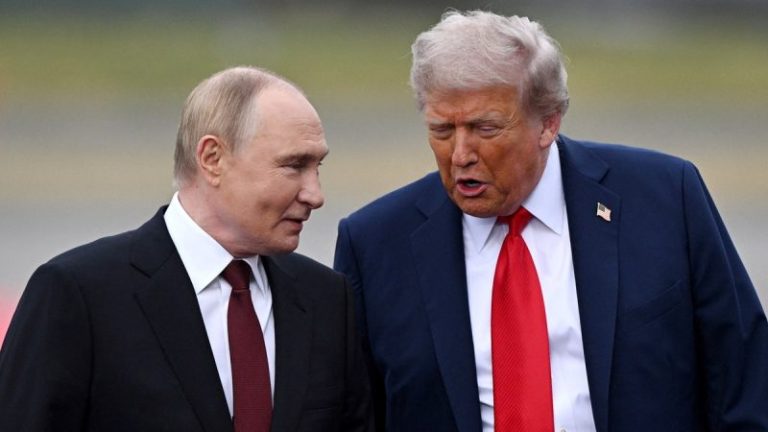
President Donald Trump said he spoke with Russian President Vladimir Putin Monday, after meeting with Ukrainian President Volodymyr Zelenskyy and European leaders at the White House, to begin coordinating next steps in the peace process aimed at ending the war in Ukraine. 

The president posted on his Truth Social platform Monday evening saying that he had called Putin at the conclusion of a day of meetings to begin ‘the arrangements for a meeting’ between the Russian president and his Ukrainian counterpart. Trump’s call to Putin mirrored his decision to call Zelenskyy following Friday’s Alaska summit with Putin. 

‘At the conclusion of the meetings, I called President Putin, and began the arrangements for a meeting, at a location to be determined, between President Putin and President Zelenskyy,’ Trump confirmed, following media reports hinting at the call.

The president added that after the meeting between the two warring presidents, there would be a trilateral meeting with the United States as well. 

‘After that meeting takes place, we will have a Trilat, which would be the two Presidents, plus myself,’ the president continued. ‘Again, this was a very good, early step for a War that has been going on for almost four years.’

Yury Ushakov, a top aide to Russian President Vladimir Putin, said Trump and Putin were on the phone for about 40 minutes and held a ‘candid and very constructive’ dialogue, according to CNN.

Putin ‘expressed support for direct negotiations between the delegations of Russia and Ukraine,’ Ushakov reportedly added.

Officials familiar with Monday’s talks also reportedly said Trump’s call to Putin came in-between talks with the European leaders present at the White House. Meanwhile, one of those leaders, German Chancellor Friedrich Merz, reportedly said Putin agreed in the call with Trump to meet Zelenskyy in two weeks. 

Earlier in the day, Trump was caught in a hot-mic moment telling French President Emmanuel Macron that Putin wants to find a resolution to bring the war in Ukraine to an end for him.

‘I think [Putin] wants to make a deal,’ Trump whispered to Macron in the East Room as they were preparing for Monday’s talks. ‘I think he wants to make a deal for me, you understand that? As crazy as it sounds.’

Following Monday’s talks, Zelenskyy thanked Trump and all the other leaders present in D.C. for their work in trying to bring peace to his country, noting that the talks were ‘long and detailed.’  

‘Today, important negotiations took place in Washington. We discussed many issues with President Trump. It was a long and detailed conversation, including discussions about the situation on the battlefield and our steps to bring peace closer,’ Zelenskyy said in a post on X Monday night.

‘We appreciate the important signal from the United States regarding its readiness to support and be part of these guarantees. A lot of attention today was given to the return of our children, to the release of prisoners of war and civilians held by Russia. We agreed to work on this,’ Zelenskyy continued. ‘The U.S. President also supported a meeting at the level of leaders. Such a meeting is necessary to resolve sensitive issues.’ 

Fox News Digital reached out to the White House for comment on this but did not receive a response.

This post appeared first on FOX NEWS

Highlights:

  • General Marks joins the board of directors of Allied USA.
  • General Marks is a leading expert on international military strategy with a distinguished career in the United States Army.
  • Allied USA is focused on importation, marketing and sales of tungsten into the United States.

Allied Critical Metals Inc. (CSE: ACM,OTC:ACMIF) (OTCQB: ACMIF) (FSE: 0VJ0) (‘Allied’ or the ‘Company’), which is focused on its 100% owned past producing Borralha and Vila Verde tungsten projects in northern Portugal, is pleased to announce the appointment of Major General (Ret.) James A. ‘Spider’ Marks to the Board of Directors of its U.S.-based subsidiary, Allied Critical Metals (USA), Inc. (‘Allied USA’). Allied USA is dedicated to the importation, marketing and sales of tungsten into the United States.

General Marks is the former Commanding General, U.S. Army Intelligence Center and brings over four decades of leadership experience across military, intelligence, and commercial sectors. His distinguished U.S. Army career included leadership roles at every level across elite units such as the 101st and 82nd Airborne Divisions. He also served in strategic intelligence positions around the globe, including deployments in Iraq, Korea, and the Balkans. Post-military, he has held executive leadership roles in private industry, including as CEO of Global Linguist Solutions and InVisM, and currently serves as President of the Marks Collaborative, an advisory firm focused on corporate transformation and national security. He is an Honor Graduate of the U.S. Army’s Ranger School, a Master Parachutist authorized to wear Canadian airborne wings, and has been awarded the Distinguished Service Medal, Legion of Merit, Bronze Star, and multiple expeditionary and service ribbons. He is a 1975 graduate of the United States Military Academy at West Point, and holds a Master’s degree in International Affairs from the University of Virginia. Marks contributes as a military and intelligence analyst for CNN. He is an adjunct professor at Georgetown University.

‘General Marks is a highly respected leader with unparalleled expertise in global defense, logistics, and strategy,’ said Roy Bonnell, CEO of Allied Critical Metals. ‘His appointment strengthens our U.S. operations at a pivotal time, as we expand our presence in the American tungsten market. His insight and network will be invaluable in helping Allied USA meet growing demand for this critical material.’

Tungsten is a critical mineral essential to industries such as aerospace, defense, and electronics. As Allied USA advances its role in ensuring secure, reliable tungsten supply chains for the U.S., General Marks’ deep knowledge of defense systems and national security will enhance the subsidiary’s operational and strategic direction.

‘I’m honored to join Allied USA’s Board of Directors,’ commented General Marks. ‘We are playing a vital role in strengthening the United States’ access to critical minerals, and I look forward to supporting our mission and growth.’

About Allied Critical Metals Inc.

Allied Critical Metals Inc. (CSE: ACM,OTC:ACMIF) (OTCQB: ACMIF) (FSE: 0VJ0) is a Canadian-based mining company focused on the expansion and revitalization of its 100% owned past producing Borralha Tungsten Project and the Vila Verde Tungsten Project in northern Portugal. Tungsten has been designated a critical metal by the United States and other western countries, as they are aggressively seeking friendly sources of this unique metal. Currently, China, Russia and North Korea represent approximately 86% of the total global supply and reserves. The tungsten market is estimated to be valued at approximately USD $5 to $6 billion and it is used in a variety of industries such as defense, automotive, manufacturing, electronics, and energy.

Please visit our website at www.alliedcritical.com.

Also visit us at:
LinkedIn: https://www.linkedin.com/company/allied-critical-metals-inc
X: https://x.com/@alliedcritical/
Instagram: https://www.instagram.com/alliedcriticalmetals/

ON BEHALF OF THE BOARD OF DIRECTORS

Per: ‘Roy Bonnell’

Roy Bonnell
Chief Executive Officer and Director

Contact Information

For further information or investor relations inquiries, please contact:
Dave Burwell, Vice President, Corporate Development
Tel: 403 410 7907 | Toll Free: 1-888-221-0915
Email: daveb@alliedcritical.com

The Canadian Stock Exchange does not accept responsibility for the adequacy or accuracy of this release.

This press release shall not constitute an offer to sell or the solicitation of an offer to buy securities in the United States, nor shall there be any sale of the securities in any jurisdiction in which such offer, solicitation or sale would be unlawful. The securities of the Company have not been, nor will they be, registered under the 1933 Act or under any U.S. state securities laws, and may not be offered or sold in the United States absent registration or an applicable exemption from the registration requirements of the 1933 Act, as amended, and applicable state securities laws.

Cautionary Statement Regarding Forward-Looking Information

This news release contains ‘forward-looking statements’, including with respect to the use of proceeds. Wherever possible, words such as ‘may’, ‘would’, ‘could’, ‘should’, ‘will’, ‘anticipate’, ‘believe’, ‘plan’, ‘expect’, ‘intend’, ‘estimate’, ‘potential for’ and similar expressions have been used to identify these forward-looking statements. These forward-looking statements reflect the current expectations of the Company’s management for future growth, results of operations, performance and business prospects and opportunities and involve significant known and unknown risks, uncertainties and assumptions, including, without limitation, those listed in the Company’s Listing Statement and other filings made by the Company with the Canadian securities regulatory authorities (which may be viewed under the Company’s profile at www.sedarplus.ca). Examples of forward-looking statements in this news release include, but are not limited to, statements regarding the proposed timeline and use of proceeds for exploration and development of the Company’s mineral projects as described in the Company’s Listing Statement, news releases, and corporate presentations. Should one or more of these risks or uncertainties materialize or should assumptions underlying the forward-looking statements prove incorrect, actual results, performance or achievements may vary materially from those expressed or implied by the forward-looking statements contained in this news release. These factors should be considered carefully, and prospective investors should not place undue reliance on the forward-looking statements. This list is not exhaustive of the factors that may affect any of the Company’s forward-looking statements and reference should also be made to the Company’s Listing Statement dated April 23, 2025 and news release dated May 16, 2025, and the documents incorporated by reference therein, filed under its SEDAR+ profile at www.sedarplus.ca for a description of additional risk factors. The Company disclaims any intention or obligation to revise forward-looking statements whether as a result of new information, future developments or otherwise, except as required by law.

To view the source version of this press release, please visit https://www.newsfilecorp.com/release/263016

News Provided by Newsfile via QuoteMedia

This post appeared first on investingnews.com

Apollo Silver Corp. (‘ Apollo ‘ or the ‘ Company ‘) (TSX.V:APGO, OTCQB:APGOF, Frankfurt:6ZF0) congratulates Equinox Gold Corp. (TSX: EQX) (NYSE American: EQX) on the recent acceptance of its Castle Mountain Project into the United States’ FAST-41 program, which is designed to streamline and derisk the permitting process. Castle Mountain is located just 165km from Apollo’s Calico silver and barite project both situated in San Bernardino County, California.

Ross McElroy, President and CEO of Apollo, commented, ‘ This news speaks to the diligence of the Equinox team in advancing their project to this stage. Crucially for our Calico Project in San Bernardino County, which hosts one of the largest undeveloped silver deposits in North America, this also highlights the government’s determination to accelerate domestic mine development.

About Apollo Silver Corp.

Apollo is advancing one of the largest undeveloped primary silver projects in the US. The Calico Project hosts a large, bulk minable silver deposit with significant barite credits – a critical mineral essential to the US energy and medical sectors. Additionally, the Company has optioned Cinco de Mayo in Chihuahua, Mexico, which is host to a major CRD deposit that is both high-grade and large tonnage. Led by an award-winning management team, our growth strategy is matched only by the scale of the opportunity in front of us.

Please visit www.apollosilver.com for further information.

ON BEHALF OF THE BOARD OF DIRECTORS

Ross McElroy
President and CEO

For further information, please contact:

Email: info@apollosilver.com
Telephone: +1 (604) 428-6128

Neither the TSX Venture Exchange nor its Regulation Services Provider (as that term is defined in the policies of the TSX Venture Exchange) accepts responsibility for the adequacy or accuracy of this release.

News Provided by GlobeNewswire via QuoteMedia

This post appeared first on investingnews.com

Democratic Rep. Sarah McBride of Delaware, who identifies as a transgender woman, accused President Donald Trump of waging an attack against ‘American democracy.’

‘This president is taking notes from his favorite dictator. Let’s be clear: a president with popular policies wouldn’t need to illegally gerrymander districts, ban voting machines, or abolish vote-by-mail,’ a Monday night post on the lawmaker’s @Rep_McBride X account declared. ‘This is an all-out assault not just on free and fair elections—but on American democracy itself.’ 

Fox News Digital reached out to the White House for comment early on Tuesday morning.

Trump, who has been aiming to help bring an end to the Russia-Ukraine war, met with Ukrainian President Volodymyr Zelenskyy and multiple other European figures in Washington, D.C., on Monday after meeting with Russian President Vladimir Putin in Alaska on Friday.

During an interview with Fox News Channel’s Sean Hannity on Friday after meeting with Putin, Trump said of the foreign leader, ‘Vladimir Putin, smart guy, said you can’t have an honest… election with mail-in voting.’

Trump declared in a Truth Social post on Monday that he will ‘lead a movement to’ eliminate voting machines and mail-in balloting from U.S. elections.

‘WE WILL BEGIN THIS EFFORT … by signing an EXECUTIVE ORDER to help bring HONESTY to the 2026 Midterm Elections,’ he declared in part of the lengthy post.

‘ELECTIONS CAN NEVER BE HONEST WITH MAIL IN BALLOTS/VOTING, and everybody, IN PARTICULAR THE DEMOCRATS, KNOWS THIS. I, AND THE REPUBLICAN PARTY, WILL FIGHT LIKE HELL TO BRING HONESTY AND INTEGRITY BACK TO OUR ELECTIONS. THE MAIL-IN BALLOT HOAX, USING VOTING MACHINES THAT ARE A COMPLETE AND TOTAL DISASTER, MUST END, NOW!!!’ the president exclaimed in another portion of the post.

This post appeared first on FOX NEWS